
Grilled Chicken Wings Recipe (Two-Zone Method)
Last tested June 2026
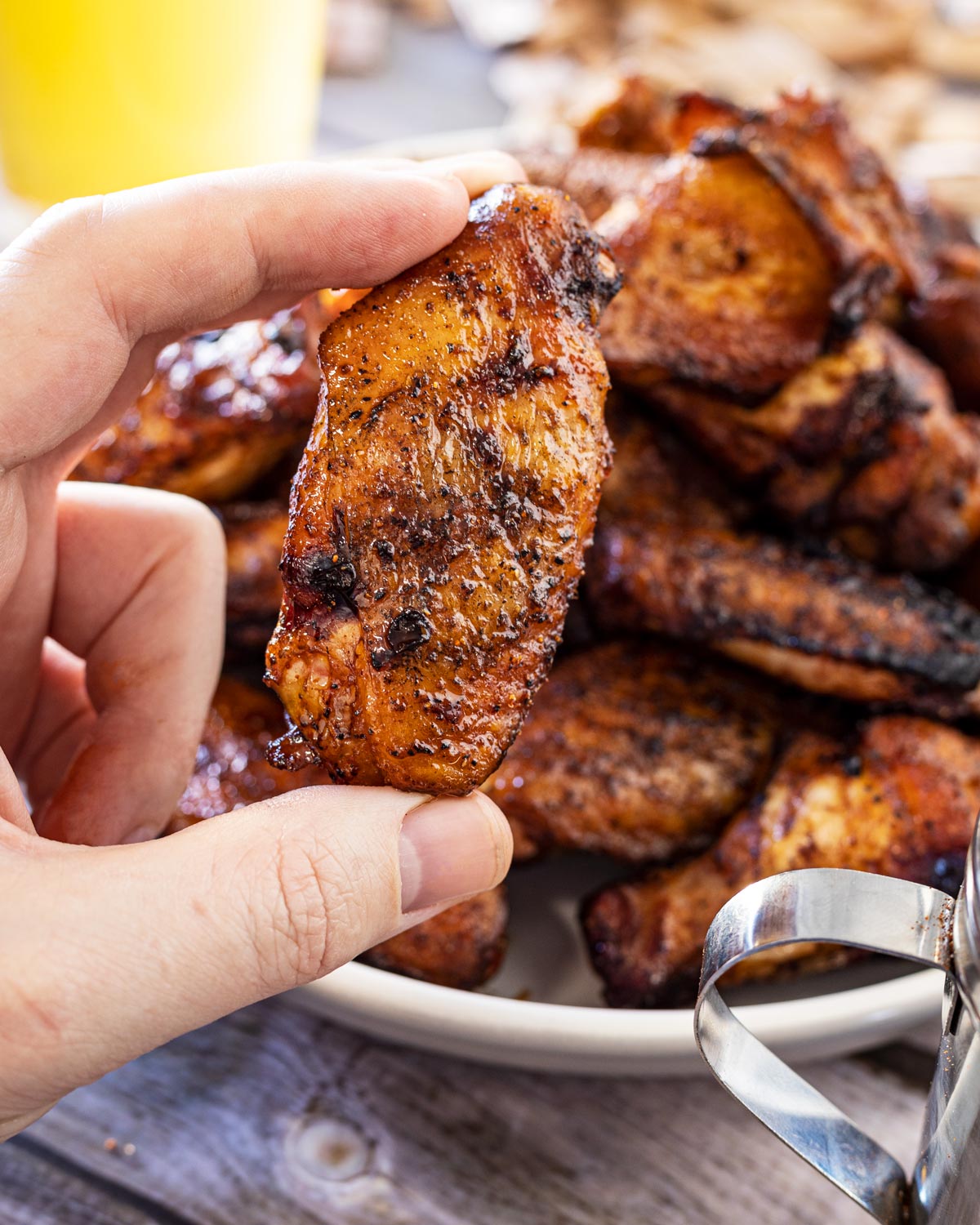
Grilled chicken wings come out best over a two-zone fire. Cook them on the indirect side with a wood chunk for smoke until they hit 165°F, then sear directly over the coals at 400 to 450°F until the skin crisps and the meat reaches 180 to 185°F. About an hour over the fire, no fryer.
Most grilled wing recipes run direct heat the whole way at around 425°F. I cook two-zone instead, so the wings take on real hardwood smoke before they crisp. I have run wings every way over the last 20 years, and this is the method I come back to when I want smoke flavor and crispy skin without a 2-hour low-and-slow cook.
Why This Process Works
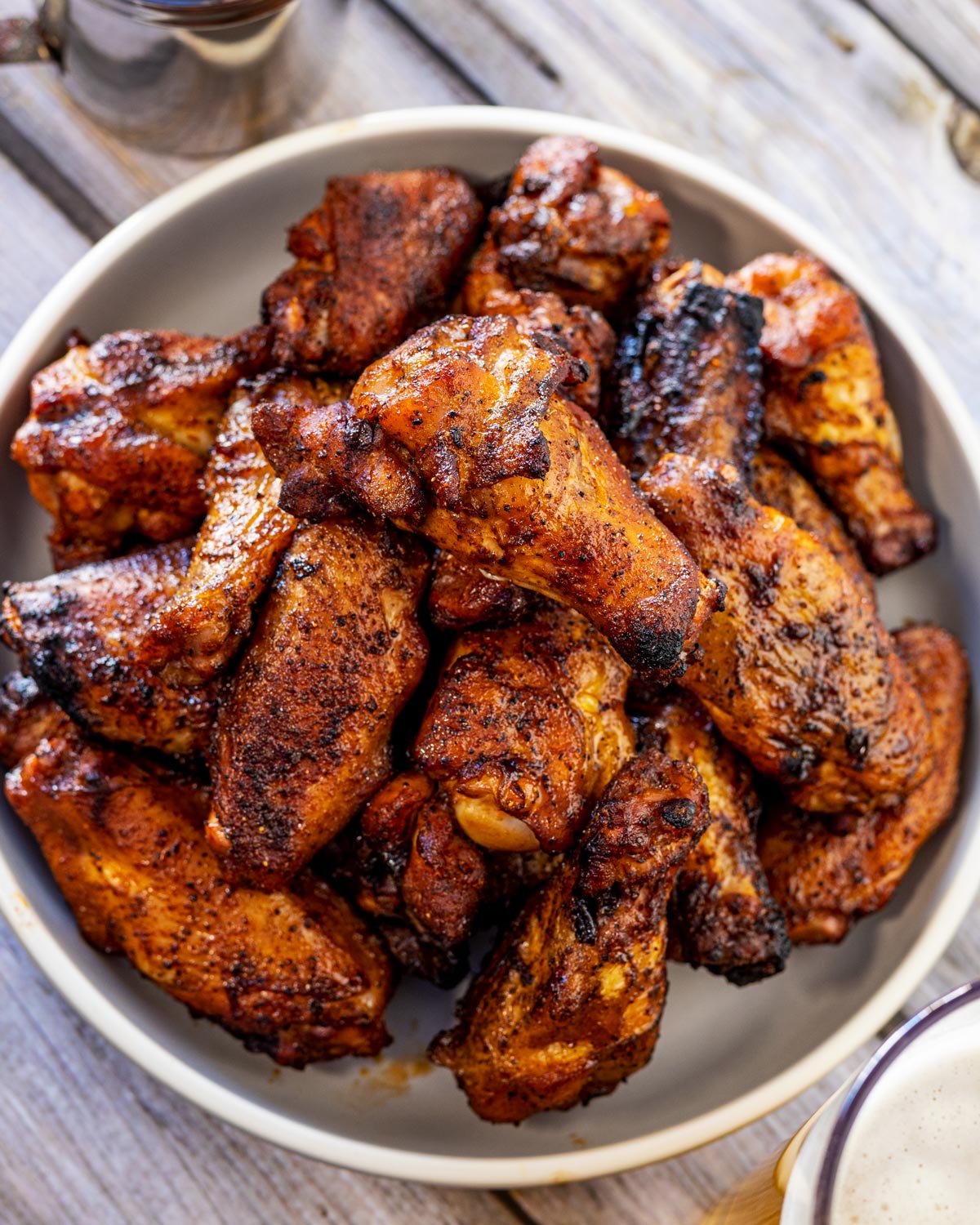
- Crispy skin without a deep fryer. The indirect phase renders the fat slowly while the wings climb to 165°F, then a direct sear at 400 to 450°F crisps the skin in the last few minutes. The slow render is what dries the skin enough to crackle over the coals.
- Real smoke flavor in under an hour. A single wood chunk on the lit coals smokes the wings through the whole indirect phase. Straight direct grilling skips this, which is why most grilled wings taste like the rub and nothing else.
- Juicy meat, not rubbery. Pulling the wings at 165°F before the sear means the final crisp happens fast, so they finish at 180 to 185°F without drying out. Wing meat needs that higher final temp to break down the connective tissue, which is what keeps it tender instead of chewy.
Grilled Chicken Wings on a Charcoal Grill
Charcoal is the setup this method is built on. It runs hotter for the sear and it takes a wood chunk for smoke, which is where the flavor edge over a gas cook comes from.
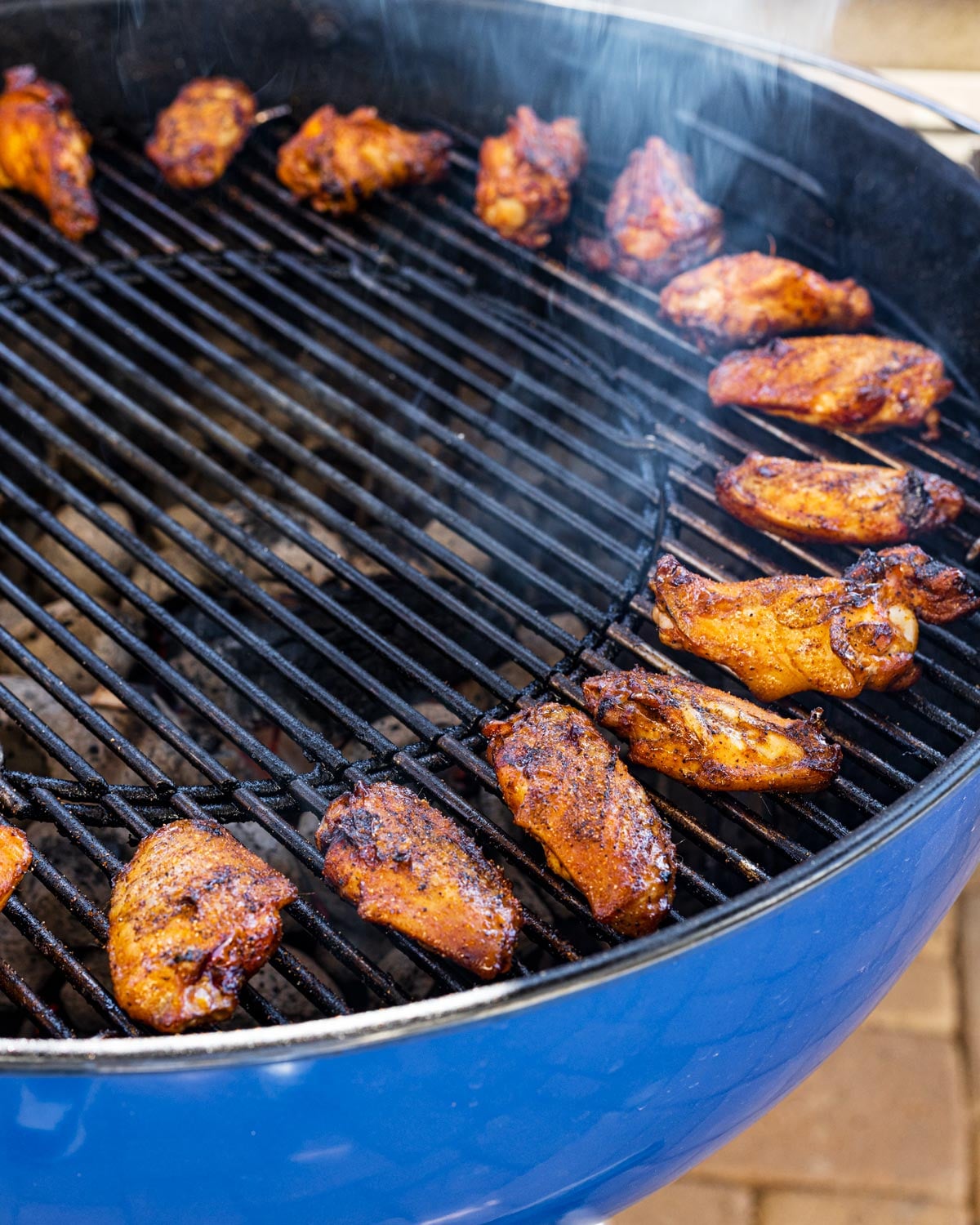
Bank the lit coals to one side of the grill, or to the center if you run a round kettle like a Weber. That gives you a hot direct zone and a cool indirect zone on the same grate. Set your wood chunk on the coals once they are lit, and the grill holds 350 to 375°F.
On a gas grill: Run a smoker box or a foil chip packet on one lit burner to cover the smoke phase, leave the other burners off for the indirect zone, then crank the heat for the sear. You lose a little smoke depth, but the two-zone method still gives you crispy skin.
On a pellet grill: Smoke at 350°F in the indirect zone to 165°F, then move to the hottest part of the grate or a separate searing station to finish. Pellet grillers get the easiest smoke phase of the three.
Key Ingredients
- Chicken wings: Whole wings or split into flats and drums. Splitting adds surface area, so the skin crisps faster and more evenly.
- Neutral oil: A thin coat helps the rub stick and the skin brown. The best options are avocado, grapeseed, or vegetable oil.
- Dry rub: Grab our Signature Sweet & Smoky Rub for sweet heat that pairs with any sauce. For something less sweet, use the Sedona Sand Fiesta Rub.
- Wood chunk or chips: Hardwood on the coals is where the smoke comes from. Cherry, maple, and hickory are my favorites.
How to Grill Chicken Wings: Step by Step
Step 1: Season the wings
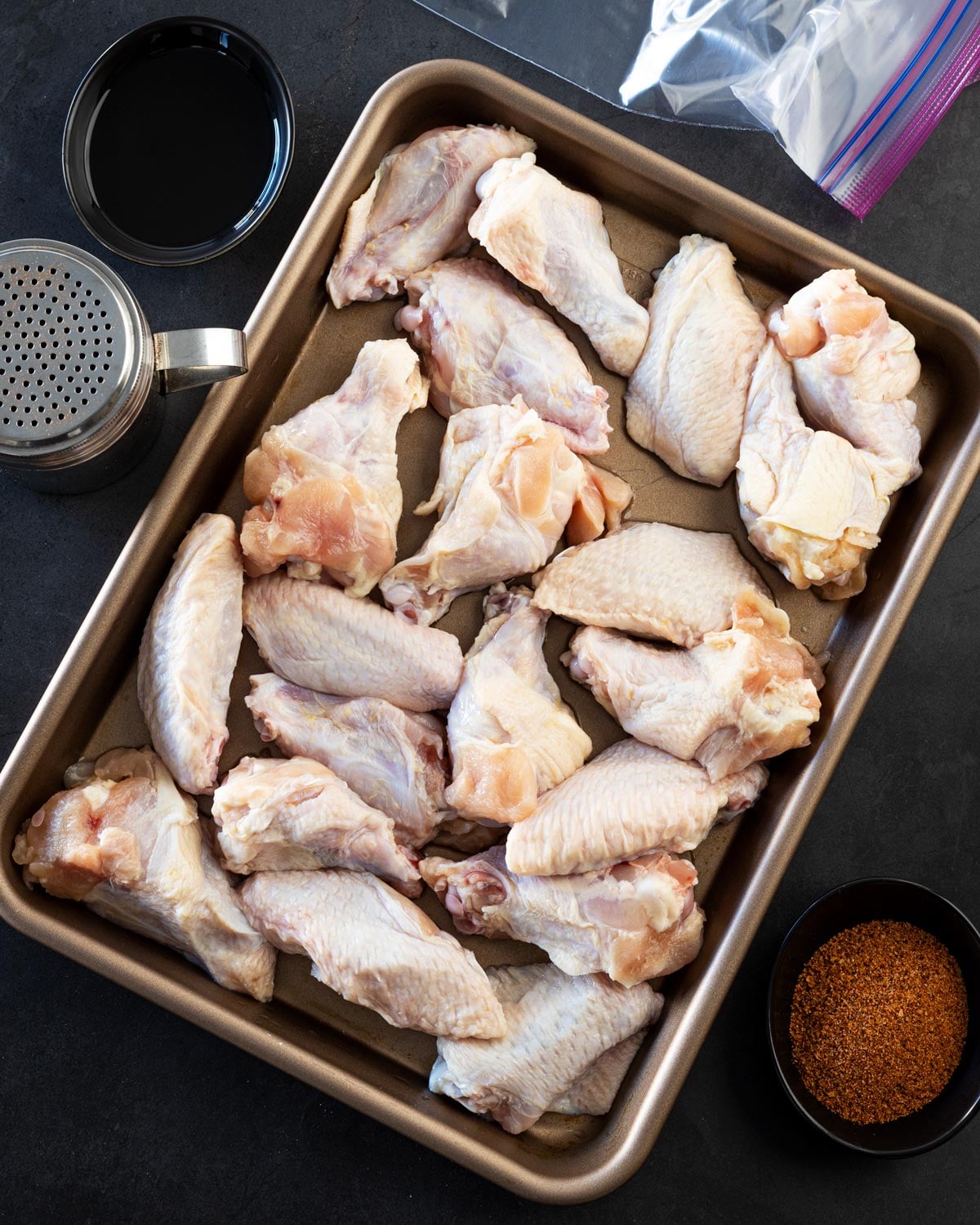
Thaw the wings and pat them bone dry with paper towels. Dry skin is the single biggest factor in crisp skin, so do not skip this. There are two ways to season from here, and you pick based on how much time you have.
Cooking today: Put the wings in a large resealable bag. Pour in the oil and toss to coat, then add the rub and toss again. The bag coats more evenly than a bowl and lays flat in the fridge. Rest at least 2 hours, up to overnight.
For extra heat, add a few dashes of hot sauce to the oil before the rub goes on.
Cooking tomorrow: Dry brine instead. Season the wings with the rub and lay them in a single layer on a rack over a sheet pan, uncovered, in the fridge for 8 to 24 hours. The salt pulls moisture to the surface, then it reabsorbs and carries seasoning into the meat, so flavor runs deeper than a same-day coat. The open air dries the skin at the same time, which crisps harder over the fire.
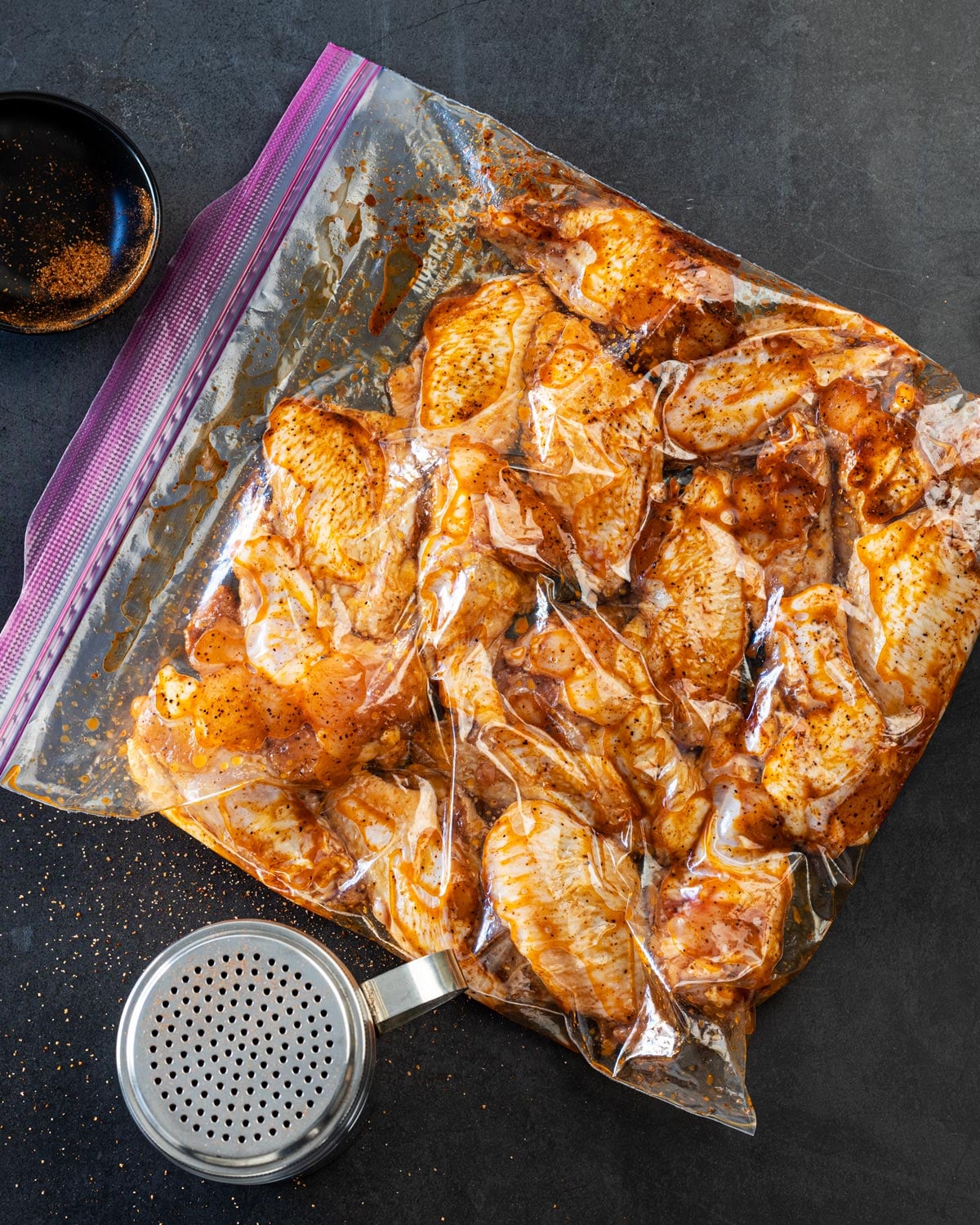
Step 2: Grill indirectly with smoke
Light the charcoal for medium heat, around 350 to 375°F, and set the two-zone fire from the section above. Set your wood chunk on the lit coals once the grill is at temp.
Arrange the wings on the cool side, away from the coals. They cook indirectly and take on smoke through this phase. Cook about 30 minutes undisturbed with the lid closed, then rotate and hold them another 15 to 20 minutes until the internal temperature reads 165°F.
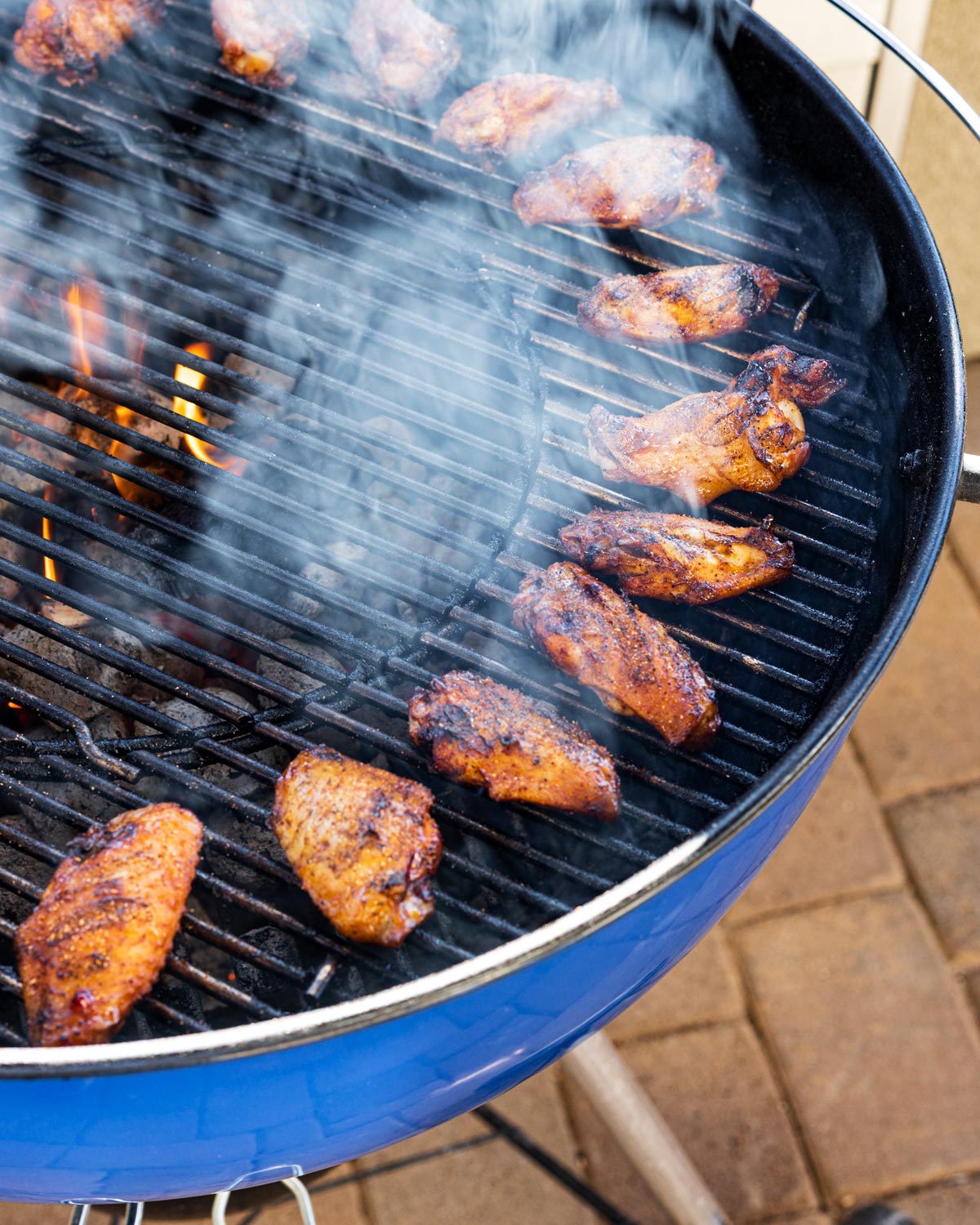
Step 3: Sear over the flames
Open the vents and pull the lid. The heat climbs fast, and you want a medium-high 400 to 450°F for the sear.
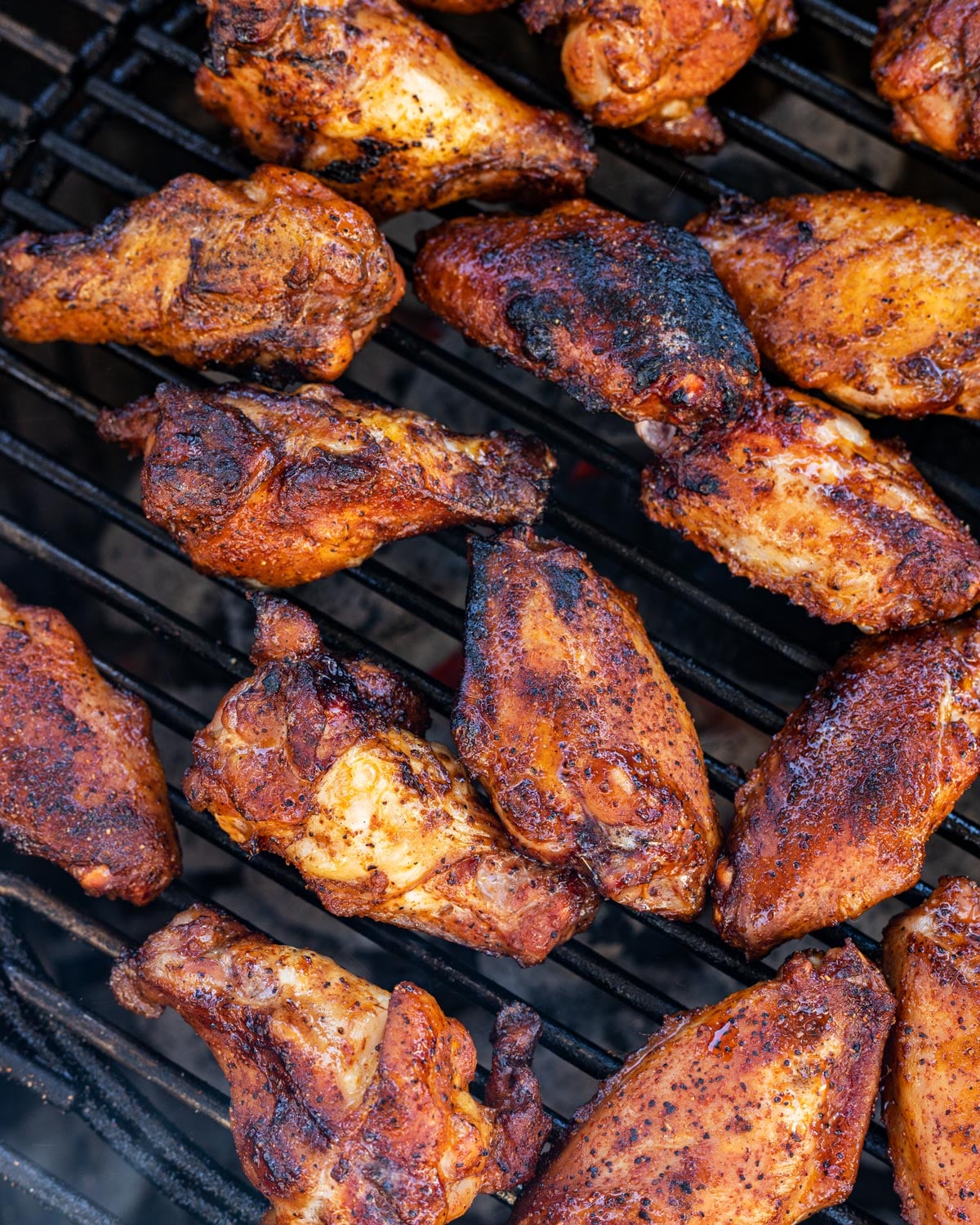
Sear the wings directly over the coals a couple of minutes per side. Flip as needed and watch for flare-ups, since dripping fat can flash. Once the skin is crisp and the wings reach 180 to 185°F internally, they are done. Rest for a couple of minutes before serving.
Grilled vs. Smoked vs. Fried Wings
Three methods, three results. Here is how they compare, so you can pick by what you have time for.
|
Method |
Total cook |
Skin |
Flavor |
Best when |
|---|---|---|---|---|
|
Grilled (this method) |
~1 hr |
Crispy from the direct sear |
Light hardwood smoke |
You want smoke and crisp without the long cook |
|
Smoked |
2 hr or more |
Softer unless finished hot |
Deep, low-and-slow smoke |
You have the afternoon and want maximum smoke |
|
Fried |
~15 min |
Crispiest |
No smoke |
Speed and crunch, indoors |
Grilling splits the difference. The two-zone fire gets you most of the crisp of a fry and most of the smoke of a low cook, in about an hour.
Make-Ahead and Storage
Season the wings up to overnight, minimum 2 hours, for the rub to set. Cooked wings keep in the fridge 3 to 4 days in a sealed container.
To bring the skin back, reheat in an air fryer at 375°F for 4 to 5 minutes, which crisps the outside better than anything else. An oven or grill at 375°F works too, about 10 minutes.
Skip the microwave, since it steams the skin soft. Cooked wings freeze up to 3 months.
Pro Tips from the Pit
- Dry skin crisps best. Pat the wings dry out of the package, and if you dry brined them uncovered overnight, the surface is already primed to crackle. Less surface moisture means more crisp over the fire.
- Pull at 165°F, do not rush the sear. Moving wings onto the direct heat too early scorches the skin before the fat renders. Let the indirect phase do its work first.
- Sauce after the sear, not before. Tossing in sauce before the fire steams the skin soft. Sear first, then toss or serve sauce on the side, so the crisp survives.
- Split whole wings. Cutting into flats and drums adds surface area and shaves cook time. More crispy edges per wing.
Pair It with Sauce
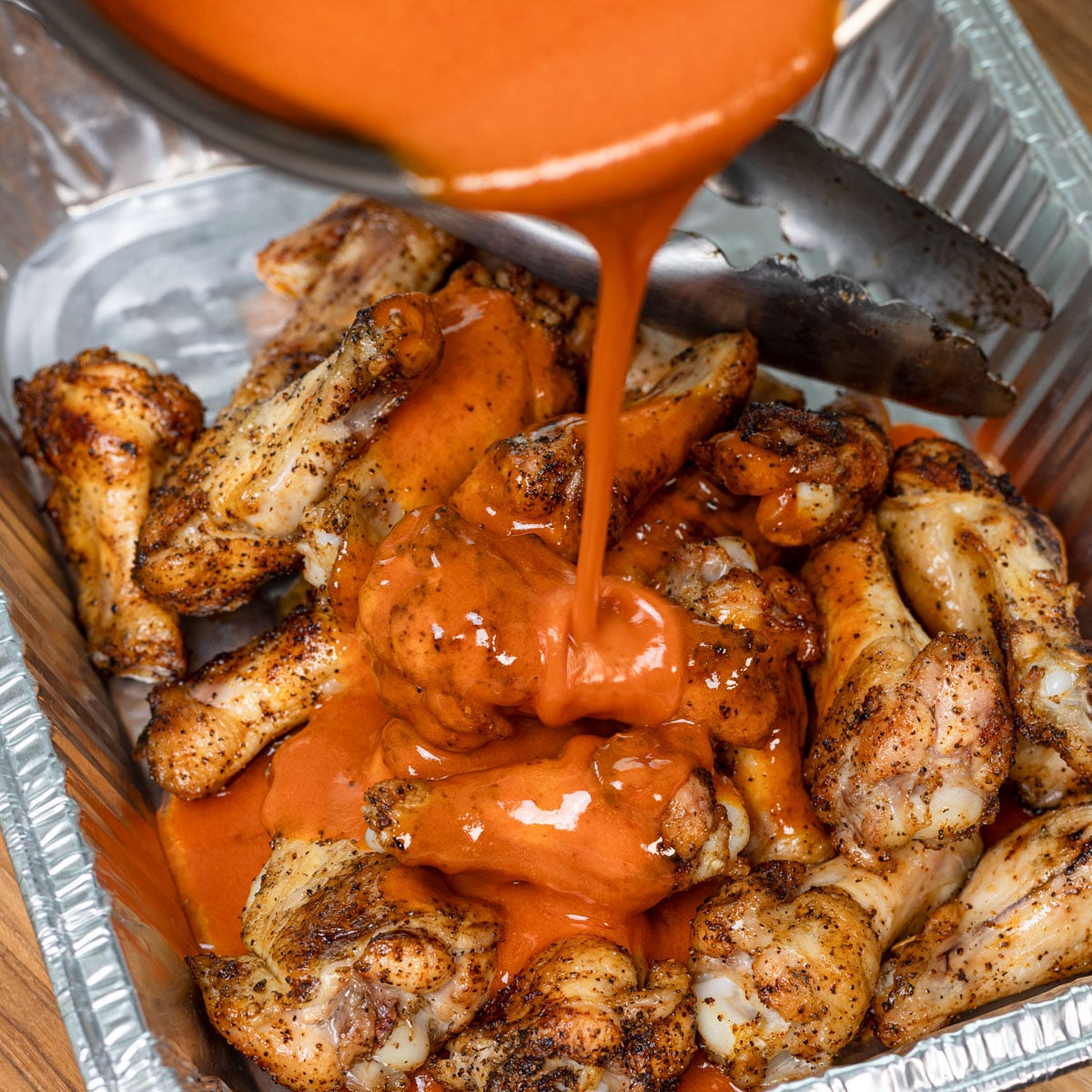
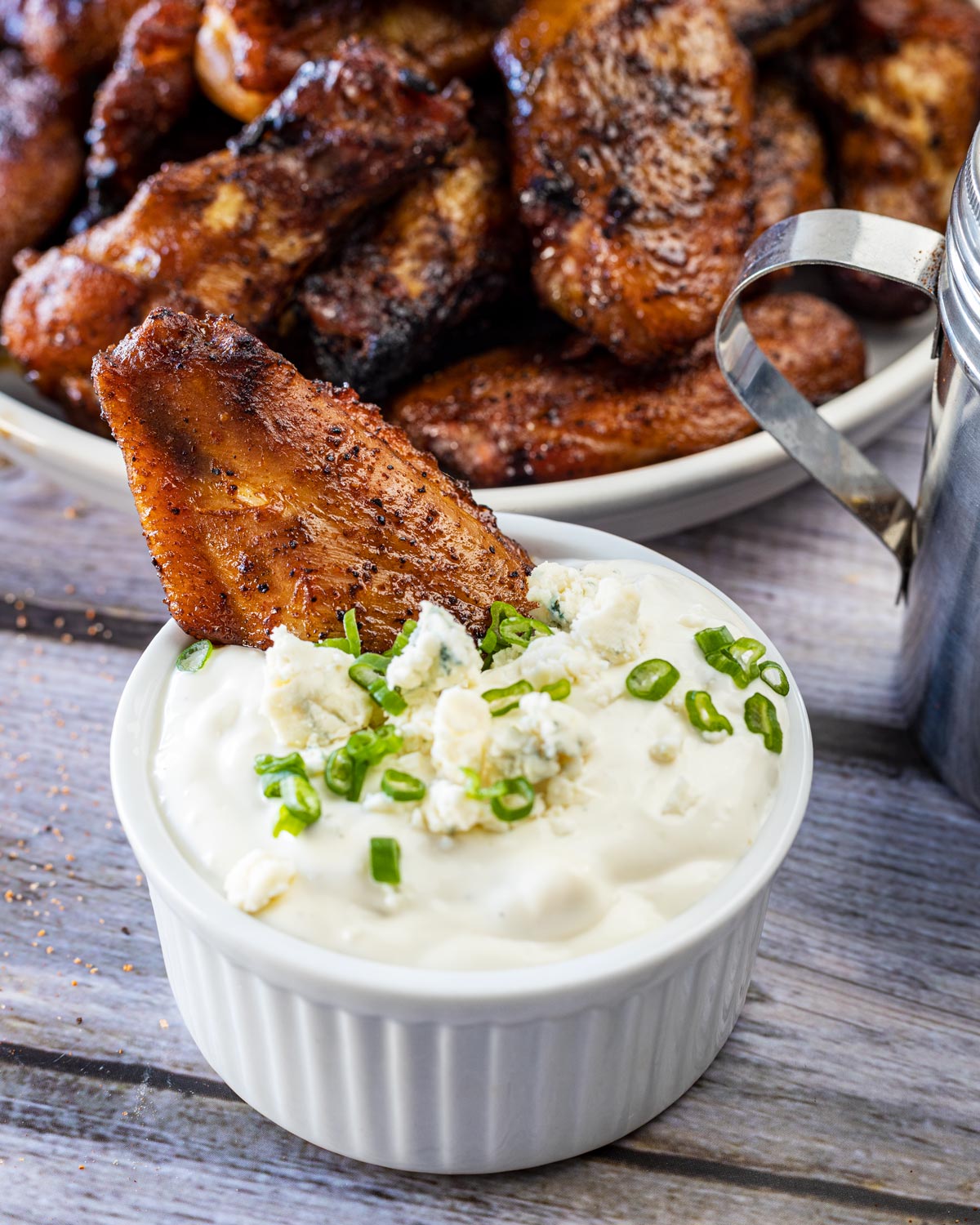
Sauce the wings after the sear so the skin stays crisp, or serve the sauce on the side for dipping.
- Mexican Buffalo Sauce: The classic buffalo heat with a Sonoran chile backbone.
- Spicy Buffalo BBQ Sauce: Buffalo tang with BBQ body for a thicker cling.
- Smoky Sweet Heat Sauce: Sweet up front, smoke and heat on the back end.
- Korean BBQ Sauce: Sticky and savory for a sweet-heat glaze.
- Smoky Sonoran BBQ Sauce: Our bottled sauce for a sweet-smoky finish straight from the shop.
Frequently Asked Questions
About an hour of cook time. The indirect smoke phase runs roughly 45 to 50 minutes to reach 165°F, with about 30 of those minutes undisturbed, then the direct sear takes another 5 to 8 minutes to crisp the skin and finish at 180 to 185°F. Plan for 2 more hours up front to season.
Chicken is safe at 165°F, but wings eat better when pulled at 180 to 185°F. That extra range breaks down the connective tissue in the wing meat so it turns tender instead of rubbery. Use a thermometer rather than going by time.
Three things. Pat the skin completely dry before seasoning, render the fat slowly over indirect heat first, then sear directly over the coals at 400 to 450°F for the last few minutes. The slow render plus the hot finish crisps the skin without any oil bath.
Both, in that order. Cook indirectly on the cool side of a two-zone fire to render fat and add smoke up to 165°F, then move them directly over the coals to crisp and finish. Direct heat the whole way, the way most grilled wing recipes run it, burns the skin before the fat renders.
No, not with this method. Baking powder raises the skin’s pH so it browns faster, and it works if you mix it into the rub thoroughly before it touches the chicken. But I tested wings both ways, and once you render fat over indirect heat and sear at 400 to 450°F, the difference is not noticeable. Applied unevenly it turns chalky and metallic, so it adds room for error for no real gain. I skip it.
If you have the time, yes. Season the wings and leave them uncovered on a rack in the fridge for 8 to 24 hours. The salt carries flavor deeper into the meat than a same-day coat, and the open air dries the skin so it crisps harder over the fire. The same-day oil and rub method still works well when you want wings now.
More Wing Recipes
Same two-zone process, different flavors. This is the cook-once play: run one wing session and split the batch across these.
- Crispy Smoked Buffalo Wings: The low-and-slow buffalo classic when you have the extra time.
- Hot Honey Lemon Pepper Wings: Fresh and spicy, these are a must.
- Nashville Hot Grill-Fried Chicken Wings: Cayenne heat and crunch for the Nashville crowd.
- Grilled Chicken Fajita Wings: Southwest seasoning and lime for a Sonoran spin.
- Grilled Kung Pao Chicken Wings: Sticky, nutty, and spicy for something different off the fire.
- Pollo Asado Rojo Wings: Red adobo marinade for deep chile color and flavor.
- Mexican Buffalo Wings: Buffalo sauce with a Mexican chile twist.
Try It and Tag Us
Make a batch of these, and you’ll make a lot of friends. Tag us on Instagram when you do. Leave a rating below if this helped.
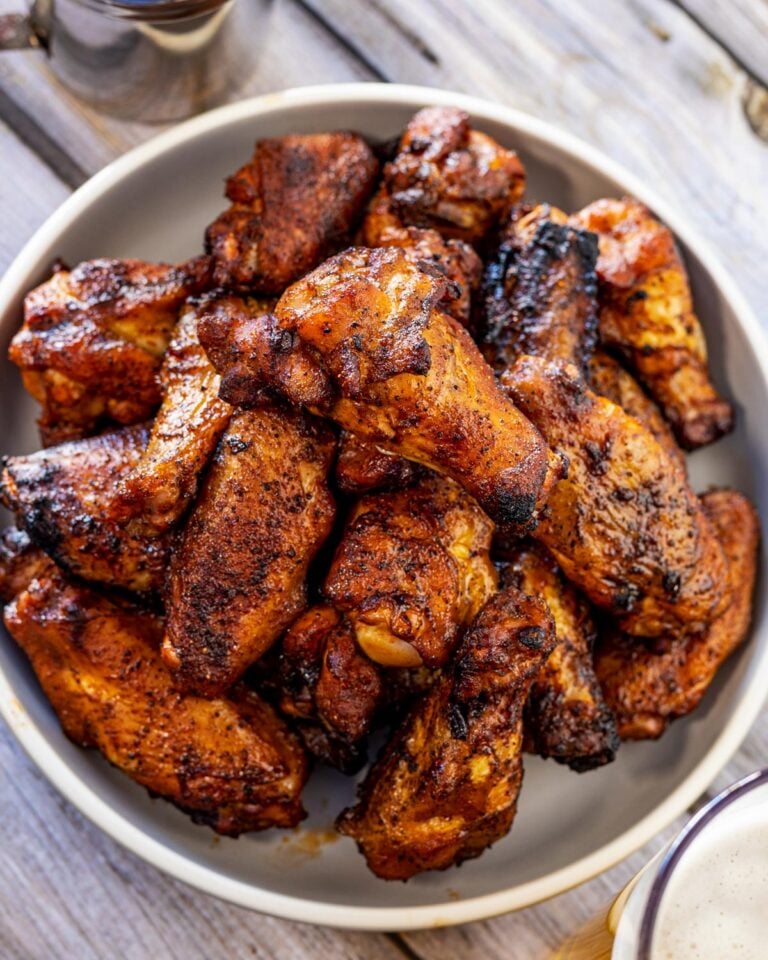
Grilled Chicken Wings
Grilled chicken wings over a two-zone charcoal fire. Smoke first on the indirect side, then sear hot for crispy skin. About an hour over the fire.
- Total Time: 3 hours
- Yield: About 2-3 1x
Ingredients
- 2 pounds of chicken wings
- 2 tablespoons of neutral oil (avocado, grapeseed, vegetable, etc.)
- 1/4 cup of Signature Sweet & Smoky Rub (or preferred rub)
Instructions
- Pat the wings dry. Place in a large resealable bag with the oil, seal, and mix to coat. Add the rub and mix again to coat fully. Refrigerate at least 2 hours, up to overnight.
- Preheat the grill for indirect cooking, about 350 to 375°F with the lid closed. Bank the coals to one side, or pile them in the center on a round kettle, leaving a cool zone.
- Place the wings on the cool side, away from the heat. Close the lid and cook about 30 minutes undisturbed. Rotate as needed and continue another 15 to 20 minutes until they reach 165°F.
- Move the wings directly over the coals to crisp. Cook and flip until they reach 180 to 185°F and the skin is crispy.
- Rest a couple of minutes before serving.

Notes
- For sauced wings, either sauce and sear during the final step, or toss in sauce after the sear. It depends on how saucy you want them.
- Do not skip the oil on the same-day method. It crisps the skin and keeps the wings from sticking.
- For deeper flavor, dry brine: season the wings and rest them uncovered on a rack in the fridge for 8 to 24 hours before grilling.
- Prep Time: 5 minutes
- Marinate Time: 2 hours
- Cook Time: 60 minutes
- Category: Chicken & Poultry
- Method: Grilling
- Cuisine: Appetizer
- Diet: Gluten-Free
Nutrition
- Serving Size: 8 wings
- Calories: 317
- Sugar: 1.2 g
- Sodium: 949.7 mg
- Fat: 15 g
- Carbohydrates: 6.6 g
- Protein: 35.4 g
- Cholesterol: 90.4 mg

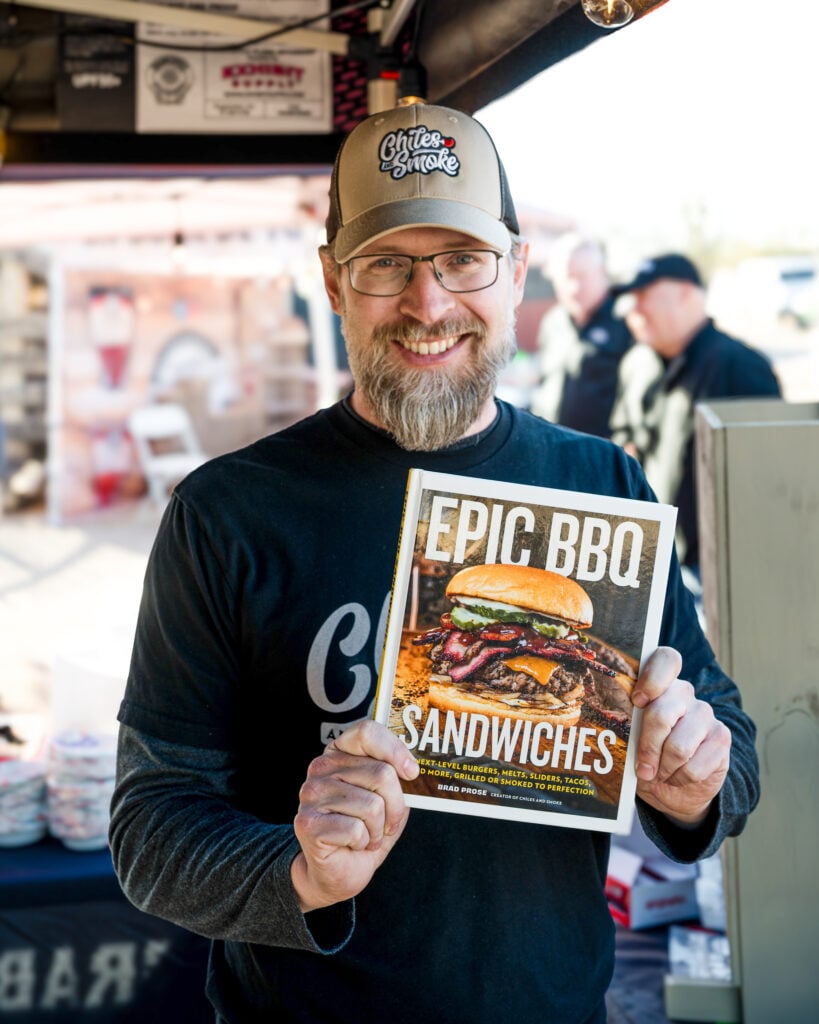
Brad Prose has been crafting recipes over live fire for 20 years. He’s the author of two cookbooks, Chiles and Smoke and Epic BBQ Sandwiches, and the creator of the original smash burger taco, as credited by the Washington Post, TODAY Show, Good Morning America, and Food Network. Brad is the force behind Chiles and Smoke, the home of Sonoran BBQ: bold flavors built around chiles, smoke, and the traditions of the American Southwest. Follow along on Instagram, YouTube, and Facebook.


Best Chicken Wings that I ever ate. My husband remarked this morning how wonderful the wings were at dinner last evening. I followed the recipe and directions to the letter. These will be on the menu weekly until it’s too cold to barbeque. Thanks for sharing your perfect recipe!
Thank you so much Deborah! That’s the kind of feedback I love to see. Cheers my friend!