Korean BBQ Sauce (Sweet Heat with Gochujang)
Last tested May 2026
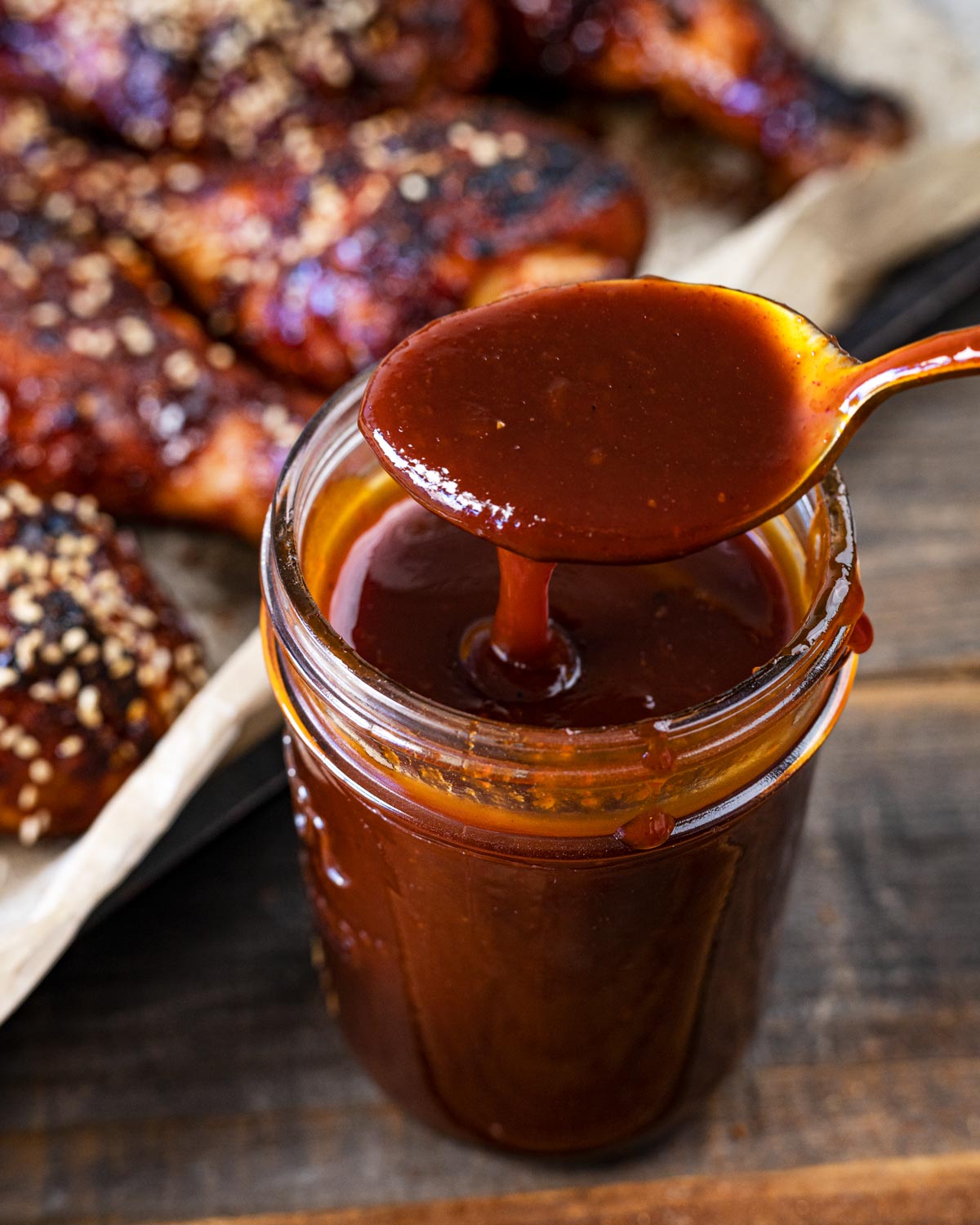
Korean BBQ sauce comes together in one saucepan in about 30 minutes. Whisk gochujang, strawberry preserves, soy, honey, brown sugar, ginger, garlic, and rice wine vinegar. Bring it to a boil, then simmer 20 minutes until it coats the back of a spoon. The strawberry rounds out the fermented chile heat so neither side takes over.
Strawberries and chiles are a perfect pairing, and the bold flavors of gochujang are balanced out with this sauce because of the savory flavors of garlic and ginger, tying them together. It was a tough one to balance, because the strawberries are so sweet, and the gochujang is so spicy and savory. It took me many tries. I’ve found it works best with chicken, pork, or shrimp. The bitter flavors from grilling bring out the best in this sauce.
Try this with Korean BBQ chicken drumsticks or chicken wings!
Why This Recipe Works
- Sweet heat that stays balanced: gochujang is fermented, so its spice builds slowly and deep instead of sharp, and the fruit sugars in the strawberry preserves sit on top to keep it in check. Neither flavor wins, but you do.
- It clings to whatever you brush it on: simmering cooks off the water and concentrates the sugars in the preserves and brown sugar, so the sauce turns thick and sticky and grips grilled meat instead of sliding off into the fire.
- Fresh aromatics you can taste: grating the ginger and garlic raw into the pan releases their oils straight into the sauce, a brighter hit than dried powders give.
Key Ingredients You’ll Need
Most of this is common pantry stuff. The one item to track down ahead of time is gochujang.
- Gochujang: the fermented chile paste that defines the sauce. You need 1/2 cup, and there’s no real substitute, so grab a tub before you start. Asian markets carry it cheapest, or order it online.
- Strawberry preserves: the sweet base, and a classic match for gochujang. Jam works too. The texture just runs a little looser.
- Grated ginger and garlic: fresh only. I’ve tested the dried versions and the flavor falls flat.
- Rice wine vinegar: use plain, not the seasoned kind. The tang reads cleaner than white or red wine vinegar here.
How to Make Korean BBQ Sauce: Step by Step
Step 1: Combine everything and bring it to a boil.
Add all the ingredients to a medium saucepan over medium-high heat. Whisk as it comes up so the sugars dissolve and don’t settle on the bottom. This only takes a few minutes.
Step 2: Drop to a simmer and reduce.
Lower the heat and simmer 20 to 25 minutes, whisking now and then. It’s ready when it coats the back of a spoon. It keeps thickening as it cools, so I usually pull it at 20 minutes rather than 25.
Can You Use Korean BBQ Sauce as a Marinade?
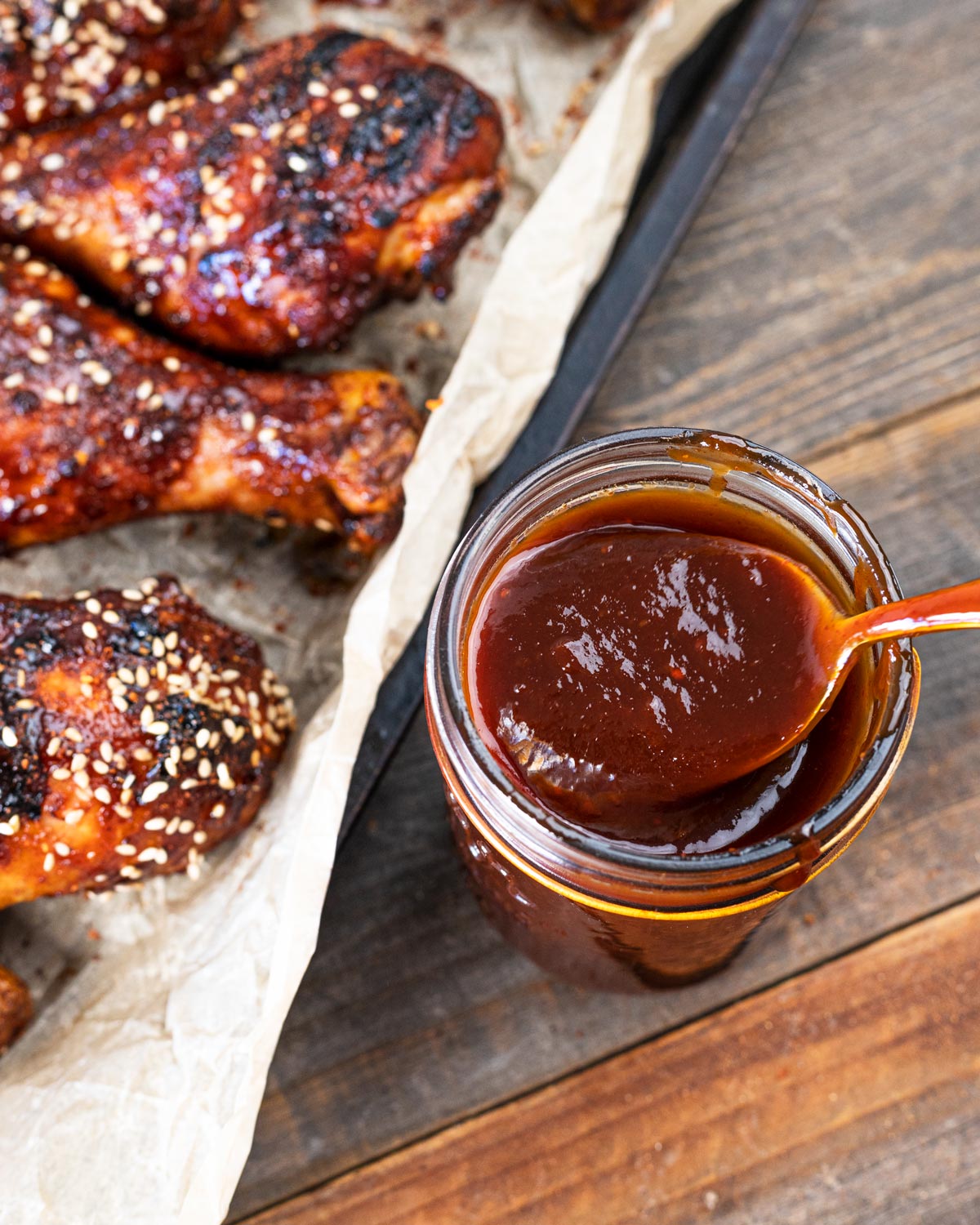
You can, but it works better as a glaze. The sauce is sugar-heavy, so if you marinate in it and then grill over high heat, the sugars scorch before the meat is done. Brush it on in the last 5 minutes of the cook instead, or marinate in a thinned-down portion and save the full-strength sauce for finishing.
Make-Ahead and Storage
Store the cooled sauce in an airtight jar in the refrigerator, where it keeps 10 to 14 days. The vinegar and sugar act as natural preservatives, but there are no commercial stabilizers, so use it within two weeks. It also freezes for up to 3 months. Thaw it in the fridge and whisk it back together before basting.
Pro Tips from the Pit
- Pull it early: the sauce sets up noticeably thicker once it’s cold, so stop at the point where it just coats a spoon.
- Glaze late: brush it on in the final 5 minutes so the sugars caramelize instead of burning.
- Warm before basting: a cold jar brushes on thick and unevenly. A few seconds of heat loosens it.
- Double it: it keeps for two weeks and goes on almost everything, so a single batch rarely lasts.
What to Use It On
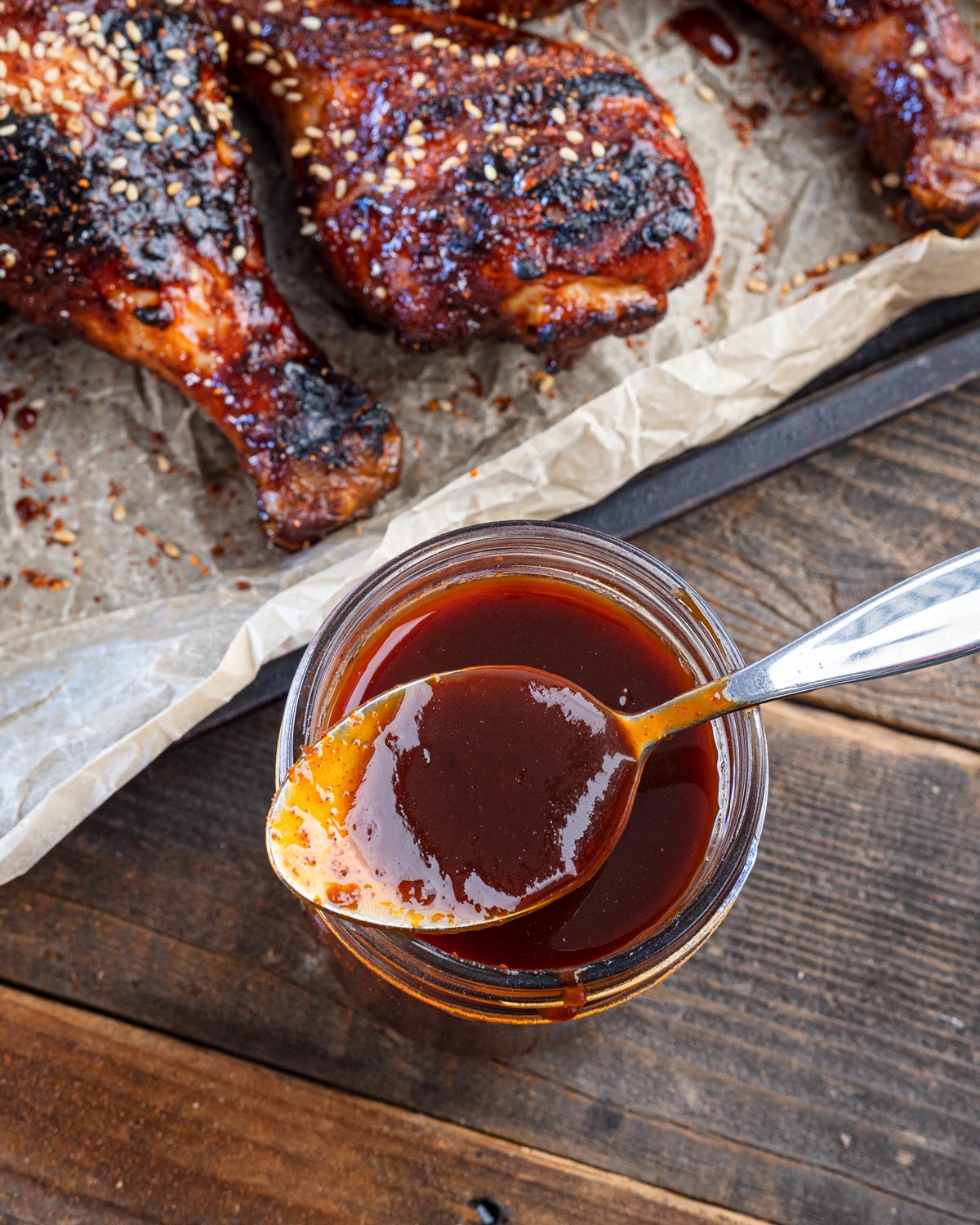
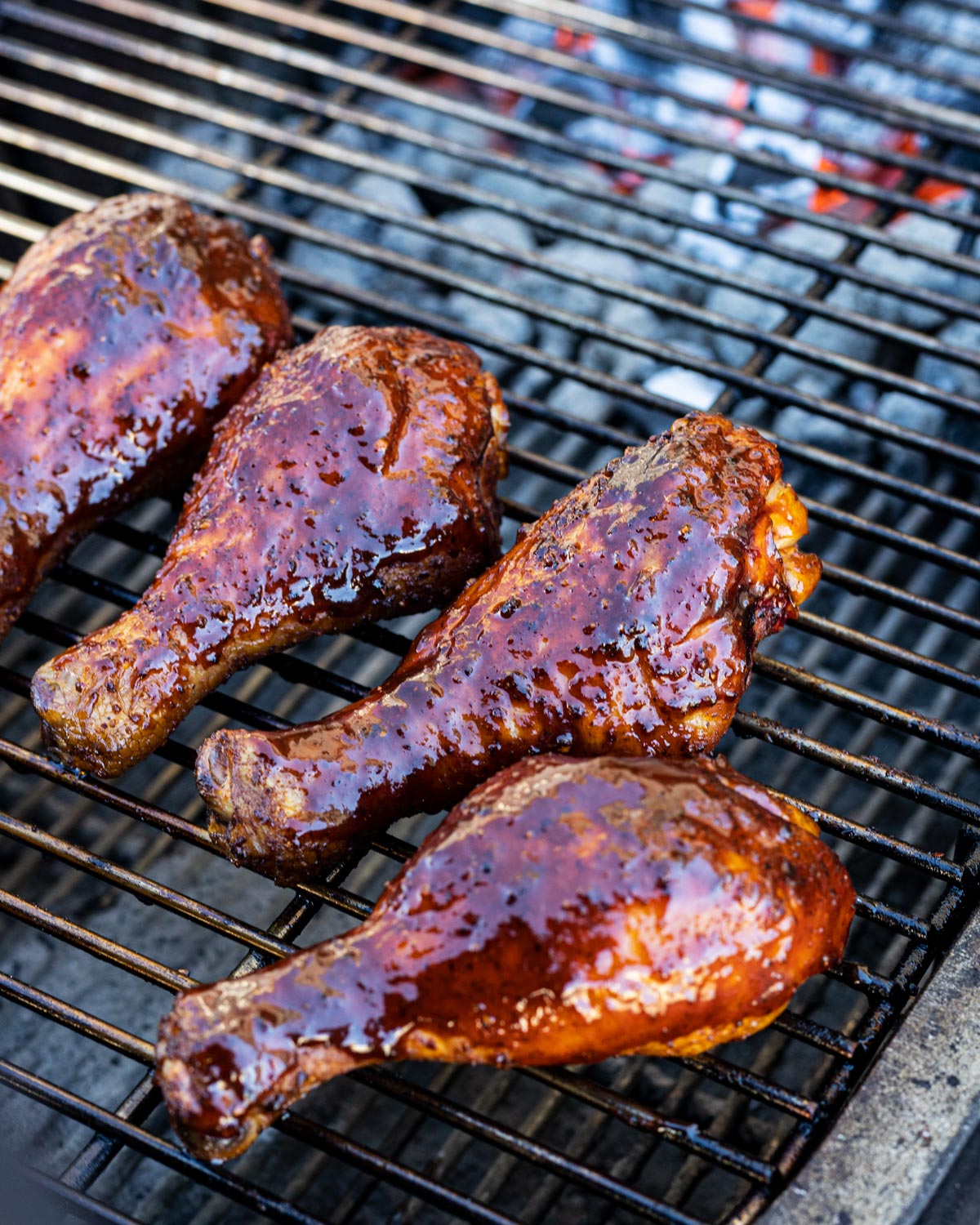
This sauce was built for Korean BBQ chicken drumsticks, where it glazes the skin in the last few minutes and caramelizes over the coals. That’s the recipe it stars in, but it carries the same weight on any smoked or shredded meat.
Brush or fold it into smoked pulled chicken, smoked pulled pork, or smoked pulled beef while the meat is still warm so it soaks in. It also shines on grilled pork belly, where the rendered fat and the sweet heat play off each other. For the deepest flavor, season the meat with Korean BBQ seasoning first, then finish with the sauce so the rub and the glaze build on each other.
Frequently Asked Questions
Korean BBQ sauce is built on gochujang, a fermented Korean chile paste, blended with sweeteners and aromatics. This version layers strawberry preserves, soy sauce, honey, ketchup, and brown sugar with fresh ginger and garlic, then loosens it with rice wine vinegar and a splash of water. The gochujang sets the flavor, and the fruit and sugar balance its heat.
This Korean BBQ sauce lands at a medium heat, not a punishing one. Gochujang brings a deep, fermented spice rather than a sharp bite, and the strawberry and brown sugar soften it further. For a milder batch, cut the gochujang to 1/3 cup. For more heat, stir in a teaspoon of gochugaru at the end.
There is no true substitute for gochujang here. Its fermented chile depth is the backbone of the sauce, and nothing off the shelf matches it. If your store doesn’t stock it, most Asian markets carry it, or you can order it online. Buy a tub rather than a small jar, since this recipe needs a full 1/2 cup.
Korean BBQ sauce is a thick, gochujang-based glaze you brush on during cooking. Bulgogi sauce is a thinner soy-and-pear marinade you soak thin beef in before grilling. This sauce leans spicy and sweet from the fermented chile and strawberry, while bulgogi runs savory and mild. They do different jobs, so I keep both on hand.
More Sauces You’ll Love
- Spicy Buffalo BBQ Sauce: the move when you want heat and tang instead of sweet heat.
- Sweet Honey Bourbon BBQ Sauce: a sweeter glaze for ribs and chicken.
- Maple Chipotle BBQ Sauce: smoky and sweet with a chipotle backbone.
- Hatch Chile Chimichurri: a bright, fresh counter to the heavier glazes.
- Best Homemade BBQ Sauces: the full roundup if you’re stocking the fridge.
Try It and Tag Us
Made this Korean BBQ sauce? Leave a star rating and a comment below, and tell me what you glazed it on. Tag us on Instagram when you do.
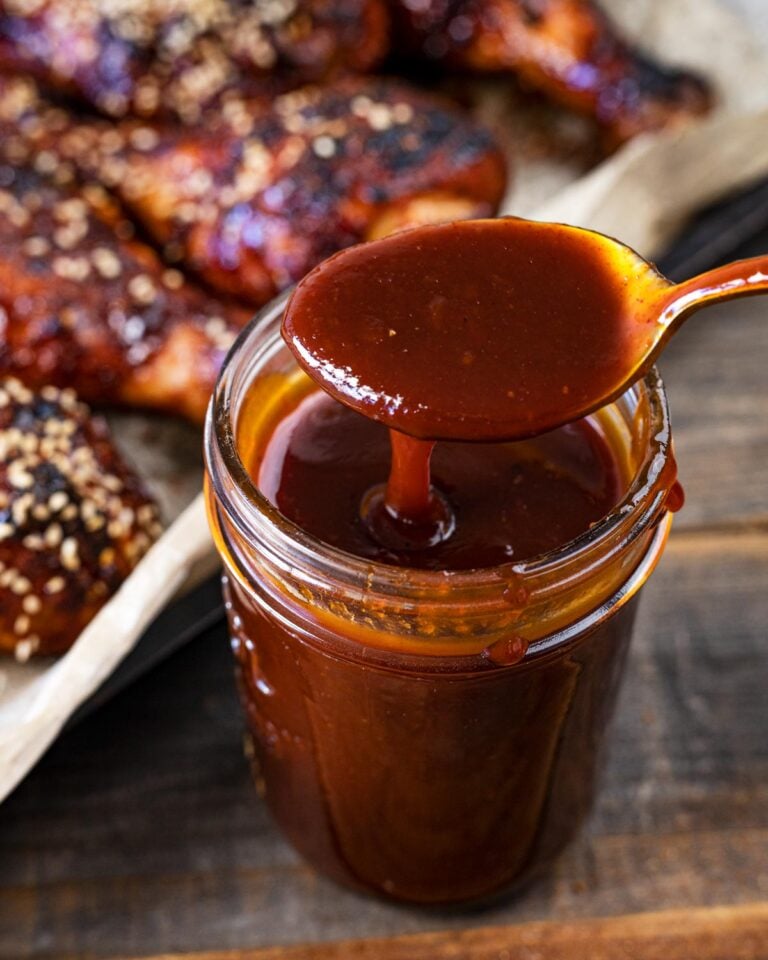
Korean BBQ Sauce
Chiles and strawberries come together for this sweet, savory Korean BBQ sauce. Baste it on chicken, pork, seafood, or anything that needs a kick of sweet heat.
- Total Time: 30
- Yield: About 2 cups 1x
Ingredients
- 1 clove grated garlic
- 1 tablespoon grated ginger
- 1 tablespoon honey
- 2 tablespoons ketchup
- 2 tablespoons soy sauce
- 1/3 cup strawberry preserves
- 1/2 cup gochujang
- 1/4 cup brown sugar
- 3 tablespoons rice wine vinegar
- 1/4 cup water
Instructions
- Combine all ingredients in a medium saucepan and bring to a boil. Whisk so the sugars dissolve and don’t settle on the bottom.
- Reduce to a low simmer for 20 to 25 minutes, whisking periodically, until thickened. The sauce should coat the back of a spoon and will keep thickening as it cools.
- Store in an airtight jar once cooled. Keeps freshest for 10 to 14 days.
Notes
- There is no substitute for the gochujang, so have it on hand before you start.
- Strawberry jam works in place of preserves. The texture runs slightly looser.
- Brush it on in the last 5 minutes of the cook so the sugars caramelize instead of burning.
- Prep Time: 5
- Cook Time: 25
- Category: Sauces & Salsas
- Method: Stovetop
- Cuisine: Korean, Korean BBQ
Nutrition
- Serving Size: 2 tablespoons
- Calories: 47
- Sugar: 8.9 g
- Sodium: 220.7 mg
- Fat: 0.1 g
- Carbohydrates: 11.2 g
- Protein: 0.4 g
- Cholesterol: 0 mg

Brad Prose has been crafting recipes over live fire for 20 years. He’s the author of two cookbooks, Chiles and Smoke and Epic BBQ Sandwiches, and the creator of the original smash burger taco, as credited by the Washington Post, TODAY Show, Good Morning America, and Food Network. Brad is the force behind Chiles and Smoke, the home of Sonoran BBQ: bold flavors built around chiles, smoke, and the traditions of the American Southwest. Follow along on Instagram, YouTube, and Facebook.