Smoked Buffalo Wings Recipe (Crispy Skin Method)
Last tested June 2026
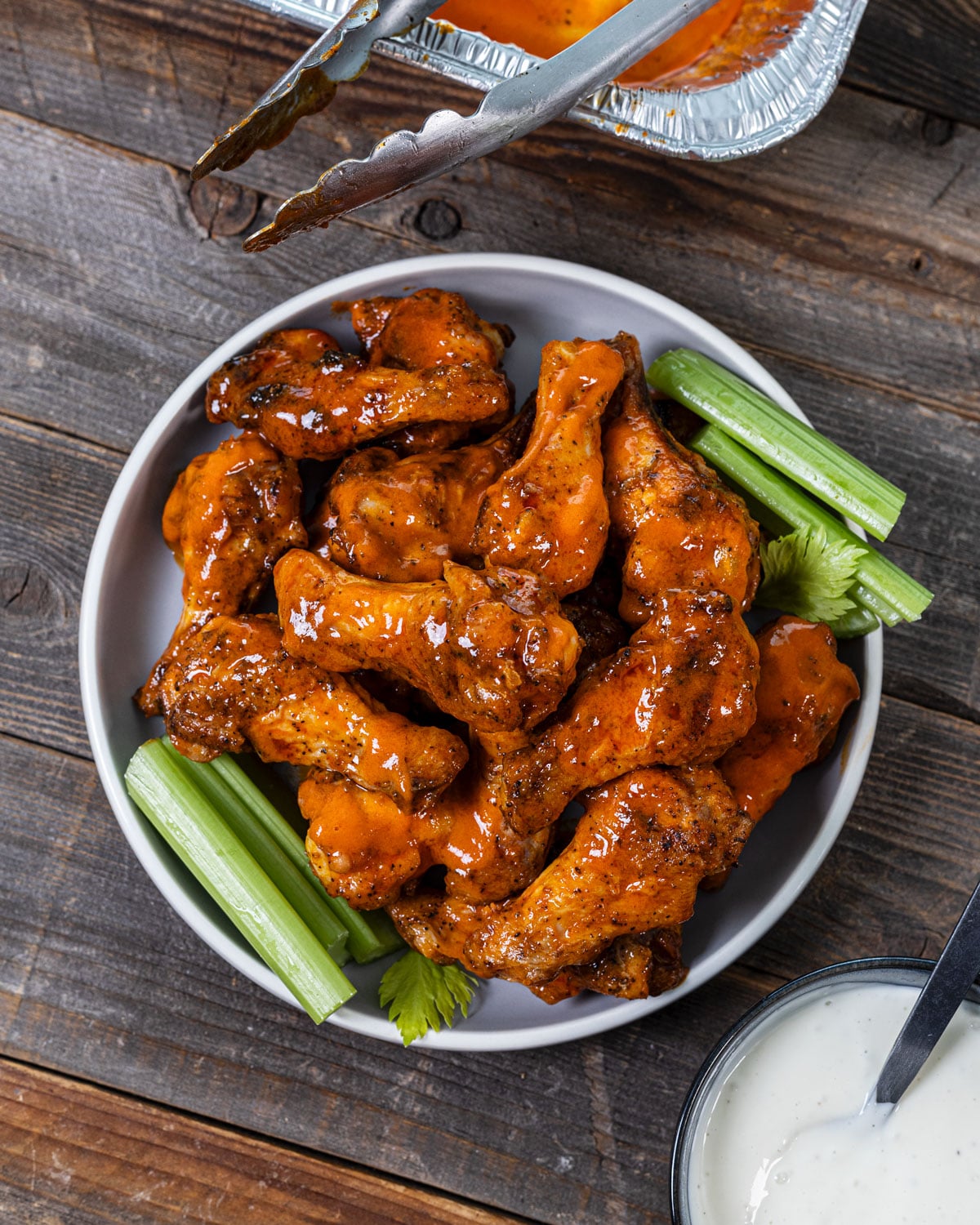
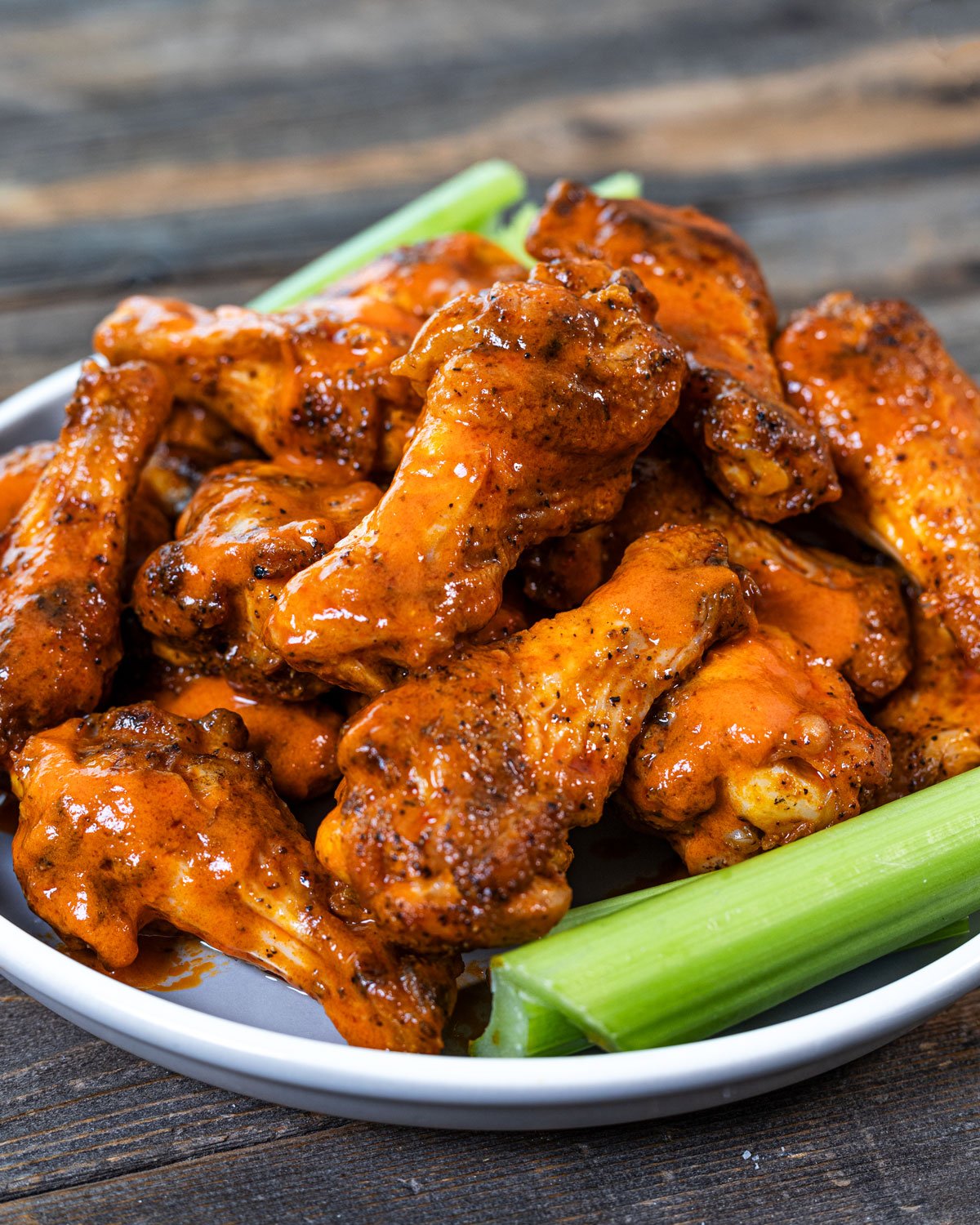
Smoked buffalo wings get real wood-fired flavor and a crispy skin by cooking low and indirect first, then finishing hot and direct over the coals. Toss them in a homemade buffalo sauce right out of the smoker and you get something a deep fryer can’t touch.
Wings are the thing I make most off the grill, more variations than any other protein on this site, and crispy skin is non-negotiable no matter what sauce ends up on them. Buffalo is the one I keep coming back to.
I’ve made enough batches to know the two things that actually matter: dry the skin before they hit the grill, and don’t skip the direct-heat sear at the end. Without that sear, you end up with smoky wings and soft skin instead of the crispy bite you’re after.
Love wings? Check out all of our tips for Grilled Chicken Wings in this comprehensive guide, along with flavor suggestions.
Why This Method Works
- Crispy skin every time: finishing the wings directly over the coals until they hit 180 to 185°F renders out the remaining fat under the skin, which is what turns rubbery smoked skin into something genuinely crispy.
- Real smoke flavor a fryer can’t touch: cooking the wings indirectly at 350 to 375°F for the first 45 minutes lets wood smoke penetrate the skin before any direct heat hits it, something that’s impossible in oil.
- Creamy buffalo sauce that clings instead of pooling: mounting the hot sauce base with cold cubed butter, a beurre monte, keeps the emulsion from breaking, so the sauce coats the wings instead of separating into an oily layer underneath.
Recommended Equipment
This recipe needs a grill or smoker capable of running both indirect and direct heat, since the whole method depends on moving from a steady indirect smoke to a hot direct sear. Here’s what I use.
- Charcoal grill or pellet smoker: A kettle grill works well for the two-zone setup this recipe relies on, coals on one side for the indirect smoke phase, direct heat on the other for the crisp. A pellet smoker handles the indirect phase easily but won’t give you true direct-flame searing.
- Charcoal chimney: The fastest way to light charcoal without lighter fluid affecting the flavor of the wings.
- Instant-read thermometer: Non-negotiable here. You’re pulling wings at 180 to 185°F, well past the standard 165°F safe minimum, and you won’t hit that target consistently by eye.
- Wire rack and baking sheet: Used for the dry brine step. Air circulating under the wings while they sit in the fridge is what actually dries the skin out.
- Metal tongs: For moving wings to the direct side and tossing them in sauce without tearing the skin.
Key Ingredients
- Chicken wings: Go for whole wings or a flat/drumette mix you’ve separated yourself. Pre-cut wing sections from the store work fine too, just account for slightly shorter cook time on flats.
- Wood for the smoker: Hickory or oak both work well here without overpowering the buffalo sauce. Save anything stronger, like mesquite, for beef.
- Frank’s or Crystal hot sauce: Either works as the buffalo sauce base. Crystal runs a touch more vinegar-forward if you want sharper tang. If you want the full breakdown on building the sauce itself, my Creamy Buffalo Sauce post covers the method in more depth.
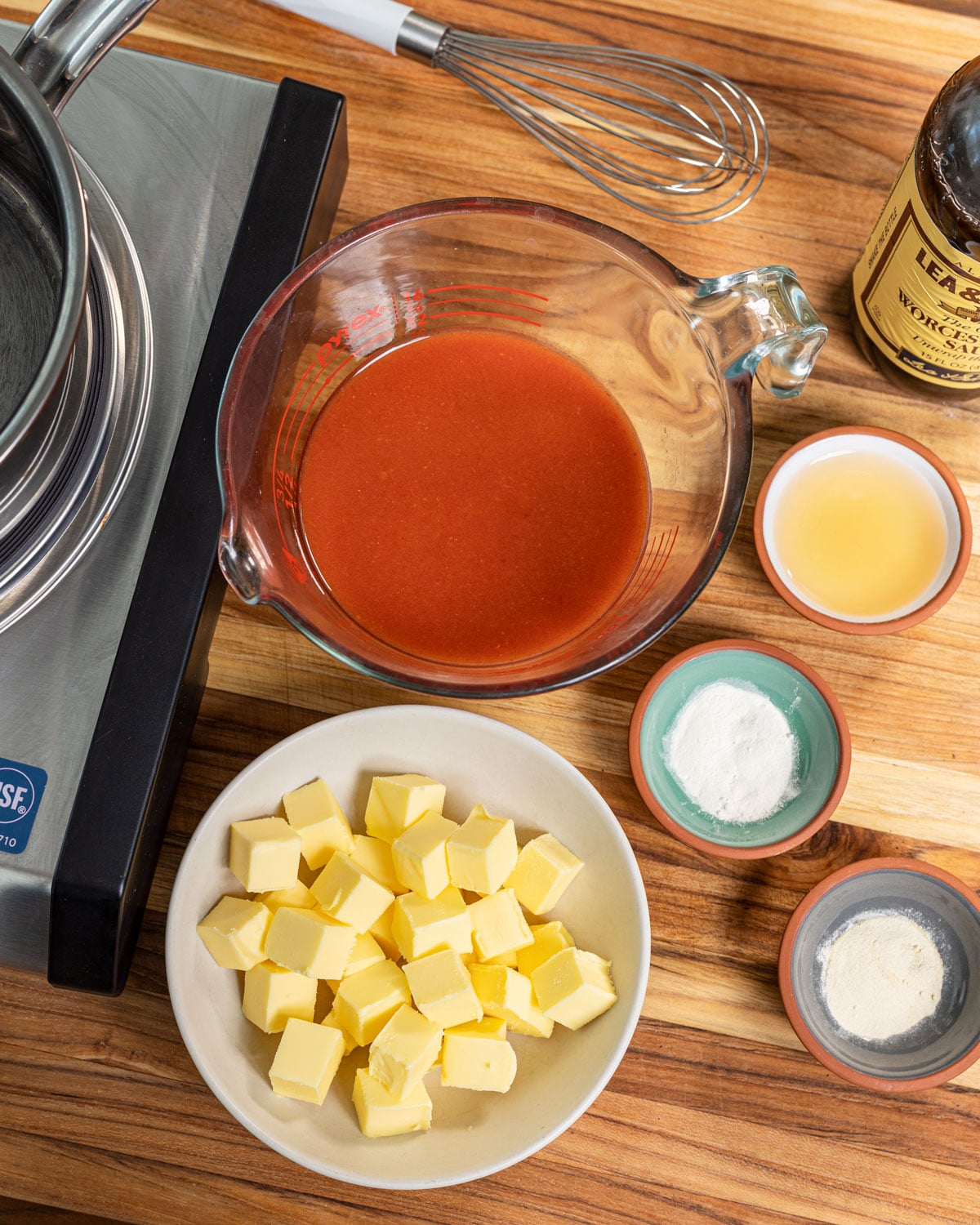
- Cold unsalted butter, cubed: Cold butter is non-negotiable here. Room temp butter melts too fast and won’t emulsify the sauce properly.
How to Smoke Buffalo Wings: Step by Step
Step 1: Season and Dry Brine the Wings
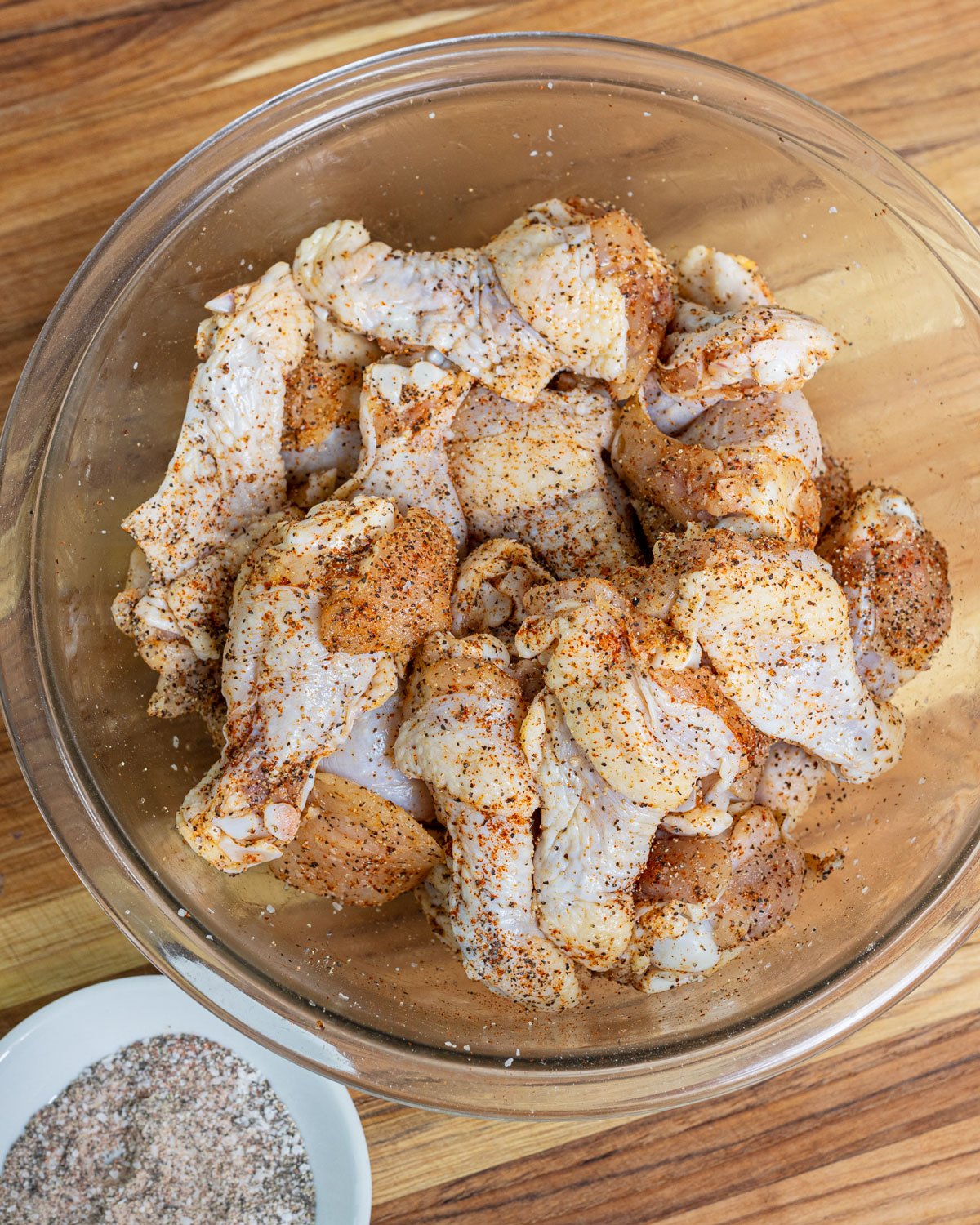
Pat the wings completely dry with paper towels. This step does more for crispy skin than anything else in the process. Mix the kosher salt, black pepper, smoked paprika, onion powder, and garlic powder, then coat the wings evenly.
Lay them in a single layer on a wire rack over a baking sheet and refrigerate uncovered for at least 2 hours, up to overnight. The fridge air dries the skin further while the salt works into the meat.
Step 2: Build the Buffalo Sauce
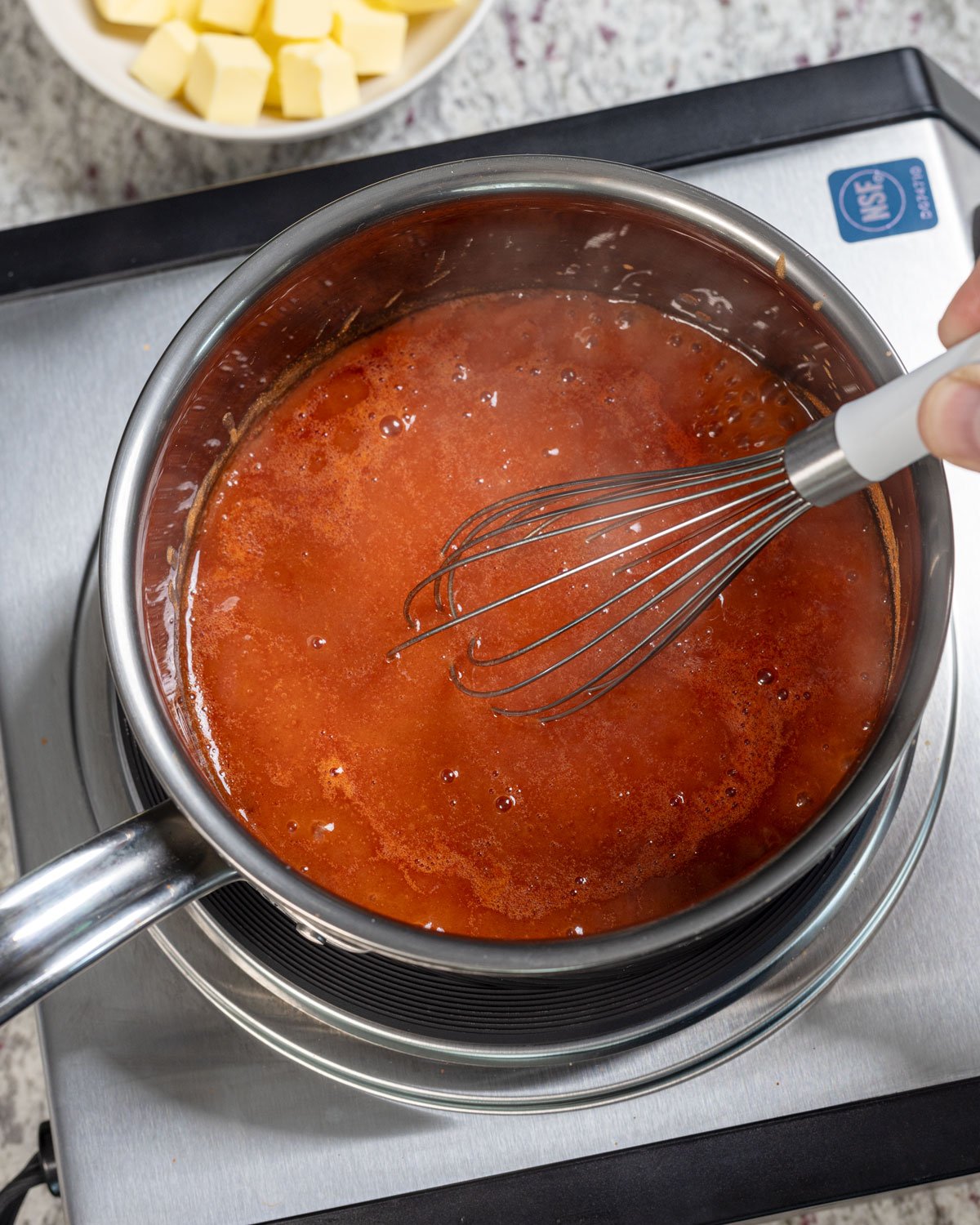
Combine the hot sauce, apple cider vinegar, garlic powder, onion powder, and Worcestershire in a saucepot over medium-low heat. Whisk until it comes to a low simmer.
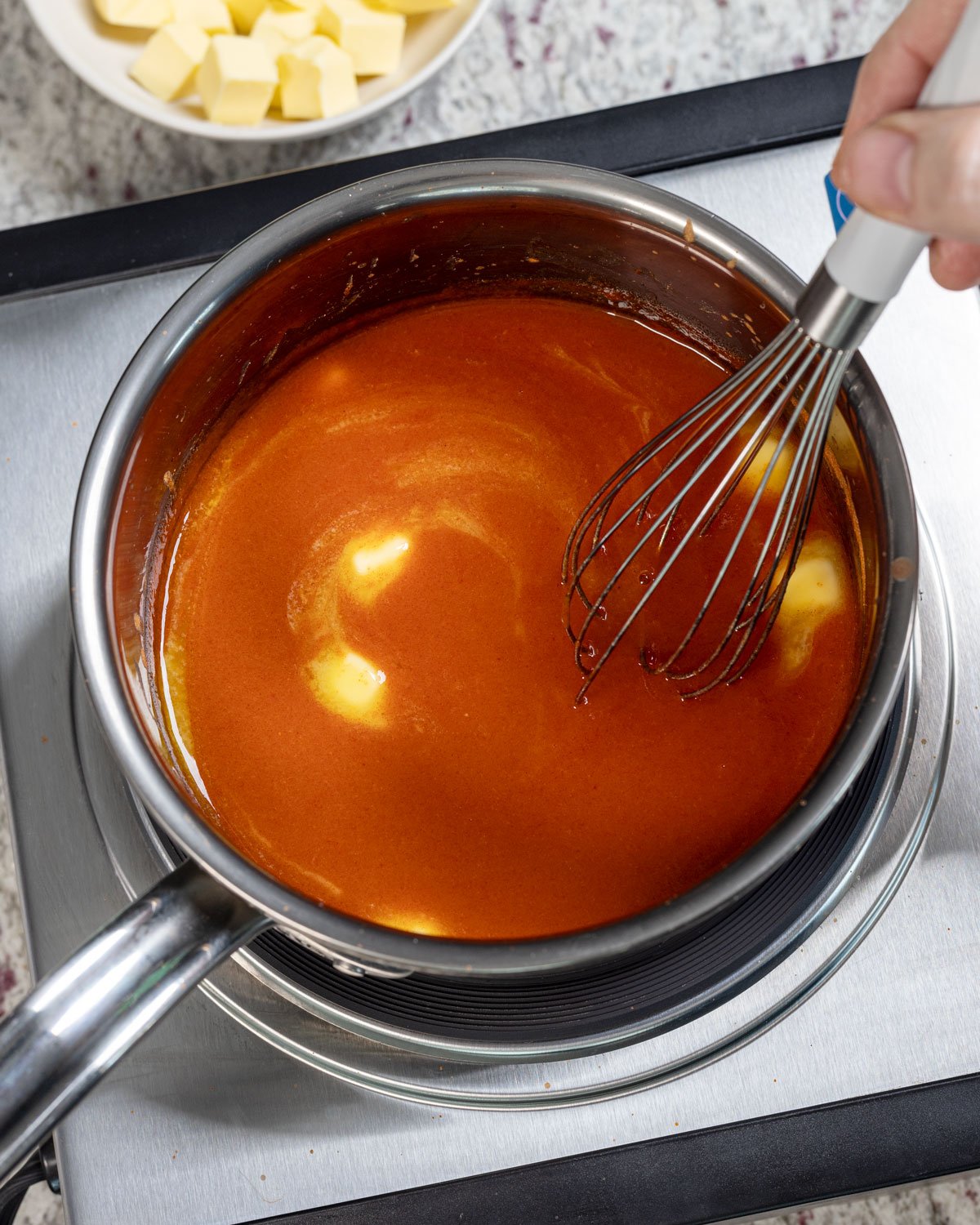
Drop the heat to its lowest setting and start adding cold butter cubes a few at a time, whisking until each batch melts before adding more. This keeps the emulsion stable.
Once all the butter is in, kill the heat and whisk for another minute. Taste and adjust salt. The sauce holds in the fridge for 7 to 10 days.
Step 3: Smoke the Wings Indirectly
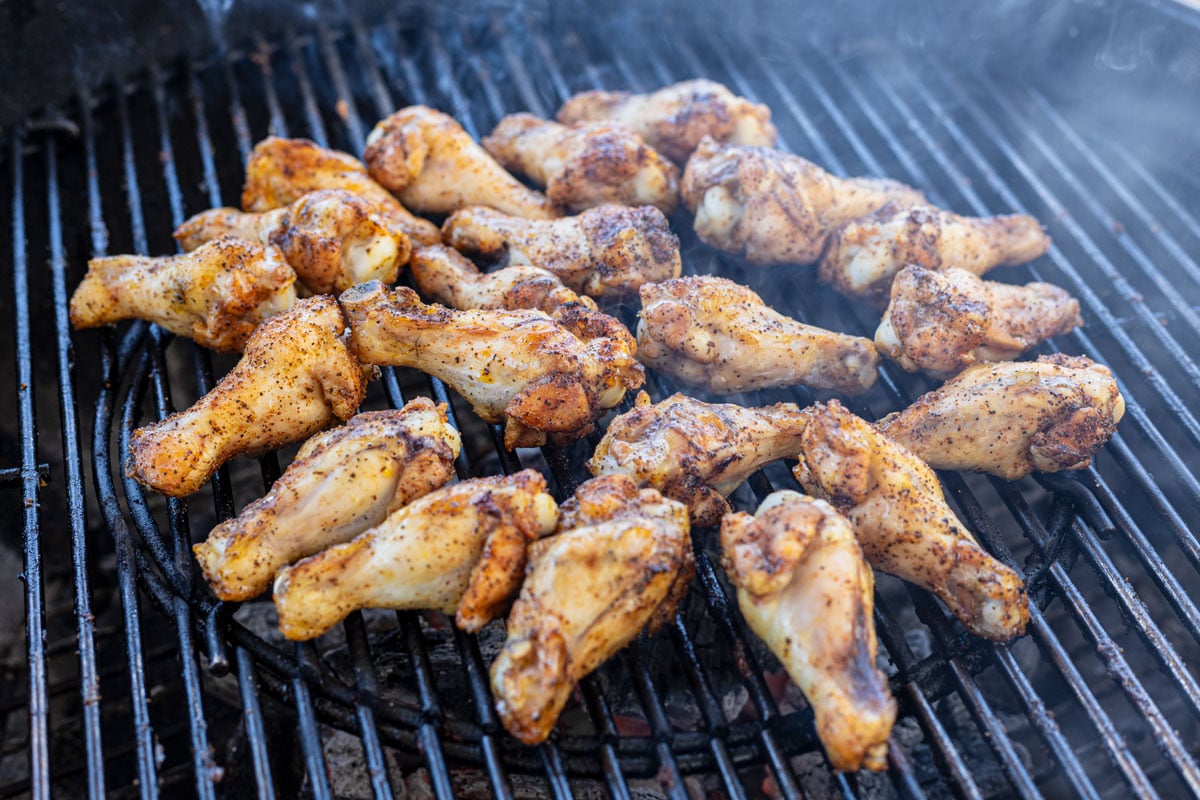
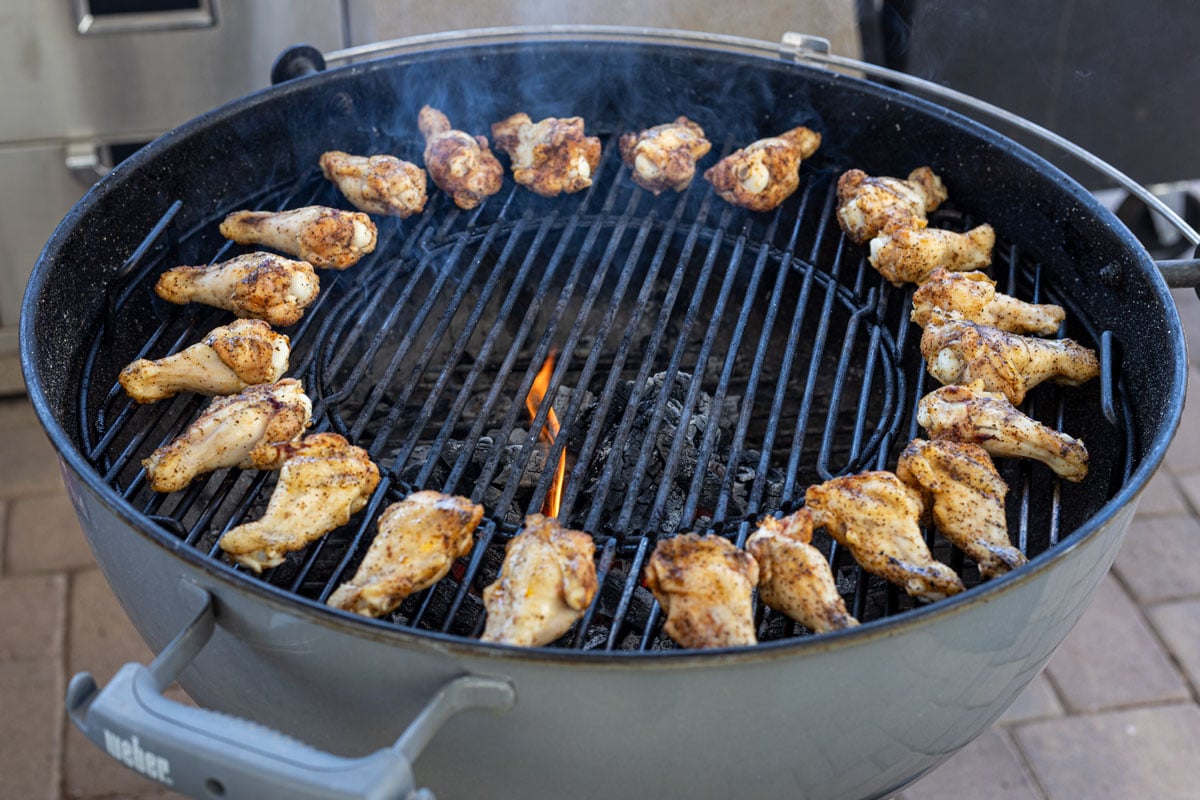
Set up your grill for indirect heat at 350 to 375°F. Coals on one side, wings on the cool side, lid closed. For a kettle grill, pile coals in the center and use the outer ring.
Let the wings cook undisturbed for the first 30 minutes, then check and rotate as needed. Total indirect time runs 45 to 60 minutes depending on wing size, until they hit 165°F internal.
Step 4: Crisp Over Direct Heat
Move the wings directly over the coals. Flip and cook until the skin is crisp and the internal temp reaches 180 to 185°F, about 5 to 8 minutes depending on your fire. This step is what separates crispy smoked wings from soft, smoky ones. Don’t skip it.
Using a pellet grill? Crank the heat up to 400°F for the last few minutes to crisp them up. Make sure the wings are on the lower grate, closest to the heat.
Step 5: Sauce and Serve
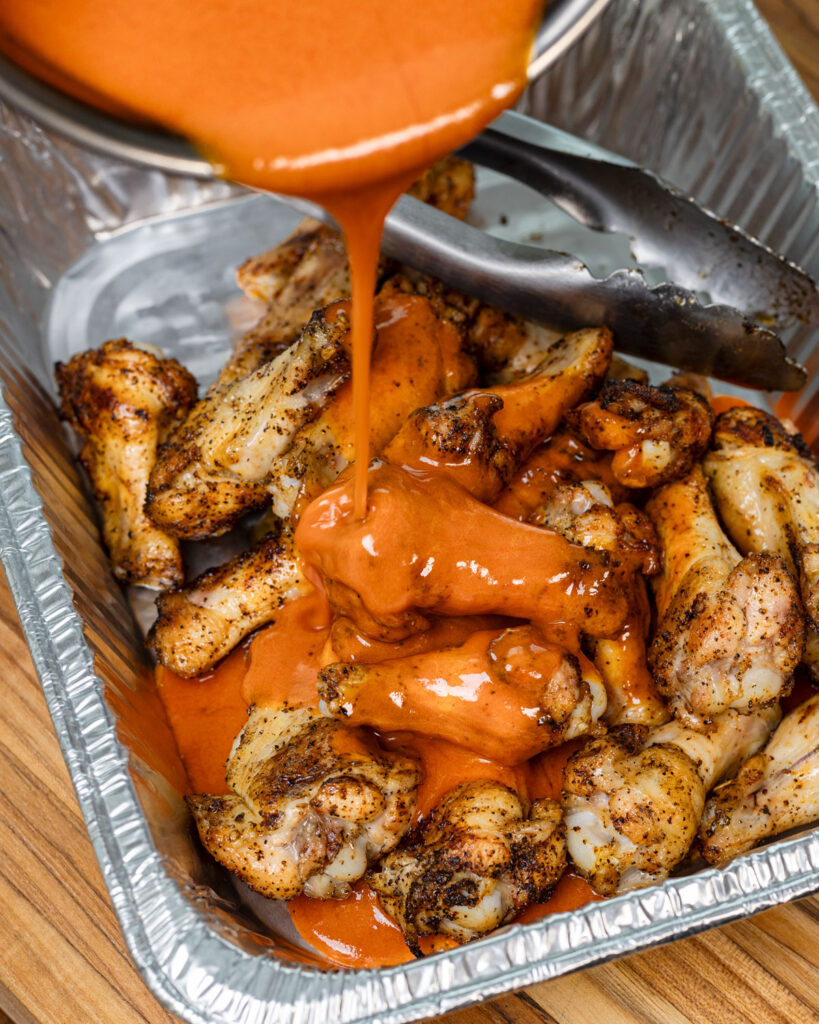
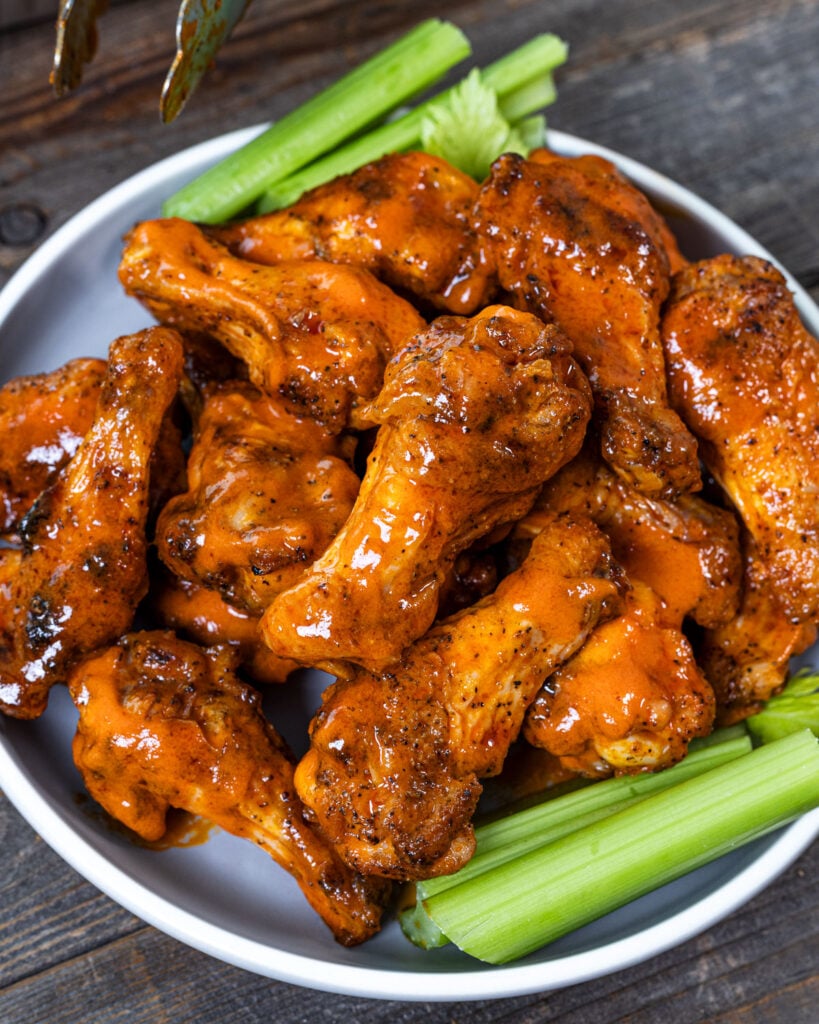
Toss the hot wings in just enough buffalo sauce to coat generously. Serve immediately while the skin is still crisp.
Make-Ahead and Storage
The buffalo sauce holds in the fridge for 7 to 10 days, so make it a day or two ahead of a party without losing quality. The wings themselves are best smoked and sauced fresh. If you need to prep ahead, dry brine the wings the night before and smoke them earlier in the day, then crisp and sauce right before serving so the skin doesn’t go soft from sitting.
Leftover sauced wings keep in the fridge for 2 to 3 days. Reheat in a 400°F oven for 8 to 10 minutes to bring the skin back, or in an air fryer at 365°F for 12 to 14 minutes.
Pro Tips from the Pit
- Dry brine if you have the time: An overnight dry brine in the fridge does more for crispy skin than any amount of extra cook time.
- Don’t skip the direct sear: Smoking wings all the way through without finishing over direct heat leaves you with soft skin. The sear is the whole point.
- Add the butter cold: Cold cubed butter whisked in slowly is what keeps the buffalo sauce from breaking into an oily mess.
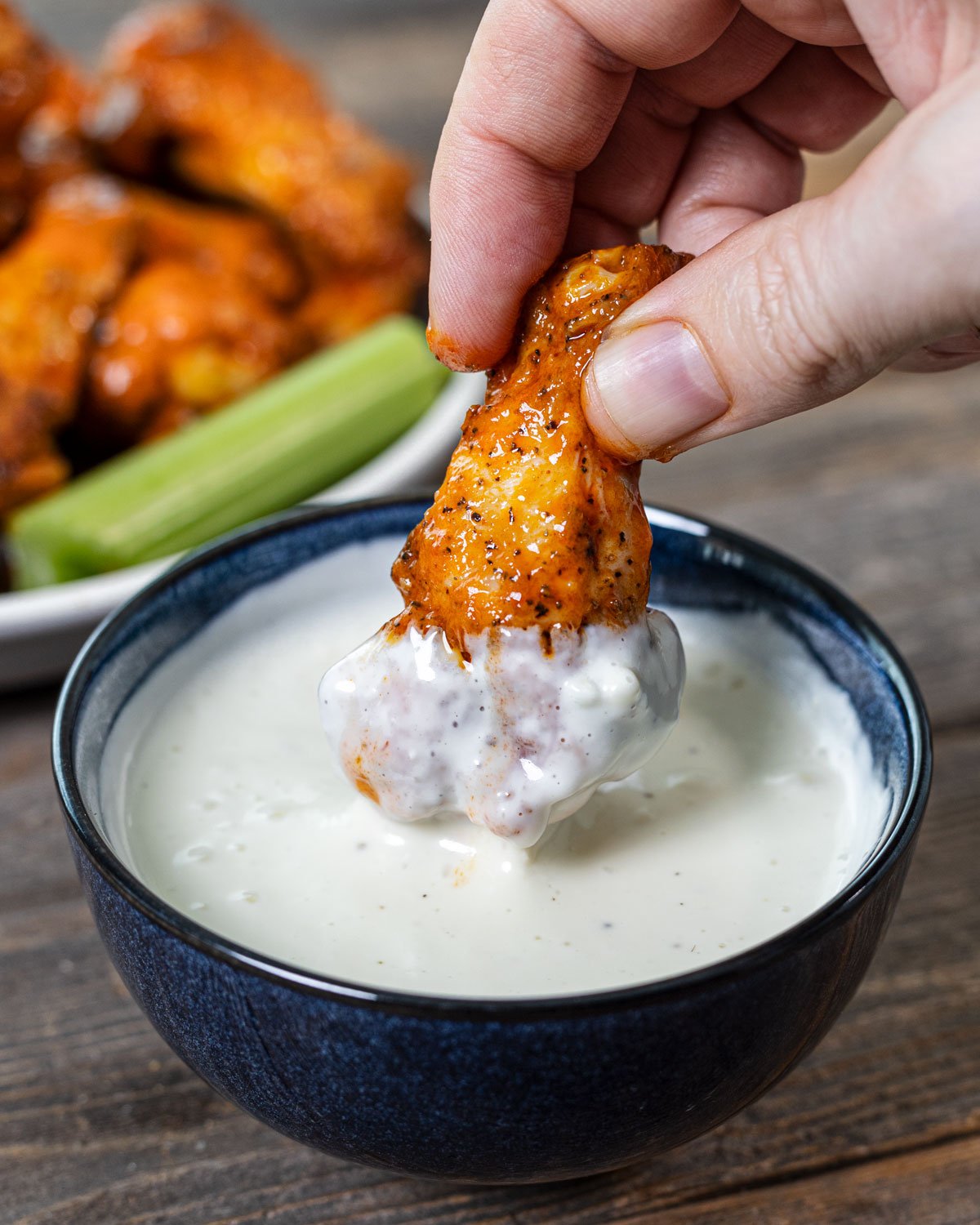
Optional Toppings
- Homemade Blue Cheese Dressing: the classic cooling dip, serve alongside for guests who want to control their own heat.
- BBQ Ranch Dressing: a smokier alternative to blue cheese if you want something with more backyard flavor.
- Quick Pickled Celery: a sharper, more interesting take on the standard celery stick.
- Smoky Sonoran BBQ Sauce: a drizzle alongside the buffalo sauce for a smokier, less vinegar-forward option on the table.
Frequently Asked Questions
About 45 to 60 minutes total over indirect heat at 350 to 375°F, until they hit 165°F internal. Exact time depends on wing size and how steady your fire runs. From there, a 5 to 8 minute direct sear crisps the skin and brings them up to 180 to 185°F.
Pull them at 180 to 185°F internal, not the standard 165°F safe minimum. Wings carry more connective tissue than other cuts, and the extra 15 to 20 degrees renders it out, giving you better texture and crispier skin.
No, not with this method. A lot of smoked wing recipes lean on baking powder or cornstarch to dry out the skin, but the dry brine and direct-heat sear here do that job without either one. Pat the wings dry, salt them, and let them sit uncovered in the fridge, and the skin gets just as crispy without an extra ingredient in the rub.
Either works. Whole wings hold together better on the grate and look better on a platter, but flats and drumettes cook a few minutes faster and more evenly since they’re a more uniform thickness. If you buy whole wings and want to separate them, cut through the two joints where the segments meet.
Yes. Smoke at 350 to 375°F as written, then finish on a hot skillet or side burner for 3 to 4 minutes per side since most pellet grills don’t give you true direct-flame searing.
More Chicken Recipes
- Hot Honey Lemon Pepper Wings: same indirect-then-sear method, different sauce direction if you want sweet heat instead of classic buffalo.
- Cajun Chicken Wings: a dry-rub, no-sauce option for the same party spread.
- Korean BBQ Chicken Drumsticks: a different cut, same crisp-skin logic, good for rounding out a wing-heavy table.
- Kung Pao Chicken Wings: a completely different sauce direction if you want something sweet, savory, and a little nutty instead of classic buffalo heat.
- Grilled Chicken Fajita Wings: Tex-Mex seasoning instead of buffalo sauce, good if you’re building a wing spread with more than one flavor on the table.
- Smoked Buffalo BBQ Wings: a buffalo and barbecue sauce hybrid if you want something sweeter and smokier than straight buffalo.
Try It and Tag Us
Made a batch of these? Leave a star rating and a comment below, it helps other people find this recipe, and I read every one. Tag us on Instagram when you do.

Smoked Buffalo Wings
Wings smoked indirect for real wood-fired flavor, then crisped up over direct heat and tossed in a homemade buffalo sauce.
- Total Time: 75 minutes
- Yield: About 2-3 1x
Ingredients
Wings
- 2 pounds wings
- 2 teaspoons kosher salt
- 2 teaspoons black pepper
- 1 teaspoon smoked paprika
- 1 teaspoon onion powder
- 1 teaspoon garlic powder
Homemade Buffalo Sauce
- 1 1/4 cup Frank’s or Crystal hot sauce
- 1 tablespoon apple cider vinegar
- 1/2 teaspoon garlic powder
- 1/2 teaspoon onion powder
- 1/2 teaspoon Worcestershire
- 1/2 cup cold unsalted butter, cubed
- Salt to taste
Instructions
- Pat the wings completely dry with paper towels and place them in a large bowl. Mix the kosher salt, black pepper, smoked paprika, onion powder, and garlic powder together, then sprinkle over the wings and toss to coat evenly.
- Lay the wings in a single layer on a wire rack set over a baking sheet. Refrigerate uncovered for at least 2 hours, up to overnight, to dry brine. Remove from the fridge just before you light the grill.
- Make the buffalo sauce. Combine the hot sauce, apple cider vinegar, garlic powder, onion powder, and Worcestershire in a saucepot over medium-low heat. Whisk until it comes to a low simmer. Drop the heat to its lowest setting and add the cold butter cubes a few at a time, whisking until each batch melts before adding more. Once all the butter is in, kill the heat and whisk for another minute. Taste and adjust salt. The sauce holds in the fridge for 7 to 10 days.
- Set up your grill for indirect heat at 350 to 375°F with the lid closed. Coals on one side, wings on the cool side. For a kettle grill, pile the coals in the center and use the outer ring as the cool zone.
- Place the wings on the cool side and let them cook undisturbed for the first 30 minutes. Check and rotate as needed. Total indirect time runs 45 to 60 minutes depending on wing size, until they hit 165°F internal.
- Move the wings directly over the coals. Flip and cook until the skin is crisp and the internal temp reaches 180 to 185°F, about 5 to 8 minutes depending on your fire.
- Toss the hot wings in just enough buffalo sauce to coat generously. Serve immediately while the skin is still crisp.
Notes
- Buffalo sauce holds in the fridge 7-10 days.
- For a pellet grill, smoke at 350-375°F as written, then finish on a hot skillet or side burner 3-4 minutes per side for crispy skin.
- Prep Time: 30 min
- Cook Time: 45 minutes
- Category: Chicken & Poultry
- Method: Grilling
- Cuisine: Appetizer, Wings
Nutrition
- Serving Size:
- Calories: 272
- Sugar: 0.2 g
- Sodium: 1399.5 mg
- Fat: 20.6 g
- Carbohydrates: 1.9 g
- Protein: 19.7 g
- Cholesterol: 94.2 mg

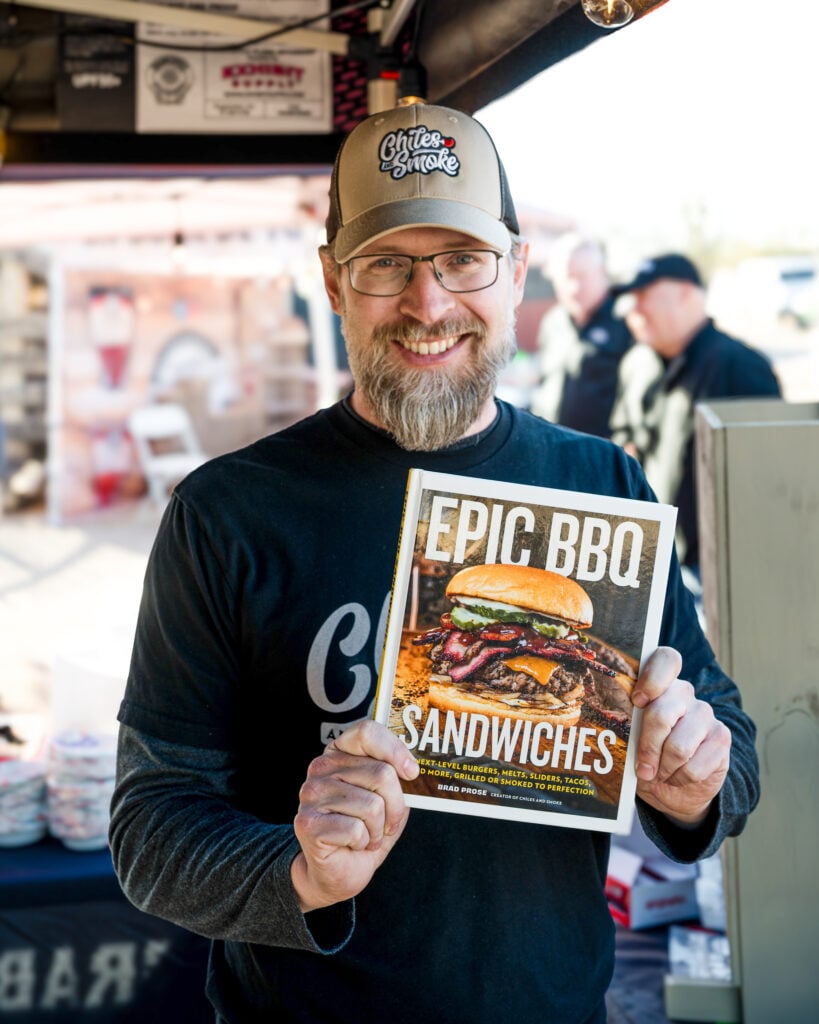
Brad Prose has been crafting recipes over live fire for 20 years. He’s the author of two cookbooks, Chiles and Smoke and Epic BBQ Sandwiches, and the creator of the original smash burger taco, as credited by the Washington Post, TODAY Show, Good Morning America, and Food Network. Brad is the force behind Chiles and Smoke, the home of Sonoran BBQ: bold flavors built around chiles, smoke, and the traditions of the American Southwest. Follow along on Instagram, YouTube, and Facebook.