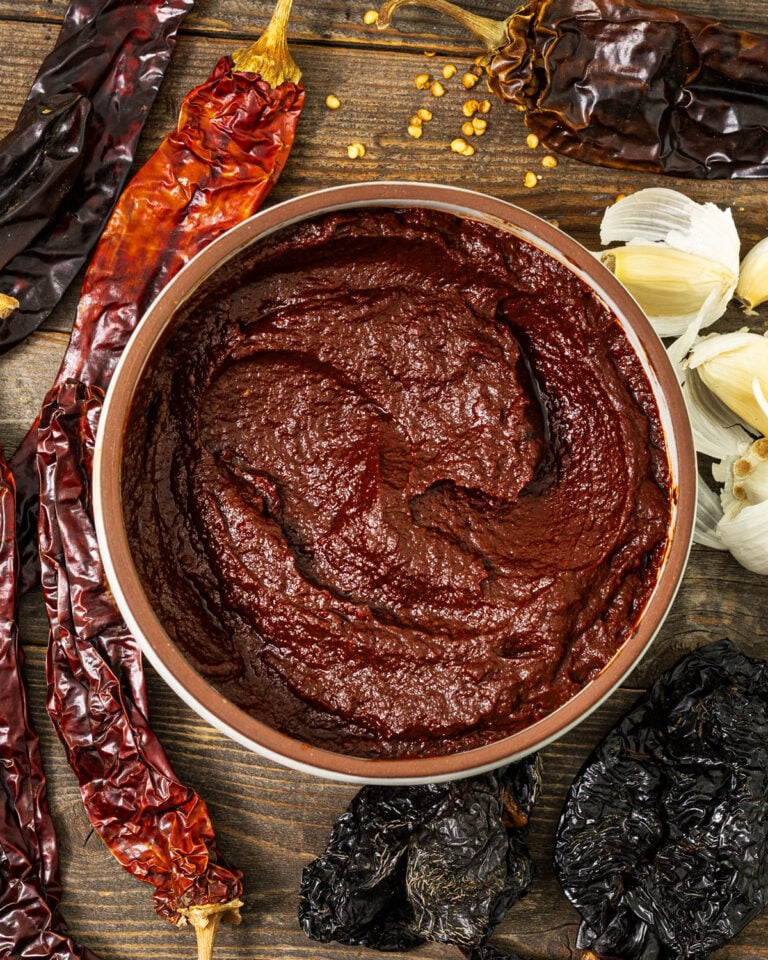
Charred Salsa Verde (Comal Method, Ready in 15 Minutes)
Last tested on: 5/08/2026
Charred salsa verde is made by dry-charring tomatillos, serrano, jalapeno, onion, and garlic directly on a hot comal or cast iron pan. No oil, no water, no oven. The high heat pulls natural sweetness out of the tomatillos and builds a smoky depth you can’t get any other way. Blend or grind in a molcajete until chunky. Done in 15 minutes.
This was the first salsa I ever made over the grill. My mother-in-law brought me an authentic molcajete from Chihuahua, and I wanted to learn traditional technique from the ground up. No shortcuts, no approximations. The comal method is how this salsa has been made in Mexico for generations, and once you make it this way, the broiler version feels like a compromise.
Don’t forget to try out other popular salsas, such as the irresistible Restaurant-Style Chipotle Salsa, or the Roasted Hatch Chile Salsa Verde.
Why the Comal Method Makes Better Salsa
Most salsa verde recipes roast in the oven under a broiler. That works, but it steams as much as it chars. The tomatillos release liquid and never get proper contact heat. A dry comal or cast iron pan over high heat is a different thing entirely.
- Direct contact char: The flat surface keeps every ingredient pressed against maximum heat, building real color and flavor on the skin rather than just softening inside.
- No moisture loss from oil: Dry-charring concentrates the tomatillo’s natural sugars instead of washing them away with added fat or steam.
- Variable char control: You pull each ingredient when it’s ready. The serrano comes off in 2 minutes, while the tomatillos take longer. That precision is tedious in a sheet pan oven situation.
- Works anywhere: The same technique works on a comal over a gas burner, a carbon steel pan on your grill, or directly on cast iron over charcoal. The flexibility is the point.
Key Ingredients
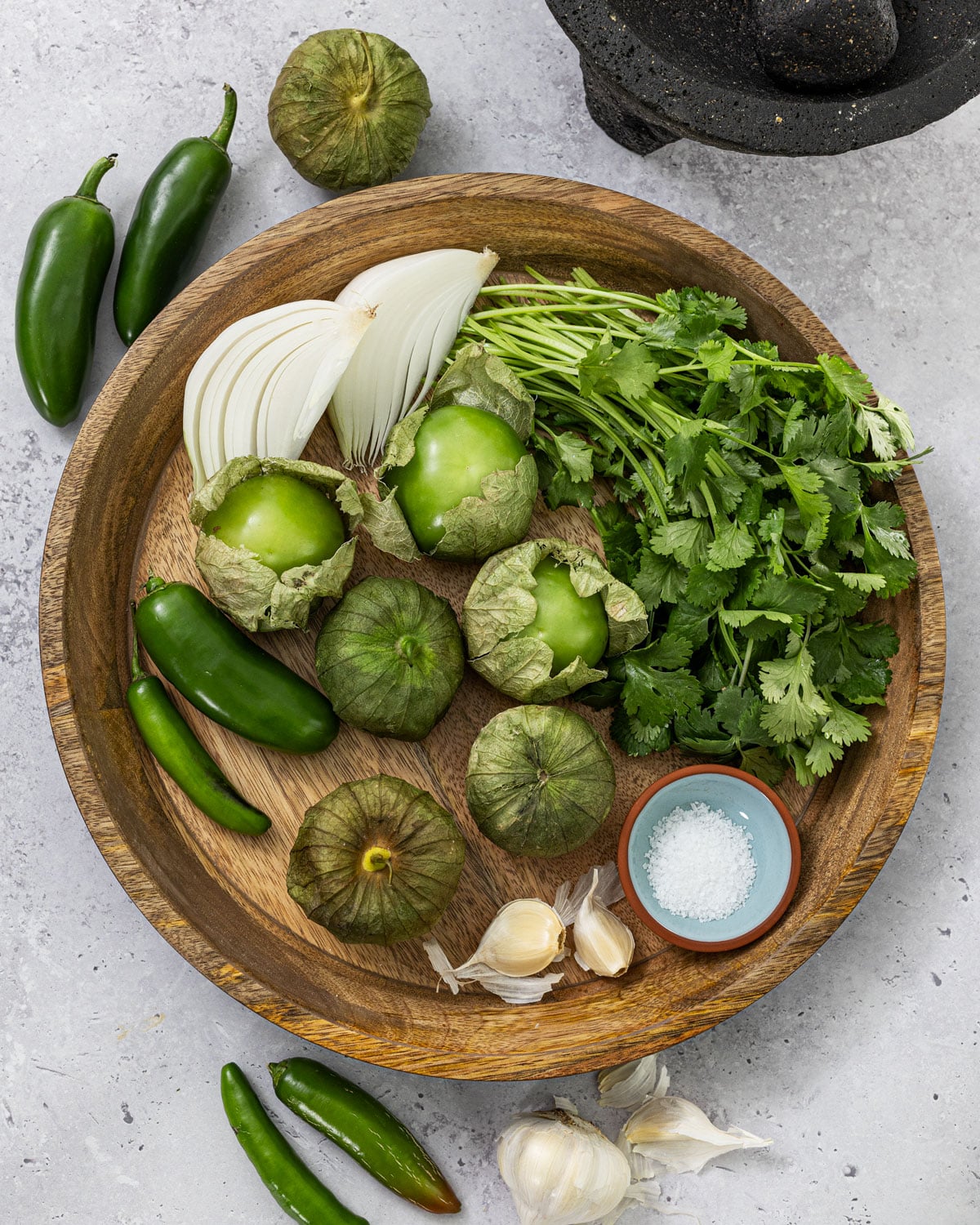
- Tomatillos: The base of any salsa verde. Look for firm ones with the husk still tight, which means they’re fresh. The dry char pulls out the sweetness that raw or simmered tomatillos don’t have.
- Serrano and jalapeño: This combination creates a balanced salsa. Serranos deliver a brighter, sharper heat, while jalapeños contribute a fresh, grassy flavor without overwhelming the other ingredients. If you’re unfamiliar with serranos, my Serrano Pepper Guide explains how they compare to jalapeños and when to use each.
- White onion: A quarter of a large onion is the right ratio, enough to add a savory backbone without taking over. White onion holds up to high heat better than yellow.
- Garlic, unpeeled: Keep the skin on while charring. It protects the clove from burning and makes it easy to peel after. The char on the outside adds a faint bitterness that balances the sweet tomatillos.
- Cilantro: Goes in fresh at the end, never charred. It’s the brightness that pulls everything together. If you don’t like cilantro, flat-leaf parsley works but changes the flavor profile significantly.
- Lime juice: Optional and worth considering carefully. The dry-char process pulls enough natural acidity and sweetness from the tomatillos that lime isn’t always needed. Taste it first before adding.
How to Make Charred Salsa Verde: Step by Step
Step 1: Heat the Comal or Pan
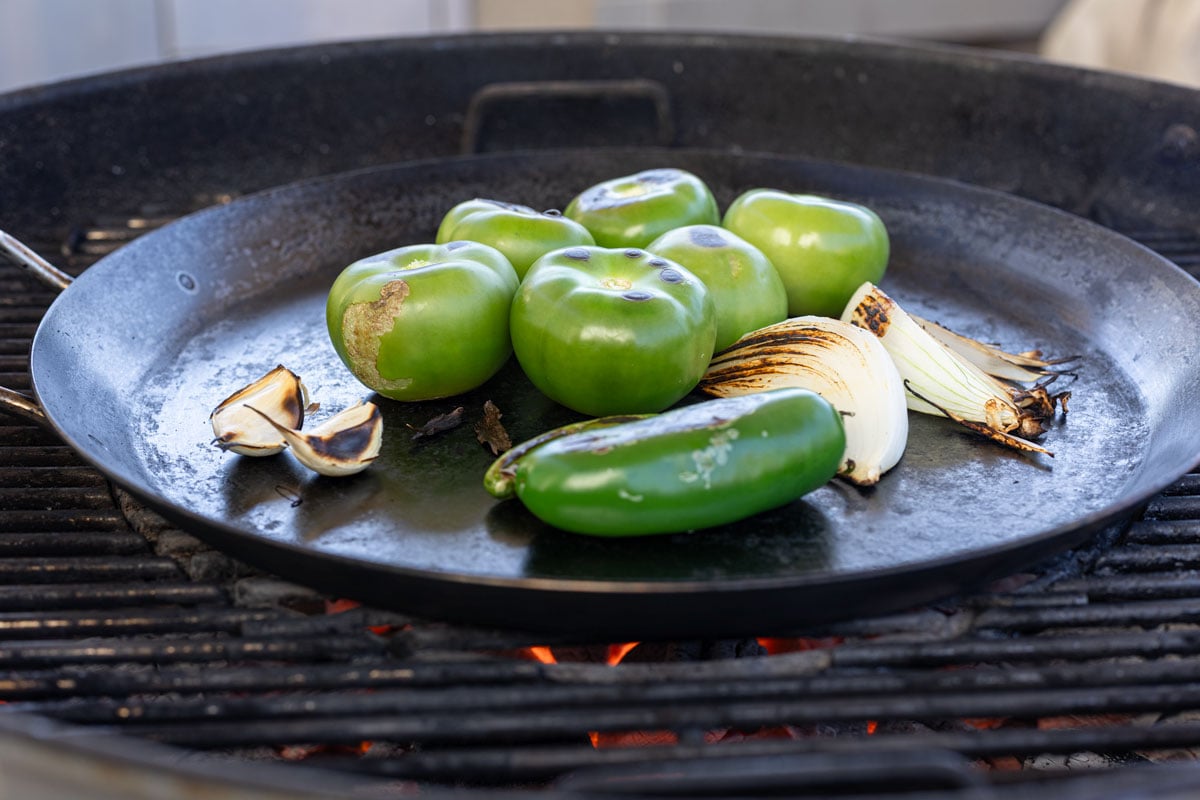
Set your comal or carbon steel pan over high heat and let it get fully hot before anything goes in. Give it 2 to 3 minutes on a gas burner, longer on charcoal or wood. You want the surface dry and smoking slightly. No oil. The dry surface is what creates the char rather than a sear.
If you’re using a grill, set the comal directly over the coals or on the grate over high heat. The smoke from the wood will infuse into the salsa during charring, which adds another layer you don’t get on a stovetop.
Step 2: Char Everything on the Comal
Add all the ingredients to the hot comal at once. Place the tomatillos on one side of the pan since they can release juices as they cook, which you don’t want running over everything else. Leave everything alone and let it char.
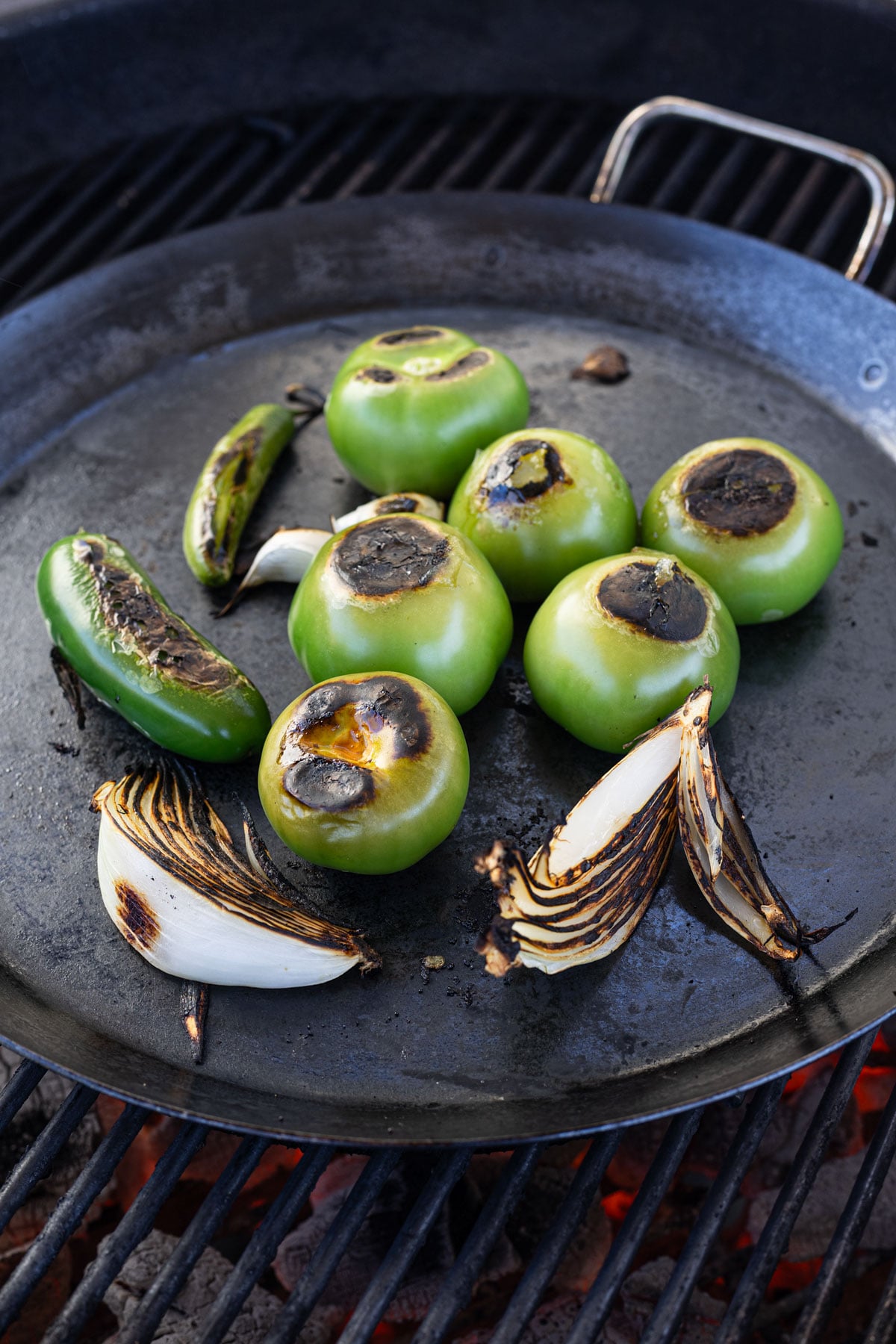
The chiles will be ready first, about 2 to 3 minutes per side once blistered and browned. Pull them off and set aside. The garlic is next, usually 3 to 4 minutes. The tomatillos take the longest, about 5 to 7 minutes, and you want them genuinely dark in spots with the inside fully soft. The onion just needs some char on the cut face.
Don’t rush this step and don’t move things around. The char is the flavor.
Step 3: Prep and Blend or Grind
Remove the stems from both chiles. Leave the seeds in if you want that heat. Remove them if you want flavor without as much burn. Peel the garlic cloves.
For a food processor: add the chiles, tomatillos, garlic, and onion and pulse until chunky. Add cilantro and pulse a few more times. Don’t over-blend — you want texture, not a smooth puree.
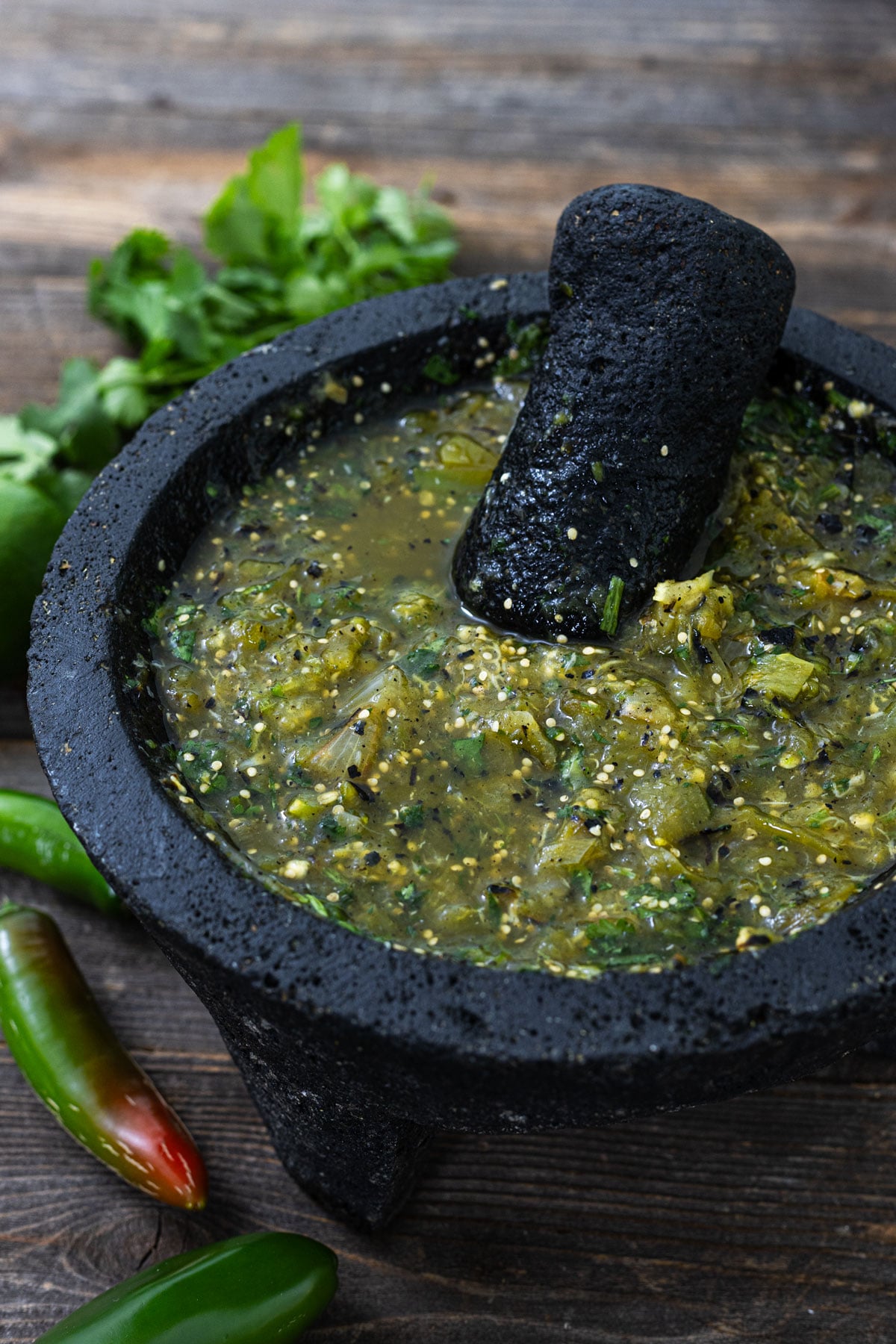
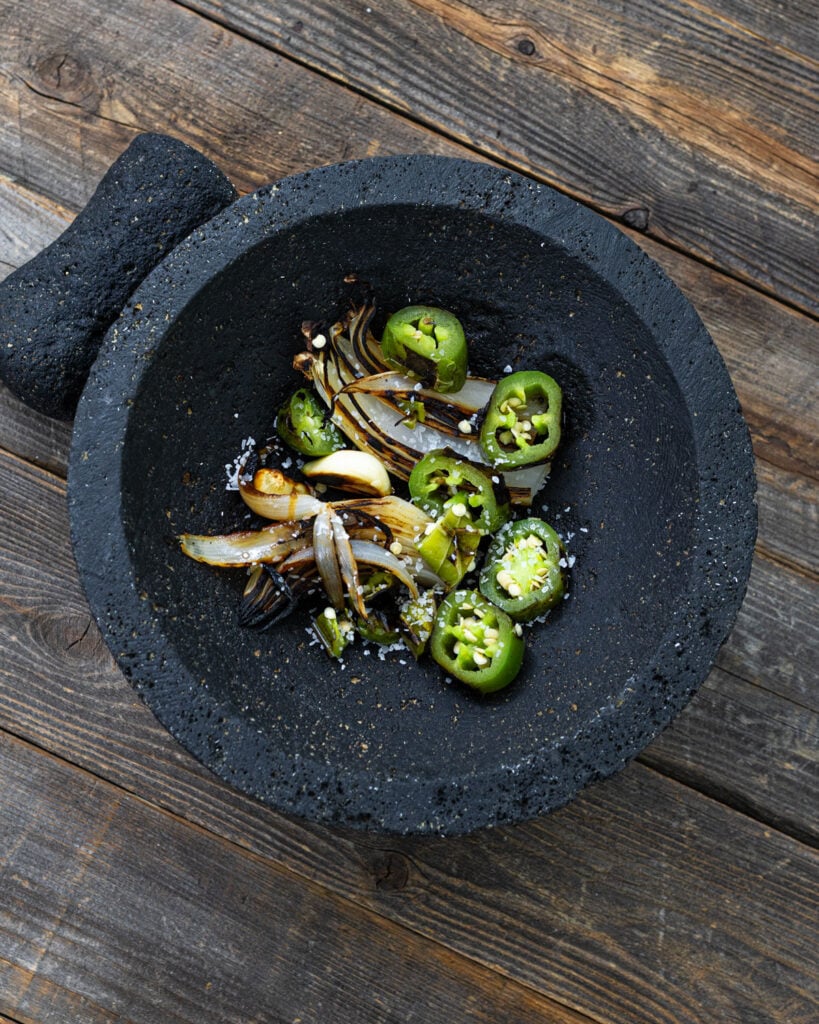
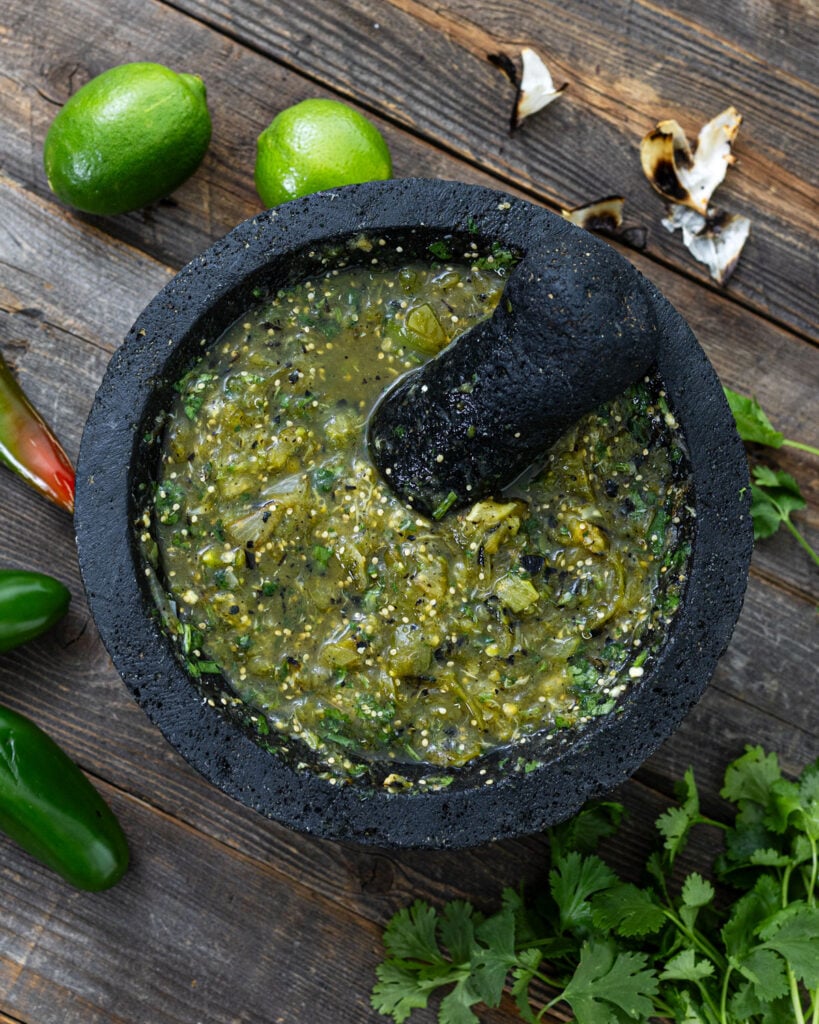
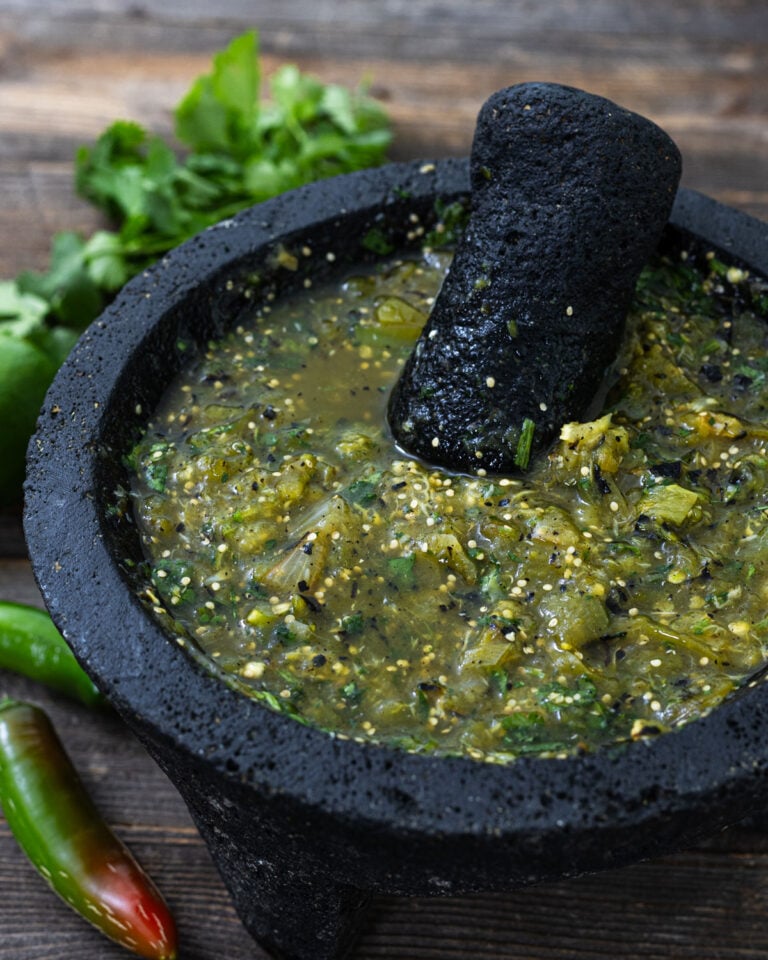
For a molcajete: start with the garlic and salt, grind into a paste, then work in the chiles, then the tomatillos and onion. Add cilantro last and grind to your preferred texture. This takes about 5 minutes of active work and produces a slightly coarser, more rustic result that holds the char flavor differently than a blended version.
Taste and add salt. Add lime juice only if the salsa tastes like it needs brightness. It often doesn’t.

First, grind the chiles, onion, and garlic with salt
Step 4: Serve at Room Temperature
This salsa is best served at room temperature, not cold from the fridge. The char flavor is more pronounced and the texture is looser when it’s not chilled.
If you’ve stored it cold, let it sit out for 15 to 20 minutes before serving.
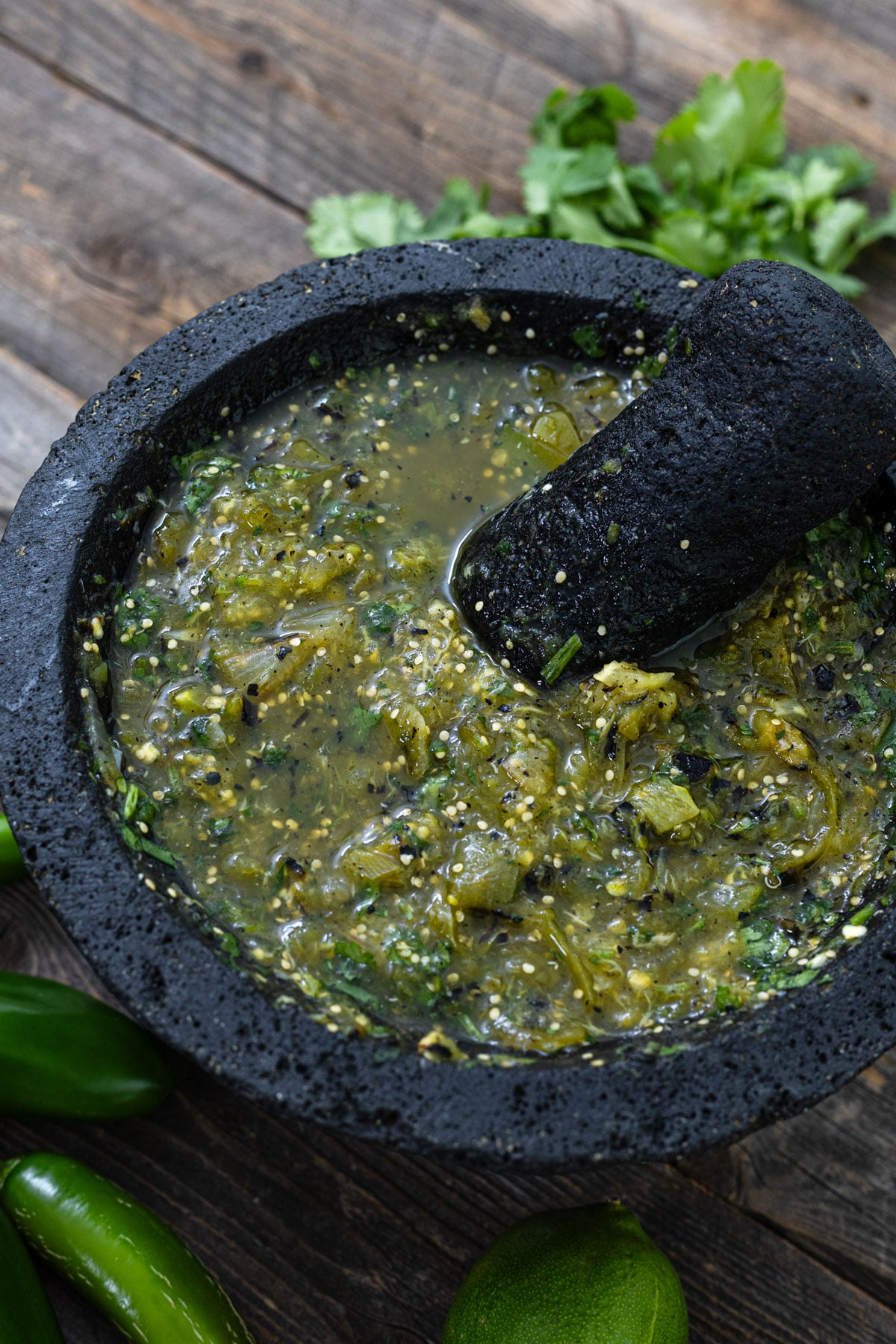
Grind the tomatillos and cilantro, adjust with salt and lime
Pro Tips from the Pit
- Let the pan get genuinely hot before you start: If ingredients are sizzling from the first second, the pan isn’t ready. You want a flat, dry, searingly hot surface. Rushing this step is the most common reason salsa verde comes out pale and bland.
- Don’t move things around too much: Place each ingredient and leave it. Constant movement prevents char from building. Treat it like a sear on a steak. Patience is the technique.
- The molcajete changes the texture in a way a blender can’t replicate: The rough volcanic stone breaks down the tomatillos unevenly, leaving some chunks while liquefying others. It’s a more interesting salsa. If you have one, use it here.
- Make it on the grill when you’re already cooking: The comal sits right on the grate. While the carnitas or pork is resting, run the salsa on the same fire. The ambient smoke during charring adds a depth you can’t fake.
- Store in an airtight container for up to a week: The flavor actually improves on day two as the char mellows and everything melds. Make a batch ahead for taco night and it’ll be better for it.
- Adjust heat after blending, not before: It’s easier to taste and assess heat level once everything is combined. Add a second serrano or a few seeds back in if you want more punch.
Ways to Use Charred Salsa Verde
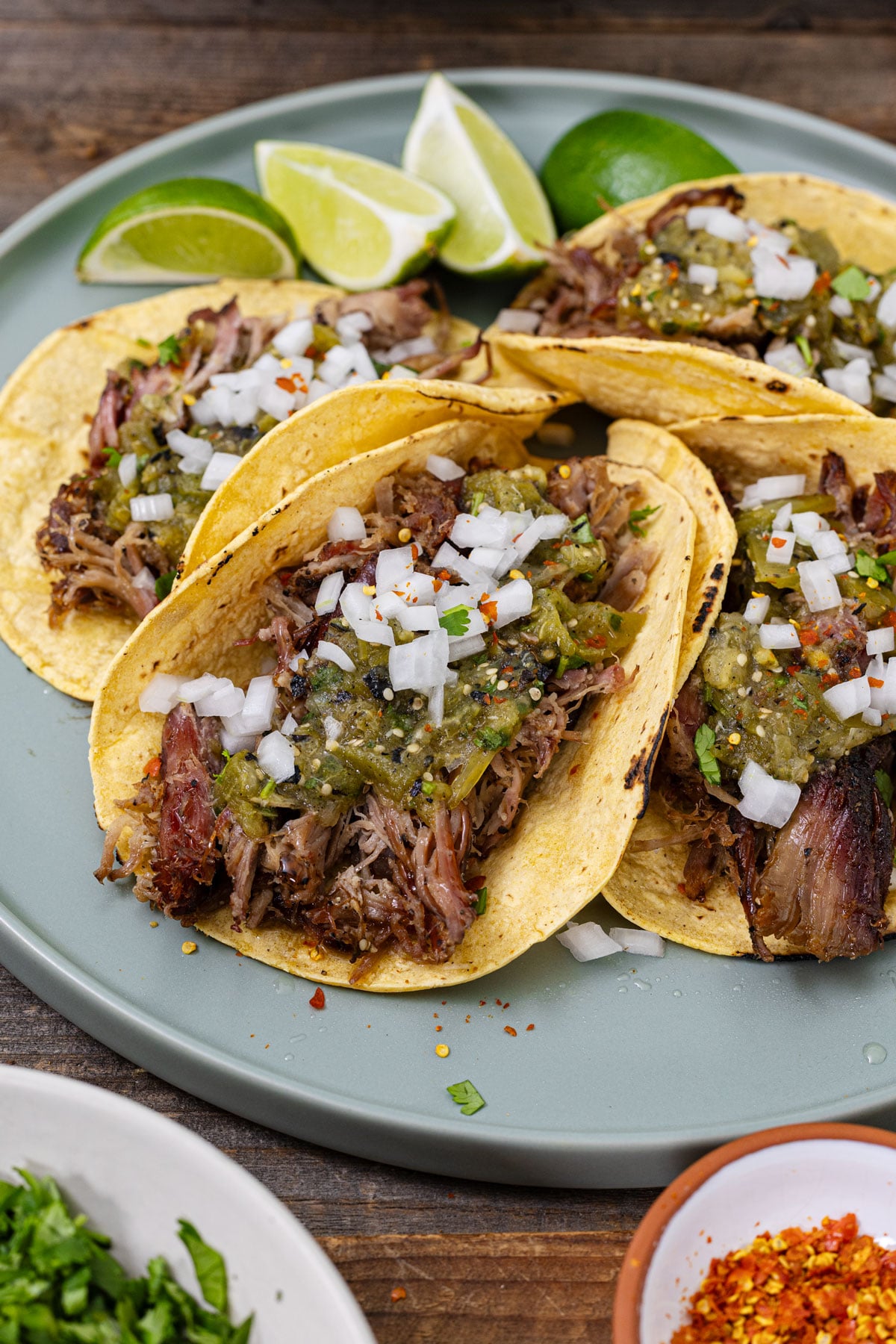
- Smoked Carnitas Tacos: The primary use. Crispy smoked carnitas, charred salsa verde, and fresh white onions in a warm tortilla. Even the Carnitas Burrito Bowls love it.
- Salsa Verde Crema: Mix this salsa with Mexican crema, it pairs so well with Carnitas Quesadillas.
- Smoked Chicken Breasts: One of the best applications. A spoonful of salsa verde keeps smoked chicken breast from drying out and adds brightness without overpowering the smoke.
- Smoked Pulled Chicken: Same idea as carnitas. Pull it, pile it in a tortilla or bun, add salsa verde and pickled onions.
- Smoked Bone-In Pork Chops: Drizzle it over the chop right before serving. The char on the salsa echoes the crust on the pork.
- Fried Smash Burger Tacos: Swap whatever sauce you’d normally use. Verde on a smash burger taco is a better call than most people expect.
Frequently Asked Questions
Roasted salsa verde typically uses an oven broiler or sheet pan, which generates indirect heat and causes the tomatillos to steam as much as char. Charred salsa verde uses direct contact heat on a dry comal or cast iron pan, producing more color, more concentrated flavor, and a smokier depth in the same amount of time. The comal method is the traditional technique used in Mexican home cooking.
Yes. A cast iron skillet or any heavy-bottomed pan works on a stovetop burner. You can also use the broiler — set it on high and get the rack as close as possible to the element, about 4 to 5 inches, and watch it closely. The broiler won’t produce the same char, but it gets close. A comal or cast iron on a grill over wood or charcoal is the best version.
Not necessarily. The dry-charring process draws out the natural acidity and sweetness of the tomatillos, so many batches don’t need lime at all. Taste the salsa after blending — if it tastes flat or one-dimensional, a squeeze of lime will brighten it. If it tastes balanced and complex on its own, skip it. Start without and add from there.
Stored in an airtight container, this salsa verde keeps for up to 7 days in the refrigerator. The flavor peaks on day two as the charred edges mellow and the ingredients integrate. Bring it back to room temperature before serving for the best flavor and texture.
For the serrano, a jalapeño is the most direct substitute, with milder heat and a similar flavor profile. For the poblano, an Anaheim or a mild Hatch green chile works well. Avoid bell peppers, which don’t have the depth needed. If you can only find one type of chile, use two jalapeños rather than doubling the serrano.
Equipment Used
Made In x Masienda Carbon Steel Comal: This is the comal in Brad’s kitchen and on his grill. Blue carbon steel heats evenly and fast, handles grill temperatures without warping, and develops a natural nonstick surface over time. Worth the investment if you make tortillas, salsas, or anything that benefits from dry high-heat cooking.
Molcajete: An authentic volcanic stone mortar and pestle. If yours came from Mexico, use it here. This is exactly what it was made for. Look for one that’s been properly cured (rubbed with rice and garlic until the grit stops coming off). Masienda happens to have an excellent molcajete as well. A food processor is a fine substitute.
Cast iron skillet or carbon steel pan: If you don’t have a comal, any well-seasoned cast iron or carbon steel pan works on the stovetop or grill.
Try It and Tag Us
Top your nachos, tacos, and anything else with this fire-roasted salsa verde. Don’t be afraid to make a double batch. Tag us on Instagram when you do. Leave a rating below if this helped.
Charred Salsa Verde (Comal Method, Ready in 15 Minutes)
A traditional charred salsa verde made on a dry comal or cast iron pan over high heat. Tomatillos, serrano, poblano, and garlic are charred until dark and blistered, then ground in a molcajete or pulsed in a food processor until chunky. Ready in 15 minutes and better than any roasted version.
- Total Time: 15 minutes
- Yield: About 1.5 Cups 1x
Ingredients
- 5 large tomatillos, husked and rinsed
- 1/4 large white onion
- 1 serrano chile
- 1 jalapeno chile
- 2 garlic cloves, unpeeled
- 1/2 cup fresh cilantro, chopped
- Salt to taste
- Fresh lime juice to taste (optional)
Instructions
- Heat a comal or cast iron pan over high heat for 2 to 3 minutes until very hot. No oil.
- Add the tomatillos, onion, serrano, jalapeno, and unpeeled garlic to the comal at the same time. Place the tomatillos on one side of the pan as they can release juices while cooking.
- Remove the chiles when both sides are charred and blistered, about 2 to 3 minutes per side. Remove the garlic when browned on the outside, about 3 to 4 minutes. Continue cooking the tomatillos until dark in spots and soft through, about 5 to 7 minutes. The onion is ready when the cut face has some char.
- Remove the stems from both chiles. For the serrano, remove the seeds if you want less heat. Peel the garlic cloves.
- Add all charred ingredients to a food processor and pulse until chunky. Alternatively, grind in a molcajete starting with the garlic and salt, then working in the chiles, tomatillos, and onion. Add cilantro and pulse or grind a few more times.
- Taste and season with salt. Add lime juice only if the salsa needs brightness. Serve at room temperature.
Notes
- Heat level: Leave the serrano seeds in for noticeable heat. Remove them for flavor without as much burn. Add a second serrano if you want more punch, but taste after blending before adding more.
- Lime juice: The dry-char process pulls natural sweetness and acidity from the tomatillos. Taste the salsa before adding lime. Many batches don’t need it.
- Molcajete vs food processor: The molcajete produces a coarser, more rustic texture that holds the char flavor differently than a blended version. If you have one, use it here. A food processor works well — use pulse mode and stop when it’s still chunky.
- On the grill: Set the comal directly on the grate over high heat. The ambient smoke from the wood infuses into the salsa during charring and adds a depth you won’t get on the stovetop.
- Storage: Store in an airtight container in the refrigerator for up to 7 days. The flavor improves on day two. Bring to room temperature before serving.
- Make ahead: This salsa is an ideal make-ahead condiment. Make a batch the day before and it will be better for it.
- Prep Time: 5 minutes
- Cook Time: 10 minutes
- Category: Sauces & Salsas
- Method: Grilling, Stovetop
- Cuisine: Mexican
- Diet: Gluten-Free, Vegan
Nutrition
- Serving Size:
- Calories: 14
- Sugar: 1.6 g
- Sodium: 245.8 mg
- Fat: 0.3 g
- Carbohydrates: 2.8 g
- Protein: 0.4 g
- Cholesterol: 0 mg

Brad Prose has been crafting recipes over live fire for 20 years. He’s the author of two cookbooks, Chiles and Smoke and Epic BBQ Sandwiches, and the creator of the original smash burger taco, as credited by the Washington Post, TODAY Show, Good Morning America, and Food Network. Brad is the force behind Chiles and Smoke, the home of Sonoran BBQ: bold flavors built around chiles, smoke, and the traditions of the American Southwest. Follow along on Instagram, YouTube, and Facebook.