Chipotle Salsa Recipe (Restaurant-Style, 5 Minutes)
Last tested: April 2026
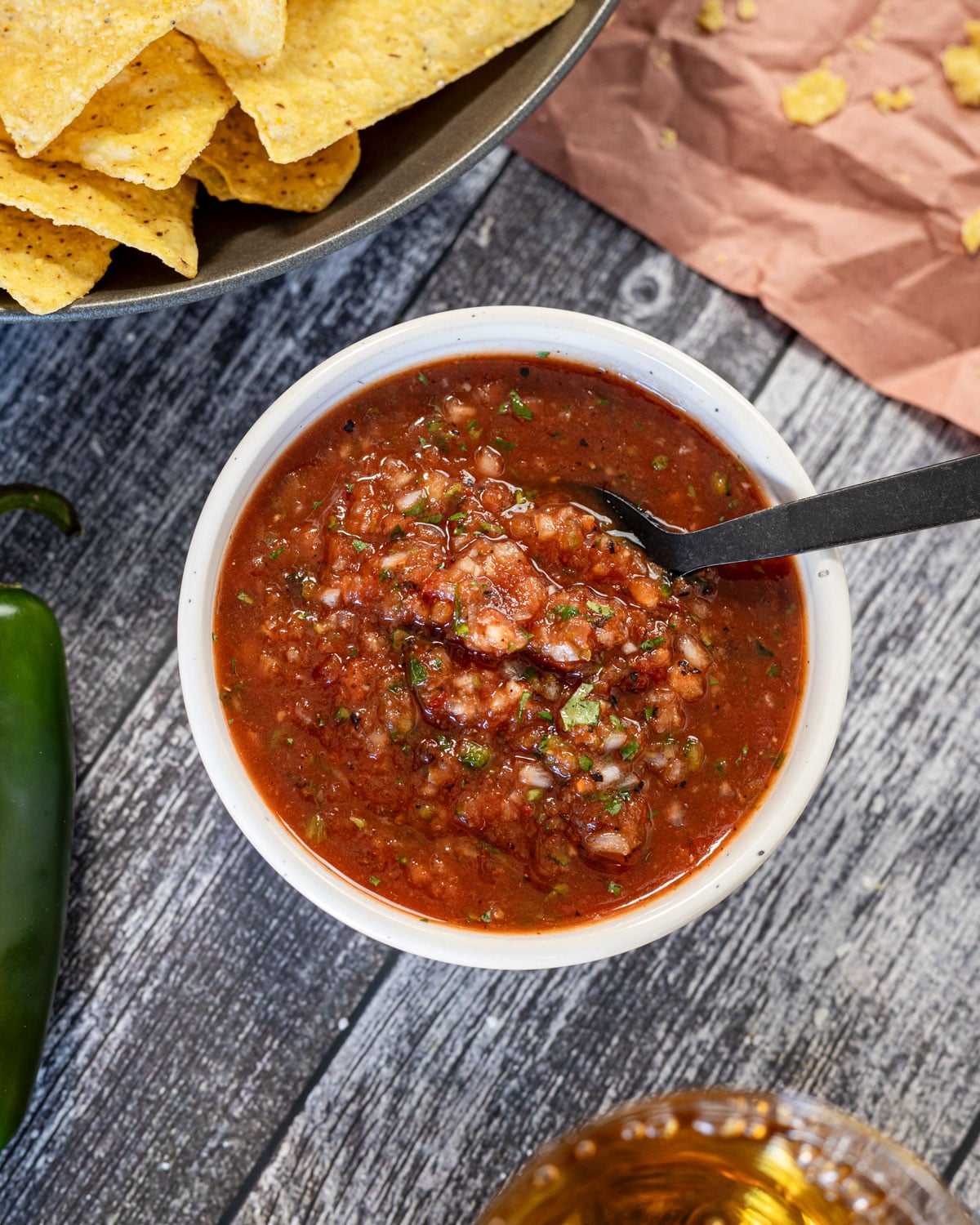
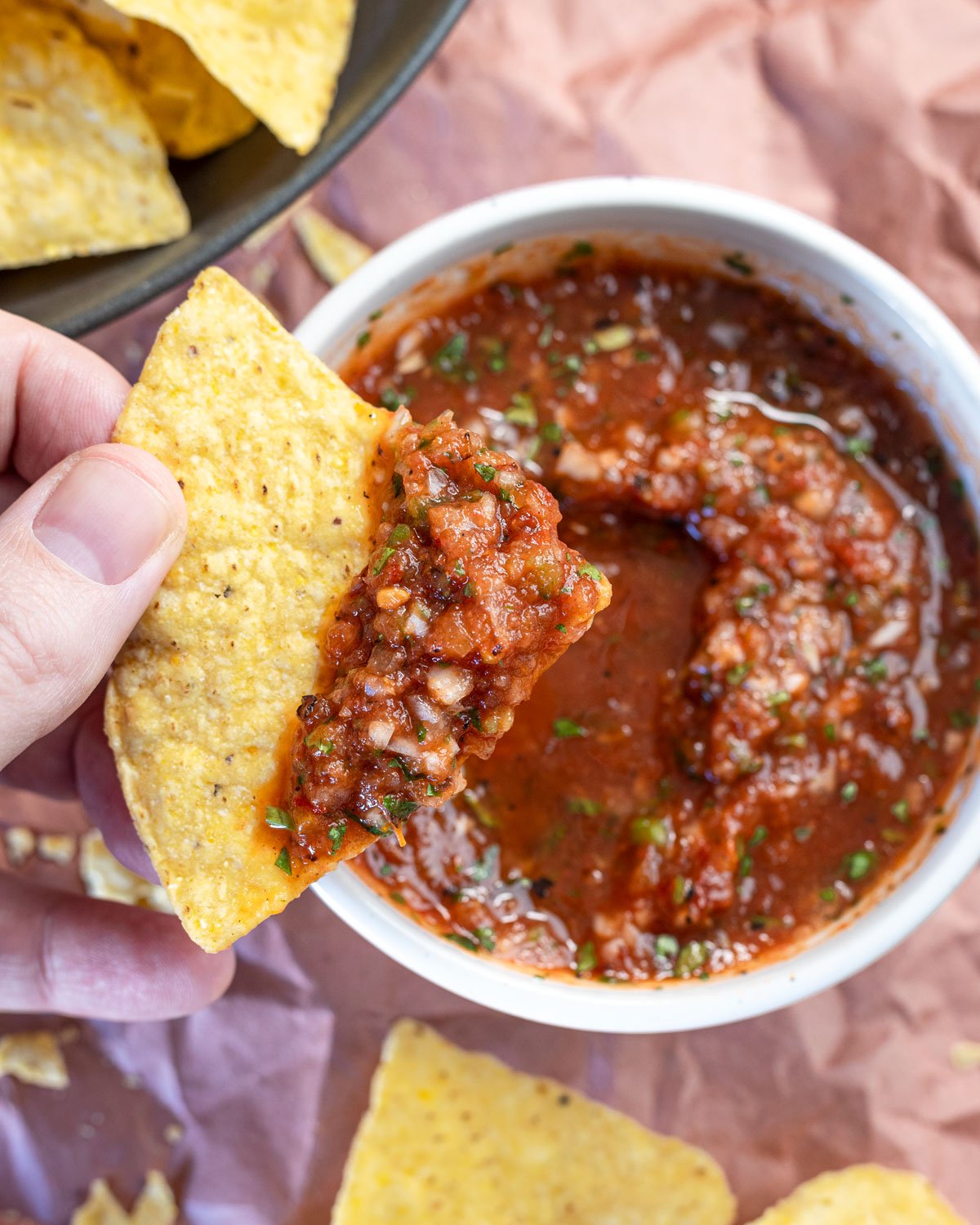
This chipotle salsa starts with canned fire-roasted tomatoes, chipotles in adobo, fresh jalapeño, onion, garlic, and cilantro. Run it through a food processor for 1 to 2 minutes and you’re done. Canned tomatoes are the key. They process into a thicker, less watery salsa than fresh tomatoes and deliver consistent flavor year-round. This is the same restaurant-style texture you get at a good taqueria.
I’ve been making this salsa for years. It’s on the table at every cookout, every taco night, and every time I smoke a pork shoulder or fire up carnitas. I’m not exaggerating when I say we go through a double batch pretty often.
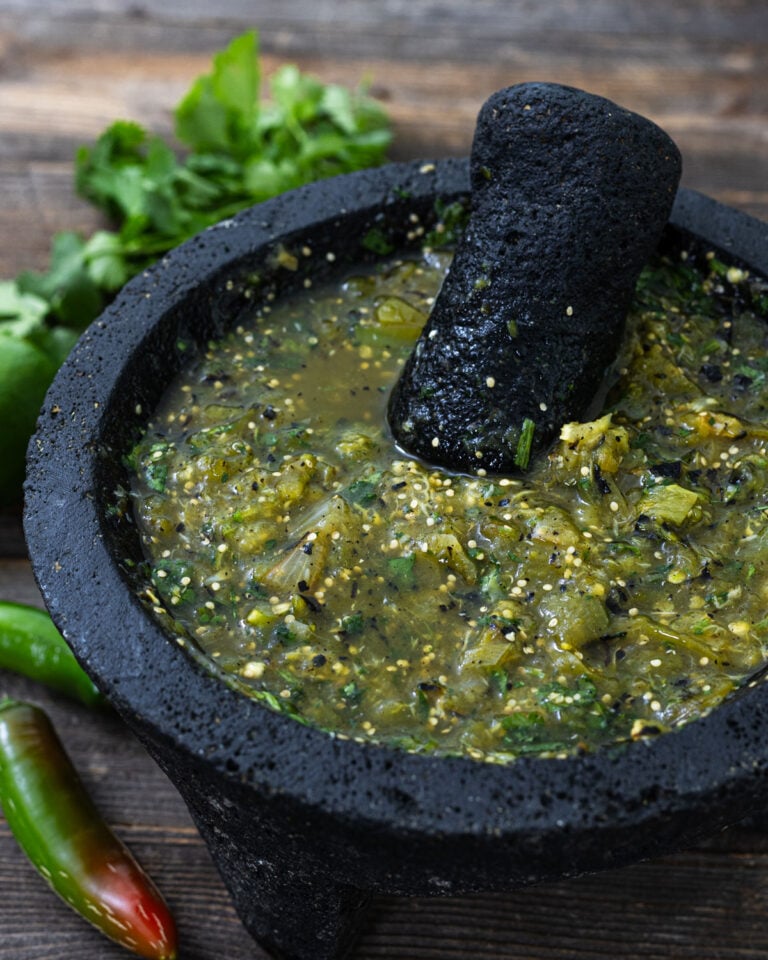
Love salsa recipes? You should also try our Charred Salsa Verde, the tangy Pickle De Gallo, or the seasonal Roasted Hatch Chile Salsa Verde.
Why This Works
- A food processor, not a blender: High-powered blenders like a Vitamix will over-process canned tomatoes, breaking down the cell walls so completely that the salsa turns watery. A food processor runs at lower speed and gives you real control over texture. Check it at 1 minute, process another 30 seconds if needed, and stop when it looks right.
- Chipotles in adobo do two jobs: The chipotles add heat. The adobo sauce adds a deep, tangy, slightly smoky flavor that fresh chiles can’t replicate. Use both. Don’t drain the sauce before adding.
- Dice the vegetables small before processing: Finely diced onion, jalapeño, and garlic process more evenly and won’t leave large chunks behind. It takes an extra minute of prep and makes a noticeable difference in the final texture.
- Resting matters: Give the salsa 30 minutes in the fridge before serving. The flavors sharpen and the heat from the jalapeño and chipotle distributes evenly. Salsa straight out of the processor tastes flat compared to rested salsa.
Key Ingredients
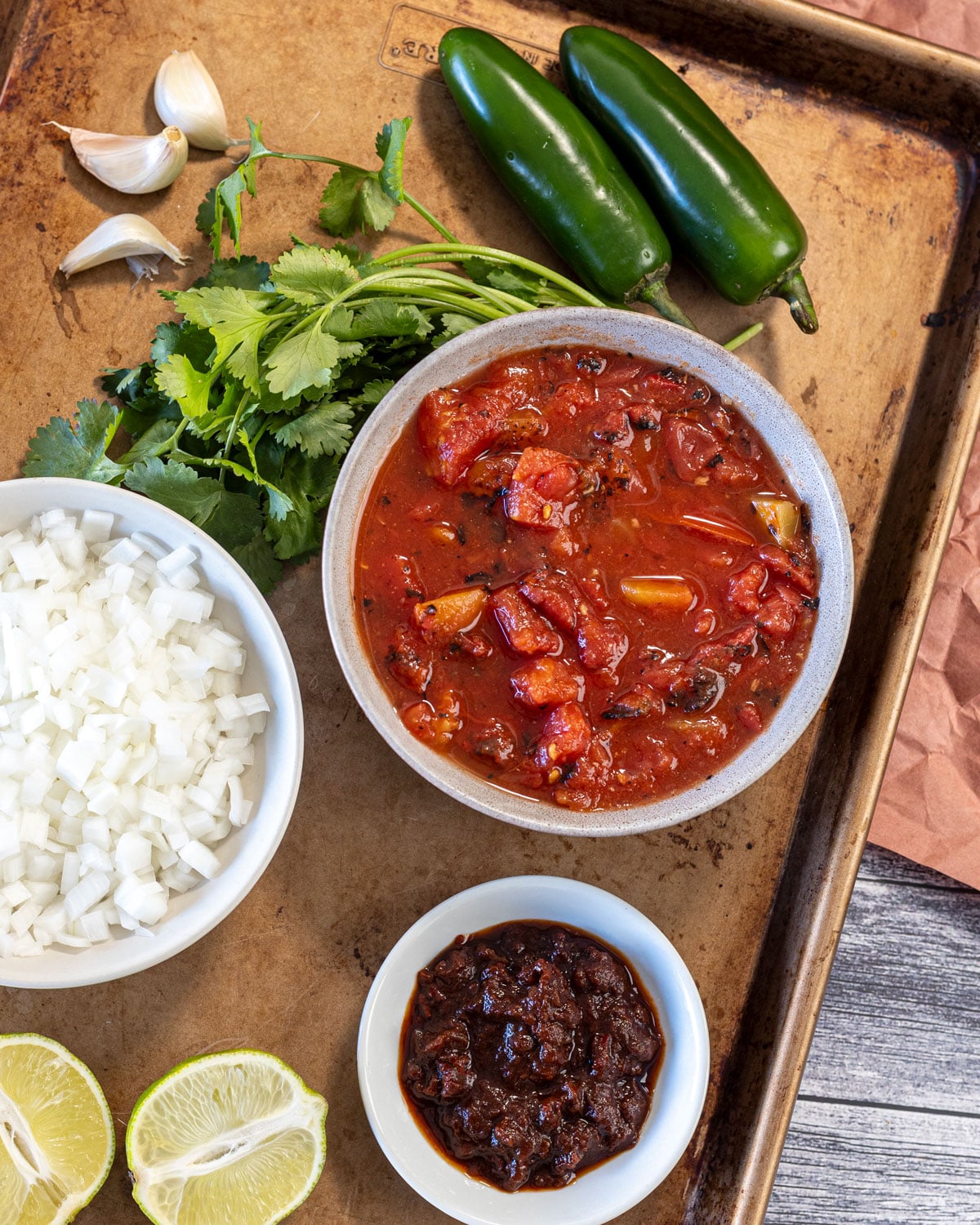
- Canned fire-roasted diced tomatoes: Fire-roasted adds a char flavor that plain canned tomatoes won’t give you. If you want to push it further, roast your own tomatoes directly over the grill until the skins blister and blacken, then peel and use them here. That’s the version I make when the grill is already going.
- Chipotles in adobo: Start with 1 tablespoon (about 1 whole chipotle, chopped) for medium heat. Add more in half-tablespoon increments to dial up. Taste your jalapeño first. If it’s hot, go conservative on the chipotle.
- Fresh jalapeño: Jalapeños vary more than people realize. One can taste like a bell pepper; the next burns. Taste a small piece before it goes in. Leave the seeds in if you want more heat.
- White onion: White onion is sharper and cleaner than yellow here. Yellow onion works but adds sweetness that competes with the chipotle.
- Garlic: One clove is enough. Two starts to overpower the chipotle. Chop it roughly before adding. A whole clove can hide from the blades and end up as a chunk in your salsa.
- Fresh cilantro: Wash it and throw in stems and leaves. The stems have just as much flavor. If you skip cilantro, flat-leaf parsley gives you the green color and some freshness without the polarizing flavor.
- Fresh lime juice: Add this after processing, not before. Acid added before processing can dull the other flavors. Squeeze, taste, add more if needed.
- Sea salt to taste: Season after blending and tasting. If you’re serving with salted tortilla chips, undersalt slightly. The chips do some of the work.
How to Make Chipotle Salsa
Step 1: Prep the fresh ingredients
Roughly chop the jalapeño, onion, and garlic. Nothing needs to be precise since everything gets processed. If any piece is too large, it may dodge the blades and end up as a chunk. Taste a sliver of jalapeño before it goes in. This tells you how aggressively to use the chipotle.
Step 2: Add everything to the food processor
Add the canned tomatoes with their liquid, chipotles in adobo, jalapeño, onion, garlic, and cilantro. Don’t add the lime juice yet.
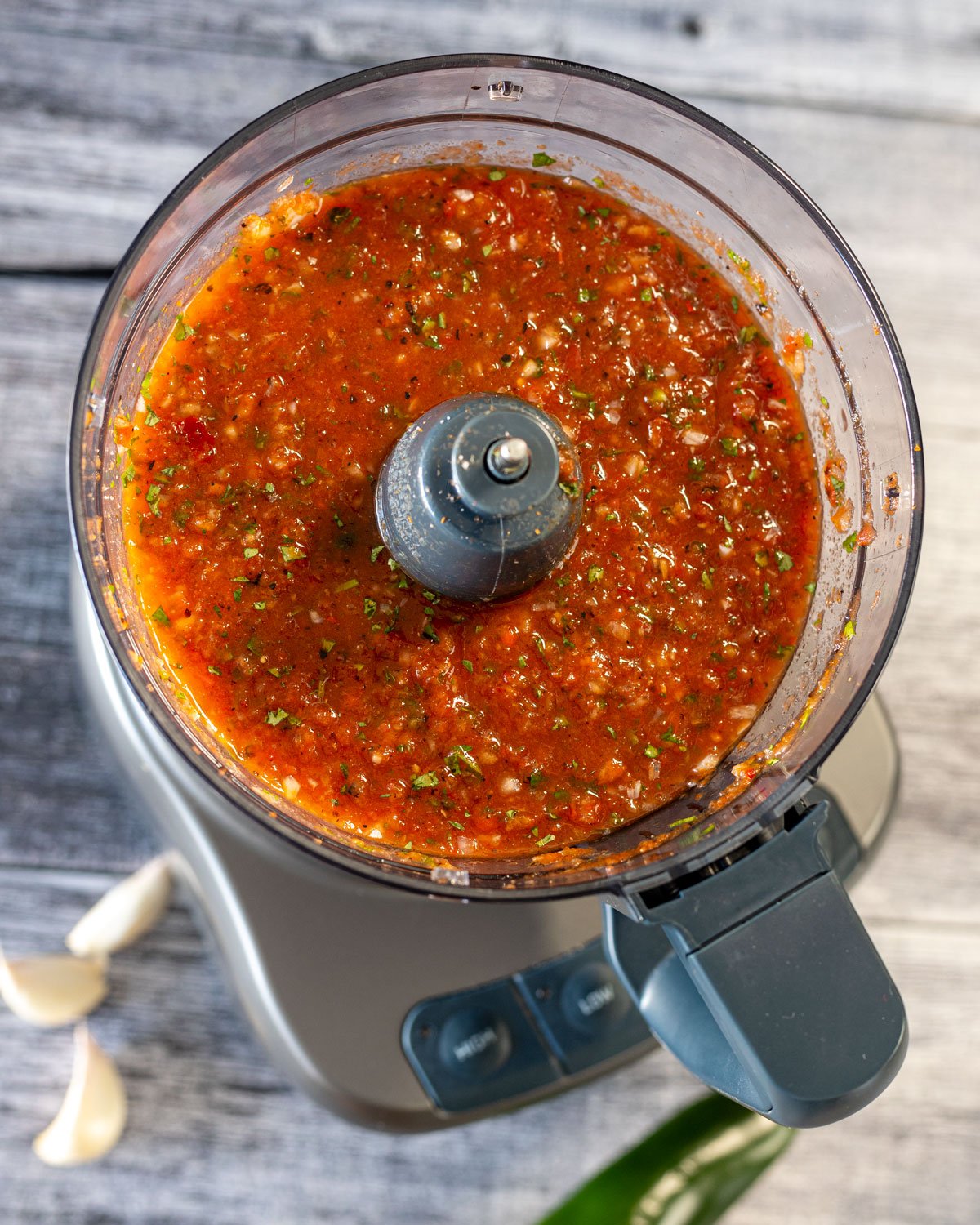
Step 3: Process to your preferred texture
Run the food processor for 1 to 2 minutes, stopping at 1 minute to check the texture. For smooth restaurant-style salsa, keep going until everything is evenly minced with no large pieces remaining. For a chunkier result, stop earlier. Use a spoon to check the bottom and sides of the bowl for any unprocessed chunks of jalapeño or garlic.
Step 4: Season and rest
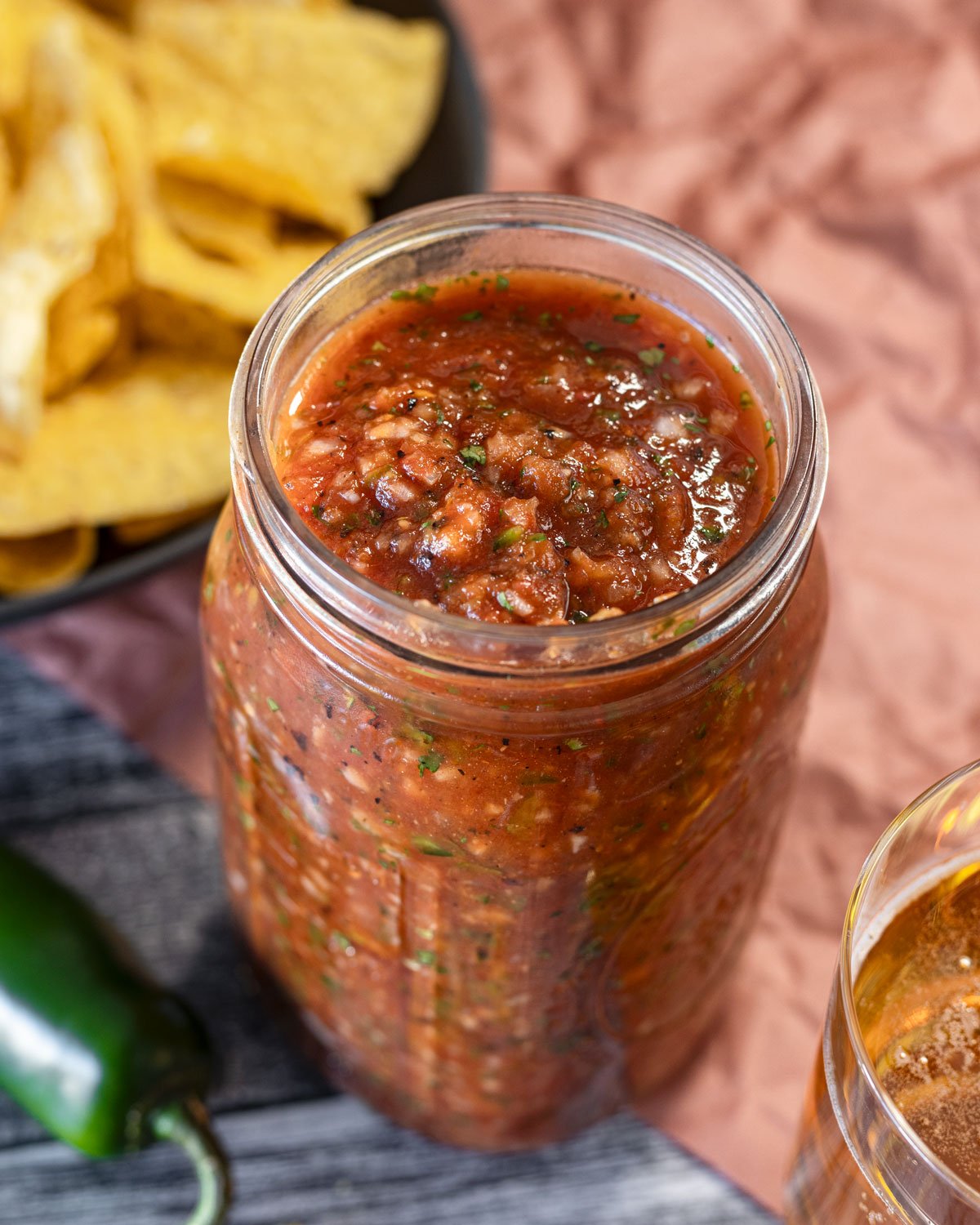
Add the lime juice and taste. Adjust with salt, more lime, or more chipotle. Transfer to an airtight container and refrigerate for at least 30 minutes before serving. The salsa will taste noticeably better after it rests.
Pro Tips from the Pit
- Control heat in layers: Jalapeño is bright and immediate. Chipotle is deeper and lingers. If the salsa is too hot after processing, add another half can of tomatoes to dilute. Don’t just add salt. It won’t fix heat.
- Don’t add lime before processing: Acid breaks down cilantro and can mute the other flavors when processed. Add lime at the end and adjust to taste.
- Roast the garlic if you have time: One clove of roasted garlic instead of raw adds a mellow sweetness that rounds out the sharpness of the onion. Not required, but worth it when you’re making this for a crowd.
- Make a double batch: This salsa keeps for 7 to 10 days in a sealed jar in the fridge. A single batch disappears fast. If you’re making it for a cookout, double it.
- Use it beyond chips: This salsa works as a taco topping, a burrito bowl base, a marinade for chicken, or a stir-in for scrambled eggs. Anywhere you want a hit of smoky heat.
What to Serve With Chipotle Salsa
- Reverse Seared Tri-Tip Steaks: Thin-sliced tri-tip with chipotle salsa spooned over the top is one of the better combinations in the rotation. The char from the sear and the smoke from the chipotles line up perfectly.
- Reverse Seared Picanha: Picanha is already a rich, fat-forward cut. The acid and heat from the chipotle salsa cut right through it. Slice it thin and let people build their own.
- Smoked Baked Potatoes: Load the potato with chipotle salsa instead of sour cream, or use both. The smoky potato and the smoky salsa are a natural fit.
- Quick Pickled Jalapeños: If you want more jalapeño heat on tacos without adjusting the salsa, these go alongside.
- Smoked Pulled Chicken: Shredded smoked chicken on warm tortillas with chipotle salsa is the easiest taco night in the rotation. The salsa does the seasoning work so the chicken doesn’t need much else.
Frequently Asked Questions
A regular blender works in a pinch, but avoid high-powered blenders like a Vitamix. They process at such high speed that they break down the tomato cell walls completely, releasing excess water and turning the salsa thin. A food processor runs at lower speed and gives you control over texture. Stop at 1 minute, check it, and process more if needed.
At the base amount of chipotle and half a jalapeño with seeds removed, this lands at medium heat. Noticeable warmth that builds but doesn’t burn. For mild, use less chipotle and skip the jalapeño seeds entirely. For hot, add more chipotle and keep the seeds in. Taste your jalapeño before it goes in. Heat level varies significantly between peppers.
7 to 10 days in a sealed jar in the fridge. Make sure the jar is airtight. A Mason jar with a lid works well. If the salsa was sitting at room temperature for more than 2 hours, subtract a day or two from that estimate. Freeze it in a zip-lock bag for up to 3 months if you made too much.
Almost always caused by over-processing, using a high-powered blender, or using tomatoes packed in a lot of liquid. If you’re using canned tomatoes, try draining about half the liquid from the can before adding. If you’ve already processed and it’s too thin, strain it through a fine mesh strainer for 10 to 15 minutes. Don’t try to cook it down. That changes the flavor profile significantly.
Yes, and it makes a noticeably better salsa. Char the jalapeño, onion, and garlic directly over a gas burner or on the grill until they have real color. The tomatoes are already fire-roasted from the can, so you’re adding another layer of char to the aromatics. This is closer to a traditional salsa tatemada and worth the extra time if you have it.
This salsa has two heat sources — jalapeño and chipotles in adobo — so you need to know which one is driving the heat before you fix it. Jalapeño heat is bright and immediate. Chipotle heat is deeper and builds slower. Either way, the fastest fix is adding another half can of fire-roasted tomatoes and processing again. That dilutes both heat sources without changing the flavor profile. A squeeze of extra lime juice helps too. The acid softens the perception of heat. Don’t add sugar. It fights the chipotle flavor.
Try It and Tag Us
If you make this, leave a rating below. It takes 30 seconds and it genuinely helps. Tag us on Instagram when you do. I want to see what you’re putting it on.
Chipotle Salsa Recipe (Restaurant-Style, 5 Minutes)
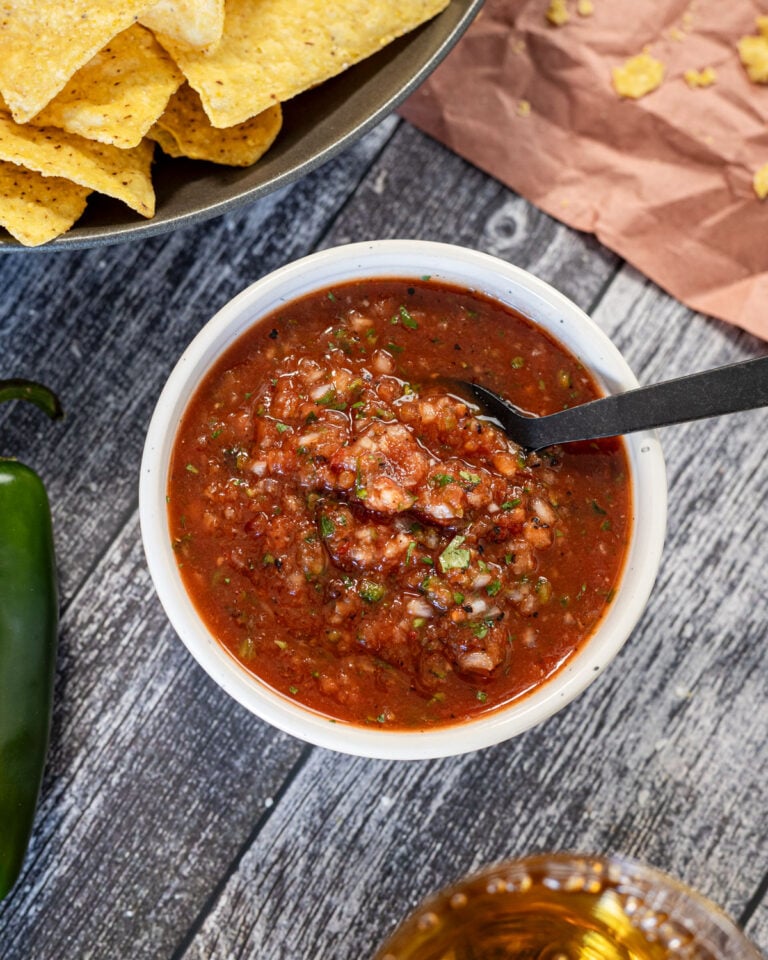
Fire-roasted tomatoes, chipotles in adobo, fresh jalapeño, and cilantro processed into a thick, restaurant-style salsa in under 5 minutes. Better texture than fresh tomato salsa, and it keeps for up to 10 days in the fridge.
- Total Time: 35 minutes
- Yield: About 3 Cups 1x
Ingredients
- ½ cup white onion, finely diced (about ½ small onion)
- 1 clove garlic, finely diced
- ½ jalapeño, seeds and ribs removed, finely diced
- 1 can (15 oz) diced fire-roasted tomatoes
- 1 to 3 tablespoons chipotles in adobo sauce, chopped
- ¼ cup fresh cilantro, lightly packed
- 1 tablespoon fresh lime juice, plus more to taste
- Sea salt to taste
Instructions
- Finely dice the onion, garlic, and jalapeño. Taste a small piece of the jalapeño to gauge heat before adding.
- Add everything except the lime juice to a food processor: canned tomatoes with their liquid, chipotles in adobo, jalapeño, onion, garlic, and cilantro.
- Process for 1 to 2 minutes, stopping at 1 minute to check texture. The goal is an evenly minced, restaurant-style salsa with no large chunks remaining.
- Add the lime juice and taste. Adjust with salt, more lime, or more chipotle as needed.
- Transfer to an airtight container and refrigerate for at least 30 minutes before serving.

Notes
- Heat control: Start conservative with the chipotle. Taste your jalapeño first. Heat level varies significantly between peppers.
- Storage: Keeps for 7 to 10 days in a sealed jar in the fridge. Freeze for up to 3 months.
- Grill variation: Roast your own tomatoes directly over the grill until the skins blister and blacken, then peel before using. Char the jalapeño, onion, and garlic the same way for a deeper, smokier salsa.
- Avoid high-powered blenders: They over-process the tomatoes and make the salsa watery. Stick with a food processor.
- Prep Time: 5 minutes
- Rest Time: 30 minutes
- Cook Time: 0 minutes
- Category: Sauces & Salsas
- Method: Food Processor
- Cuisine: Mexican
- Diet: Gluten-Free, Vegan
Nutrition
- Serving Size:
- Calories: 10
- Sugar: 0.9 g
- Sodium: 241 mg
- Fat: 0 g
- Carbohydrates: 1.9 g
- Protein: 0.1 g
- Cholesterol: 0 mg

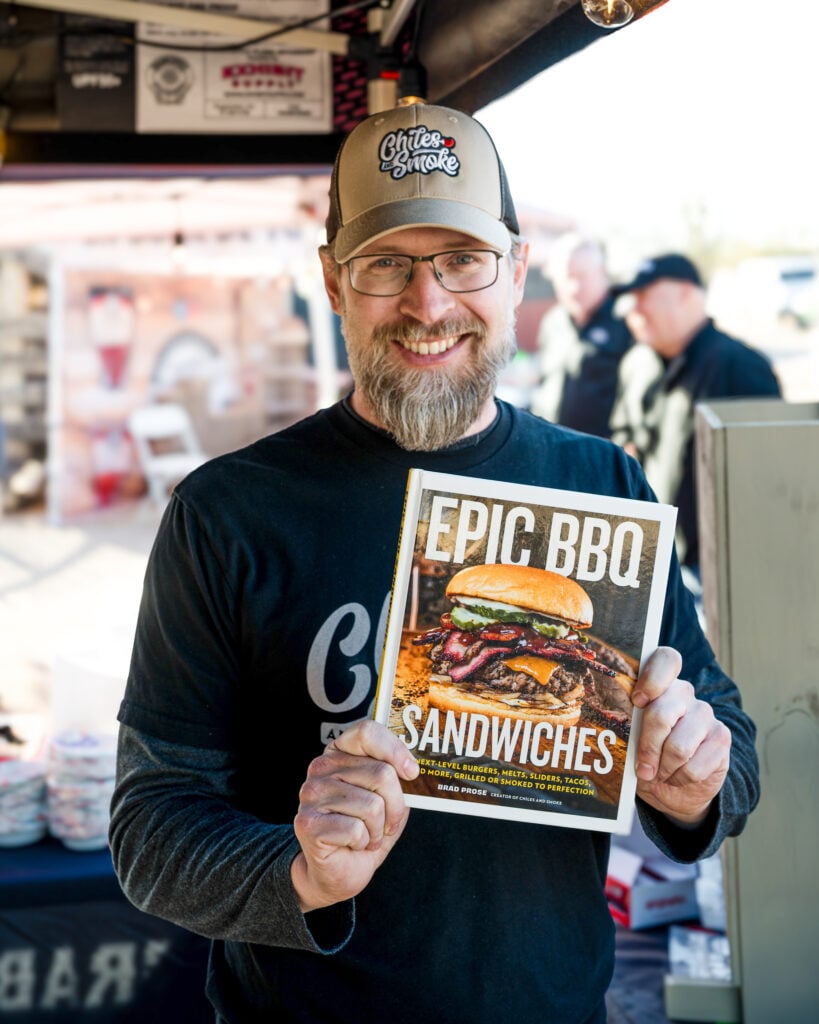
Brad Prose has been crafting recipes over live fire for 20 years. He’s the author of two cookbooks, Chiles and Smoke and Epic BBQ Sandwiches, and the creator of the original smash burger taco, as credited by the Washington Post, TODAY Show, Good Morning America, and Food Network. Brad is the force behind Chiles and Smoke, the home of Sonoran BBQ: bold flavors built around chiles, smoke, and the traditions of the American Southwest. Follow along on Instagram, YouTube, and Facebook.