
Smoked Carnitas Tacos with Charred Salsa Verde
Last tested on: 5/08/2026
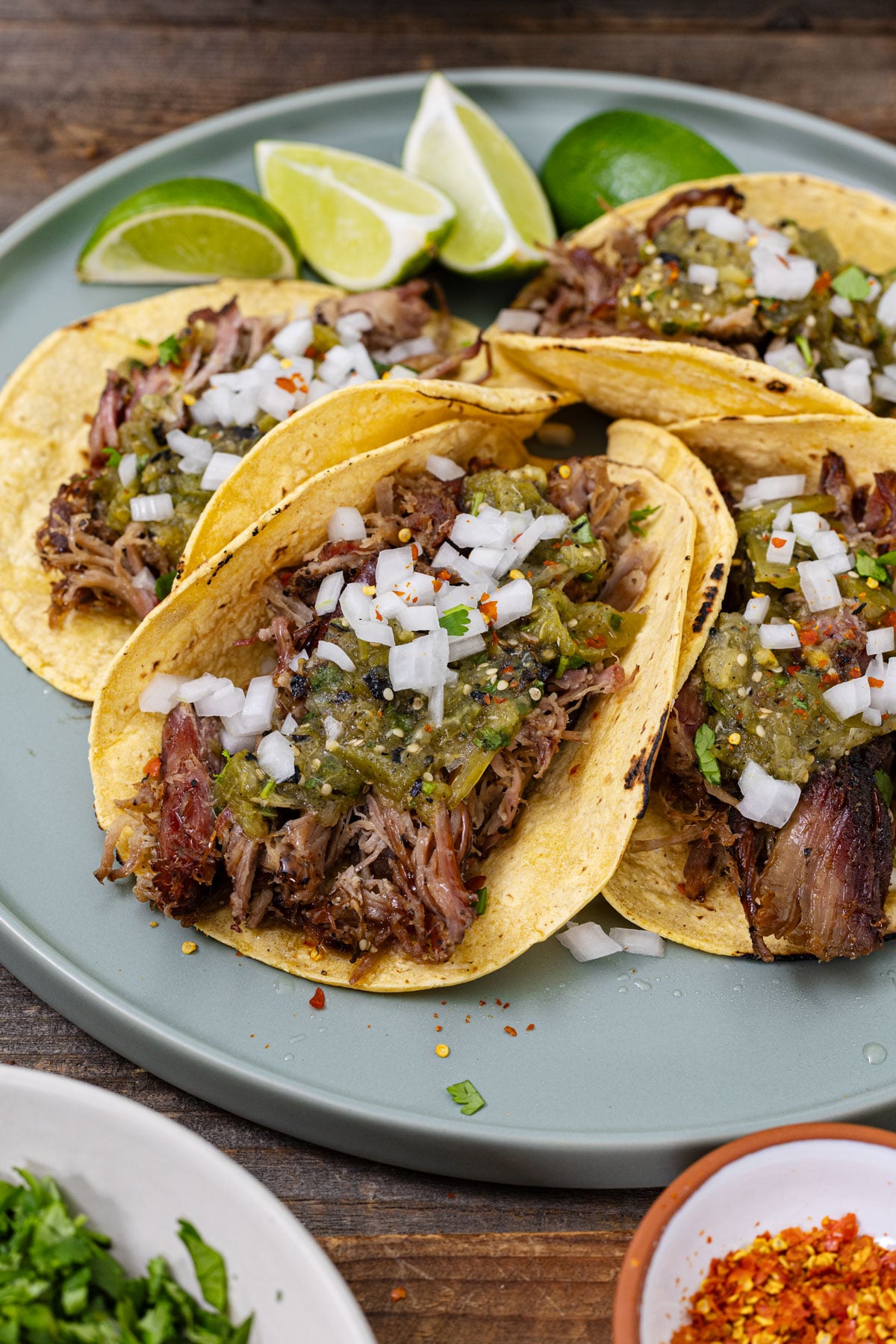
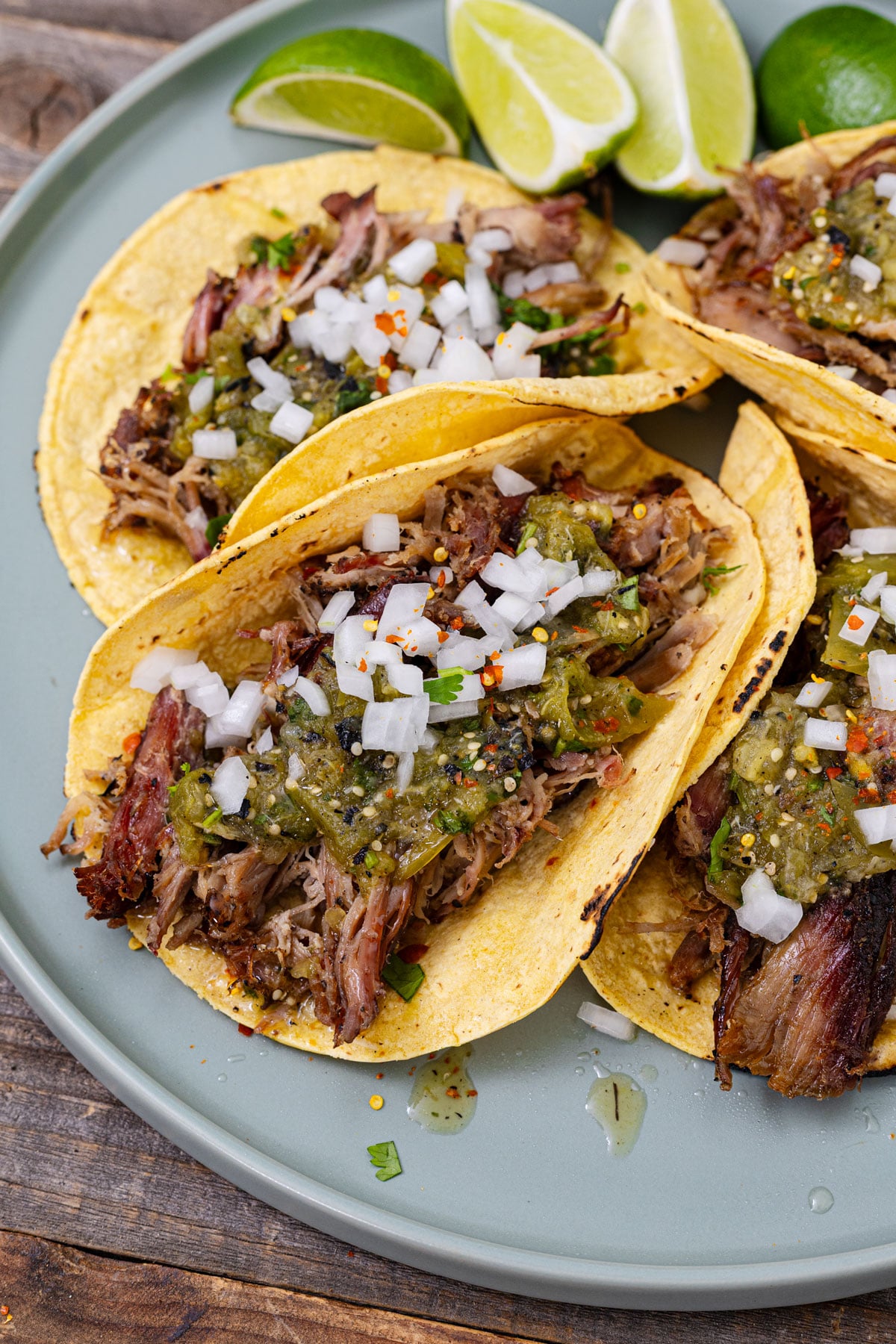
Smoked carnitas tacos are corn tortillas loaded with slow-smoked pulled pork, topped with charred salsa verde made in a molcajete, diced white onion, fresh cilantro, and a hit of ground chiltepin for heat that builds instead of burns. The smoke on the pork and the char on the salsa are doing the same job. Deep, roasted flavor that braised carnitas and jarred salsa simply can’t touch.
This is the taco I make whenever I’ve got a batch of smoked carnitas resting. The combination isn’t new. Salsa verde and carnitas have been a taco stand staple forever. What I wanted was that same build with more fire behind it. Wood smoke on the pork, char on the tomatillos, crispy meat instead of braised. Same bones, different kitchen.
Don’t want tacos? Use the meat and make Carnitas Burrito Bowls or cheesy Carnitas Quesadillas.
Why This Combo Works
- Smoke meets char: The carnitas picks up deep wood smoke during a long cook. The salsa verde gets its own layer of roasted, slightly bitter char from the tomatillos in the molcajete. Two different techniques, same flavor frequency.
- Fat needs acid: Smoked pork shoulder is rich and fatty by nature. Charred salsa verde brings enough acidity and brightness to cut through without drowning the meat.
- Chiltepin adds heat that doesn’t overpower: Ground chiltepin has a sharp, clean heat that hits fast and fades quickly. It amplifies every other flavor on the taco rather than competing with them. This is the Sonoran detail most recipes skip.
- Corn tortillas are non-negotiable: Street-style corn tortillas have the structure and earthiness to hold smoked meat without going soggy. Their flavor plays directly into the smoke-and-char profile of the whole build.
What Goes Into These Tacos
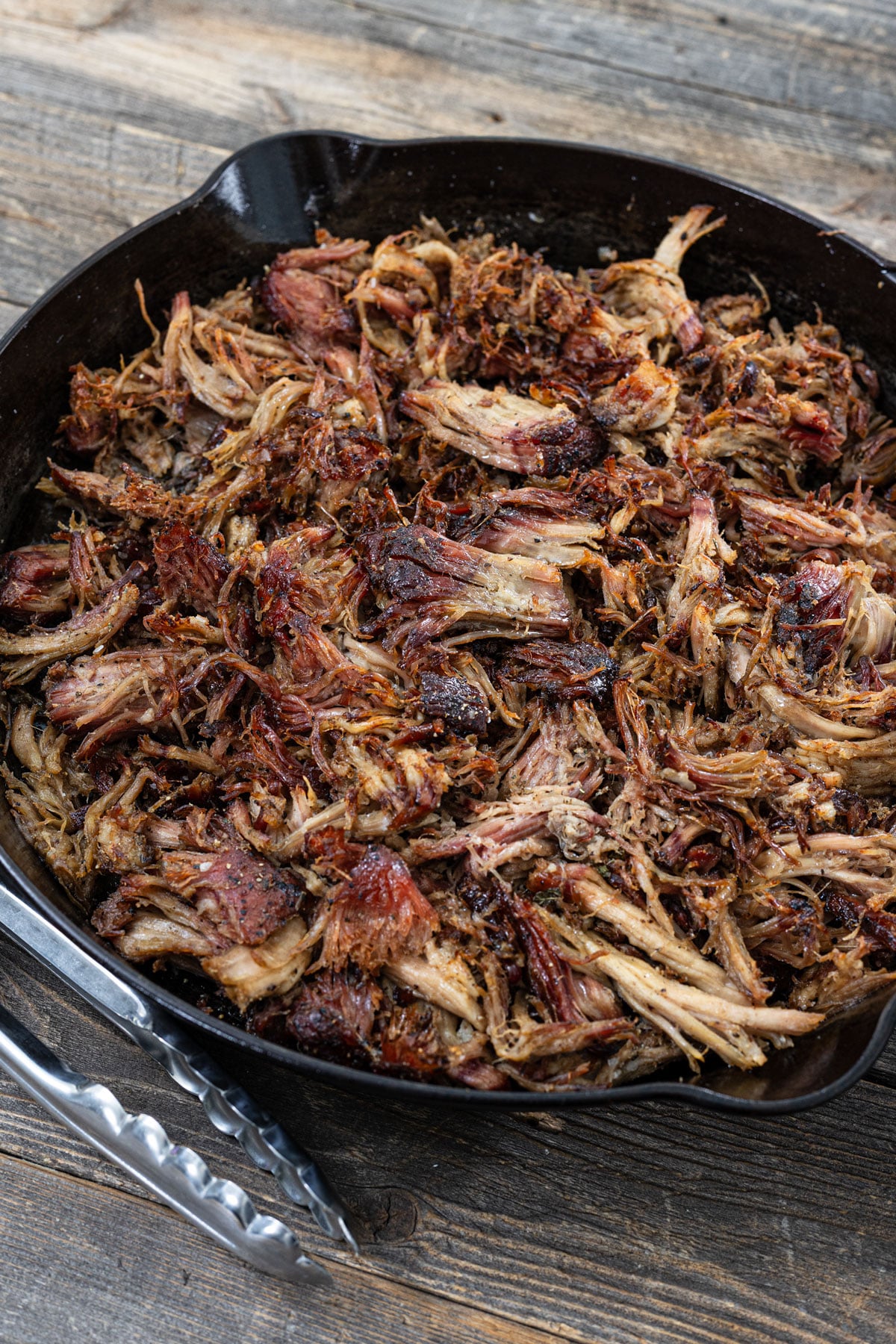
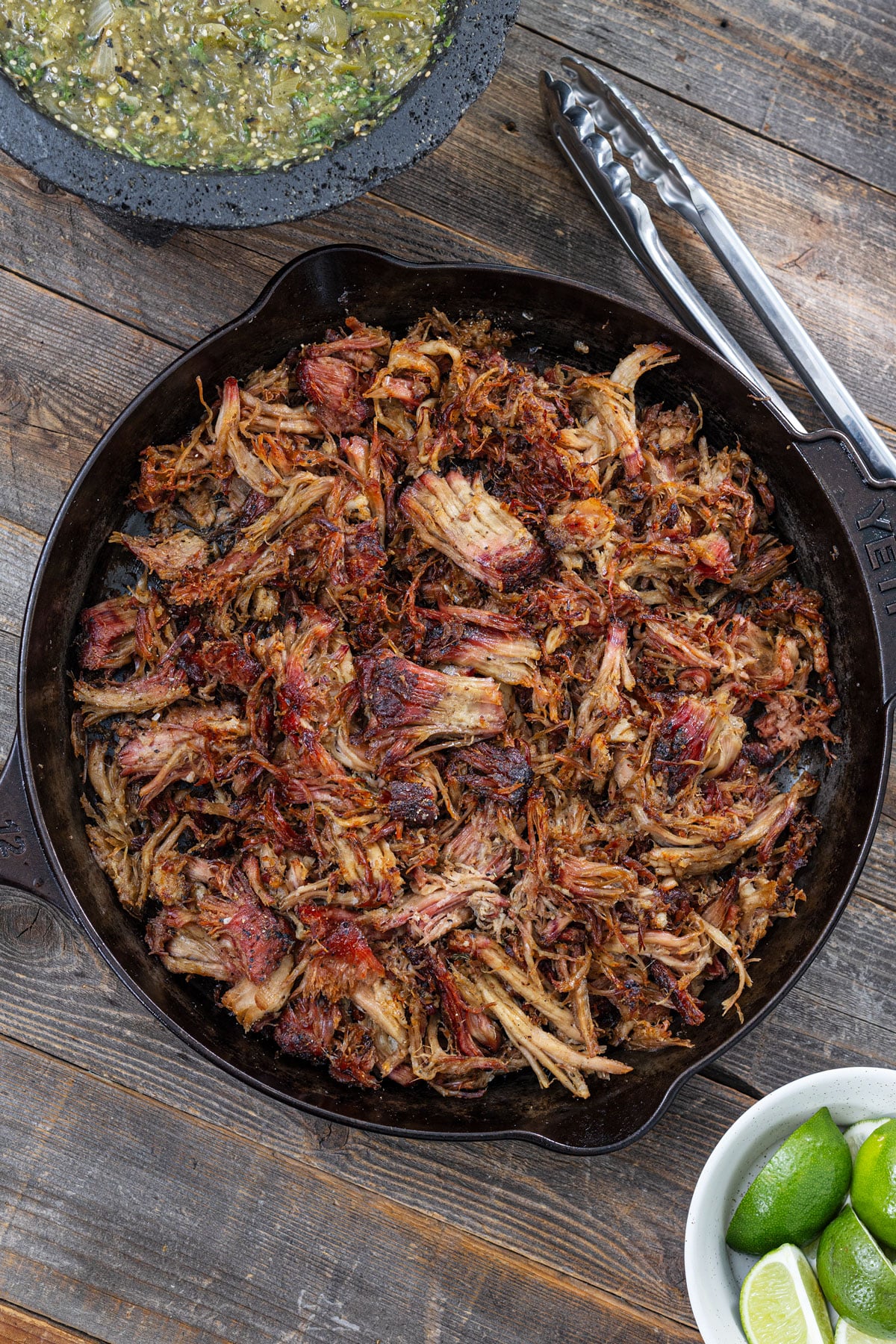
- Smoked carnitas: Made from pork shoulder smoked low and slow, then crisped in a cast iron skillet. The bark and the pull are both essential. Don’t substitute pulled pork or slow cooker carnitas here. The smoke is load-bearing.
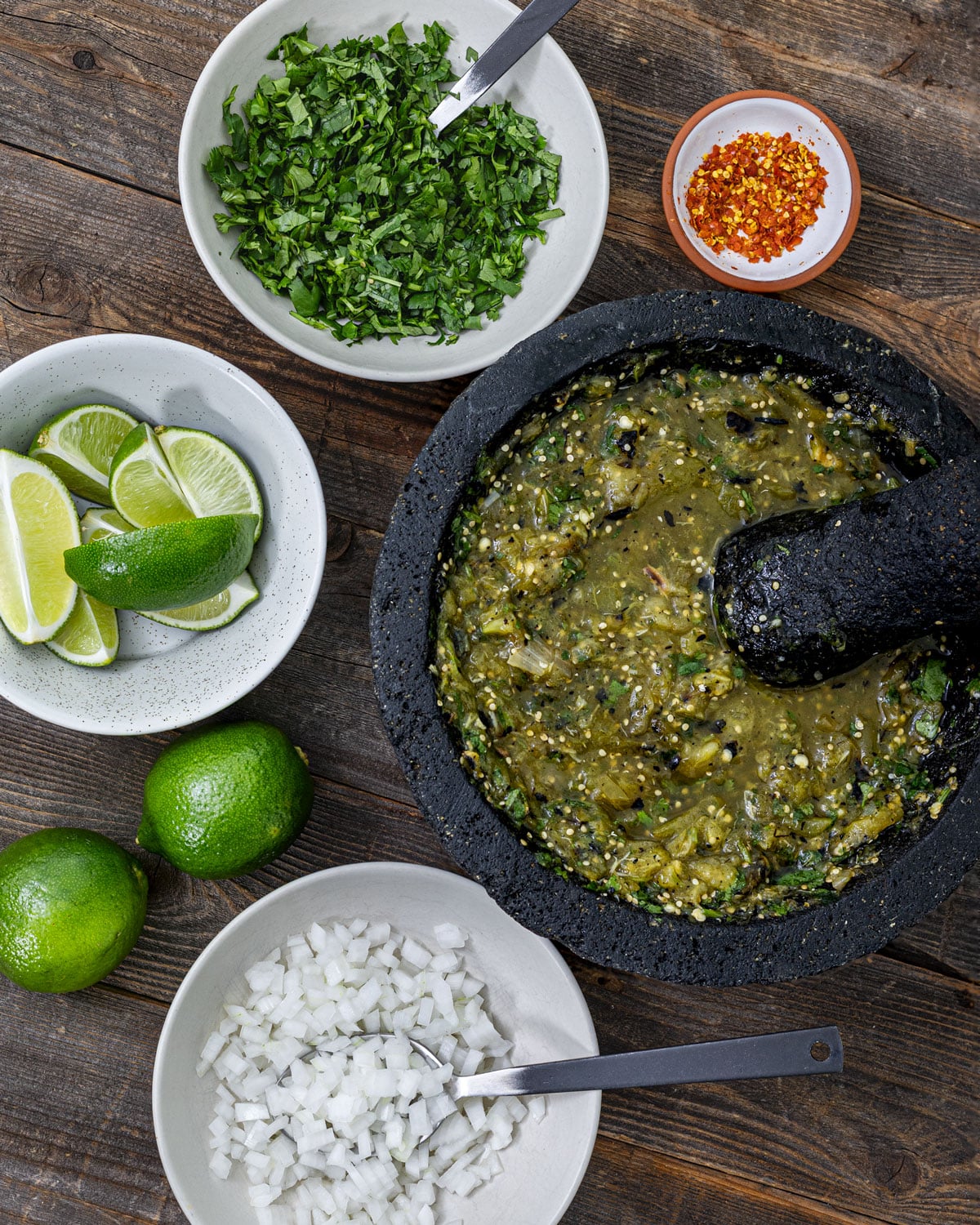
- Charred salsa verde: Roasted tomatillos, charred chiles, and fresh herbs ground together in a molcajete. The texture you get from a molcajete is coarser and more alive than anything a blender produces. It’s worth it.
- Corn tortillas: Small street-taco size, 4 to 5 inches. Warm them directly on a gas flame or dry cast iron until pliable with a little char. Double them up if they’re thin.
- White onion: Diced fine. White onion specifically, not yellow. Sharper and cleaner, and the classic choice for tacos de carnitas at taquerias across Mexico and the Southwest.
- Fresh cilantro: Chopped. Don’t skip it. The brightness cuts the richness in a way nothing else does.
- Ground chiltepin: This is the move. Chiltepin is a wild chile native to Sonora and the American Southwest with an intense, clean heat. Ground over the finished taco, it brings everything into focus. Find it at Mexican markets or order online. Crushed red pepper flakes work in a pinch but the heat profile is different.
- Lime: One squeeze right before eating. Not optional.
How to Build Smoked Carnitas Tacos
Step 1: Get Your Carnitas and Salsa Ready
Both the smoked carnitas and charred salsa verde are made ahead. This is an assembly recipe, not a cook-from-scratch one. If you’re pulling everything together same day, start the carnitas first since it’s a multi-hour smoke. Make the salsa while the pork rests. Have everything warm and ready before you start building tacos.
The carnitas should be warm. Either freshly pulled or reheated in a cast iron skillet over medium heat for 5 to 7 minutes, tossed in the rendered fat until the edges crisp back up. Cold carnitas in a taco is a mistake you only make once.
Step 2: Warm the Tortillas
Warm corn tortillas directly over a gas burner on medium flame, turning every 15 to 20 seconds with tongs until they have light char marks and are pliable. No gas burner? Use a dry cast iron skillet on high heat. Do not use a microwave. It steams them into something soft and forgettable. Keep warmed tortillas stacked under a clean kitchen towel while you work through the batch.
For street-taco style, use 2 small tortillas per taco. It doubles the structure and the corn flavor.
Step 3: Load the Taco
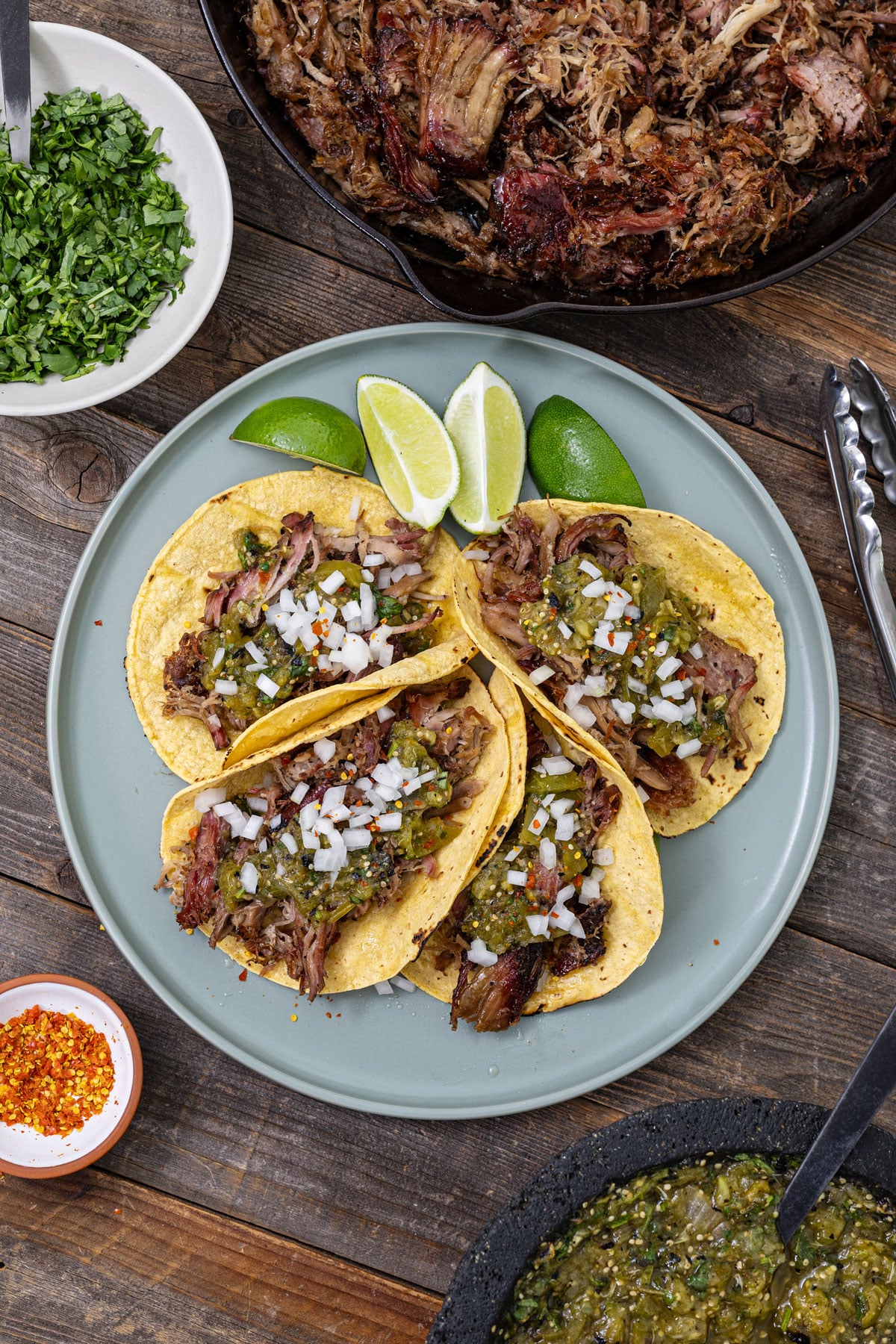
Start with 2 to 3 tablespoons of warm carnitas per taco, layered toward the center of the tortilla. Spoon 1 to 2 tablespoons of charred salsa verde directly over the meat. You want it distributed across the pork, not pooled at the bottom. Add a pinch of diced white onion and a small handful of chopped cilantro.
Finish with a pinch of ground chiltepin over the top. Just enough to see it land. Squeeze a lime wedge over everything right before it goes to the table. Build all tacos before serving rather than assembling one at a time.
Pro Tips from the Pit
- Crisp the carnitas before you build: Reheating in a dry cast iron skillet over medium-high for 5 to 7 minutes revives the bark and renders the fat back into the meat. It makes a real difference in texture.
- Don’t drown the taco in salsa: 1 to 2 tablespoons per taco is the right ratio. The salsa should complement the smoke, not cover it up. If you’re reaching for more, the carnitas probably needs more salt.
- Use a molcajete for the salsa, not a blender: The hand-ground texture is coarser and catches more of the charred bits from the tomatillos. Serve the leftover salsa in the molcajete alongside the tacos.
- Chiltepin is a finishing spice here, not a cooking ingredient: Add it after the taco is built, not mixed into the salsa or the meat. The quick hit of heat on top is the whole point.
- Make more carnitas than you think you need: Leftover smoked carnitas keeps in the fridge for 4 days and in the freezer for up to 3 months. These tacos go fast, and having extra pork on hand means you can build another round in 10 minutes.
What to Serve With Smoked Carnitas Tacos
- Southwest Creamed Corn: Poblanos, cotija, and lime make this the right corn dish for a taco spread. Richer than elote, still bright enough to hold its own next to the salsa verde.
- Grilled Corn Ribs: If you’re already firing up the grill for the carnitas, throw these on. Good contrast to the soft, pulled pork.
- Creamy Pinto Bean Dip: Works as a side or a spread on the tortilla before the carnitas goes on. Adds body without competing with the salsa.
Want to build out the taco bar? These toppings also work well with the crispy carnitas:
- Quick Pickled Red Onions: Acid and color. Good swap or addition if you want more brightness than raw white onion delivers.
- Fresh Pico de Gallo: For anyone who wants a fresher, chunkier salsa option on the table.
- Roasted Hatch Chile Salsa Verde: A smokier, earthier riff on the charred salsa verde. Put both on the table and let people choose.
Frequently Asked Questions
Tacos de carnitas is the traditional Mexican preparation: slow-cooked pork, usually braised in lard or its own fat, served in corn tortillas with white onion, cilantro, and salsa verde. It is one of the most iconic taqueria dishes in Mexico, particularly associated with the state of Michoacán. This recipe honors that tradition while taking the pork through a smoker instead of a braise, adding a layer of wood smoke to the classic build.
The classic toppings are white onion, cilantro, salsa verde, and lime. That formula exists for a reason. White onion specifically gives the sharp, clean bite that cuts through the fat. Charred salsa verde is better here than red salsa because the acidity and brightness balance the richness of the pork. The one non-traditional addition worth making: a pinch of ground chiltepin over the top for heat that builds without burning.
Charred salsa verde is the best match for carnitas tacos. The acidity of roasted tomatillos cuts the fat in the pork, and the char on the tomatillos echoes the smoke on the meat. A bright blender-style salsa verde works too, but the roasted version has more depth. Avoid heavy red salsas. They compete with the pork instead of complementing it.
Yes, smoked carnitas develops a bark on the outside that braised carnitas can’t replicate, and the wood smoke adds a flavor dimension that plays well against salsa verde and lime. The key is crisping the smoked carnitas in a cast iron skillet before building the tacos. It mimics the texture of traditional fried carnitas while keeping the smoke flavor intact.
The best way to reheat carnitas is in a dry cast iron skillet over medium-high heat for 5 to 7 minutes, tossing occasionally, until the edges crisp and the fat renders back into the meat. Add a splash of the original cooking liquid or chicken broth if the pork looks dry. Avoid the microwave. It makes carnitas soft and steamy rather than crispy and textured.
Equipment Used
- Smoker or charcoal grill: For the carnitas. Any smoker works, as does a kettle grill set up for indirect heat with wood chunks.
- Cast iron skillet: Essential for crisping the carnitas before building. Also useful for warming tortillas if you don’t have a gas burner.
- Molcajete: For grinding the charred salsa verde. The texture is noticeably better than a blender and it doubles as a serving vessel.
- Tongs: For turning tortillas on the flame and handling the cast iron.
Try It and Tag Us
Make sure you’ve got plenty of salsa, because you’re going to want piles of these tacos. Tag us on Instagram when you do. Leave a rating below if this helped.
Smoked Carnitas Tacos with Charred Salsa Verde
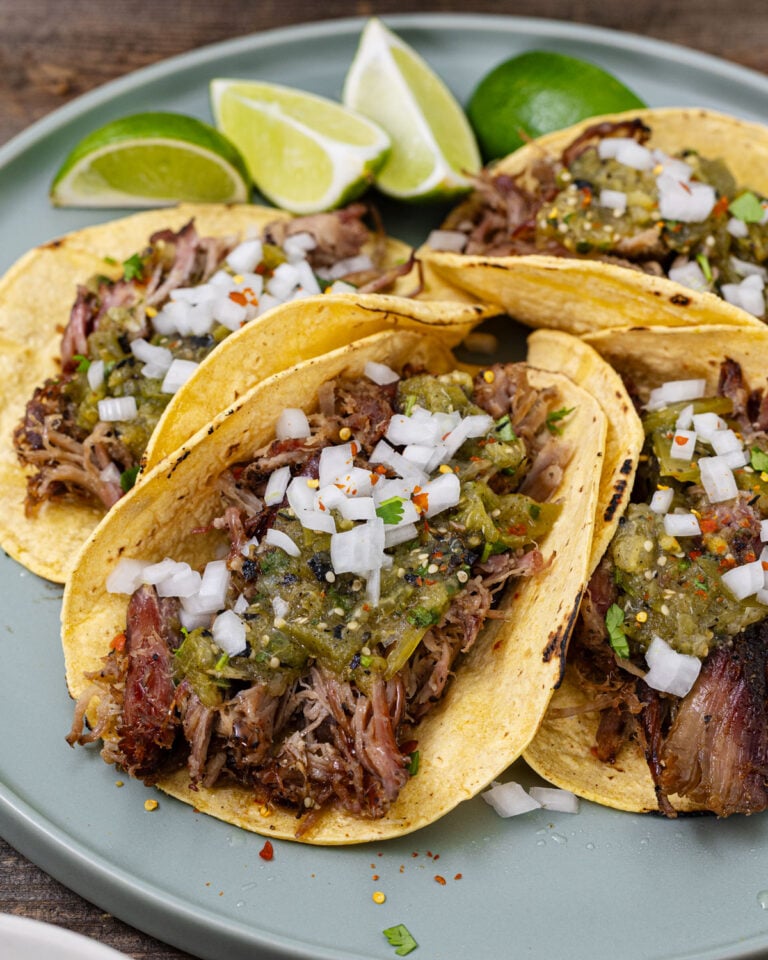
Salsa verde and carnitas have been a taco stand staple forever. This version puts more fire behind it. Wood-smoked pork, charred salsa verde from the molcajete, crispy meat, fresh toppings, and ground chiltepin on warm corn tortillas. Same classic build, born in fire.
- Total Time: 30 minutes
- Yield: 8 tacos 1x
Ingredients
- 1½ cups smoked carnitas, warm (see Smoked Carnitas recipe, approximately 12 oz pulled pork)
- 1½ cups charred salsa verde (see Charred Salsa Verde recipe, approximately one full molcajete batch)
- 8 corn tortillas (or 16 small, if street tacos)
- ½ cup white onion, finely diced (about ½ medium onion)
- ¼ cup fresh cilantro, chopped
- 1 to 2 teaspoons ground chiltepin (adjust to heat preference)
- 2 limes, cut into wedges
Instructions
- Crisp the carnitas. Heat a cast iron skillet over medium-high heat. Add the smoked carnitas and cook, tossing occasionally, for 5 to 7 minutes until the edges are crispy and the fat has rendered back into the meat. If the pork looks dry, add a splash of broth or reserved cooking liquid. Keep warm.
- Warm the tortillas. Working in batches, warm corn tortillas directly over a gas burner on medium flame, turning every 15 to 20 seconds with tongs, until pliable and lightly charred in spots. Alternatively, warm in a dry cast iron skillet over high heat. Stack finished tortillas under a clean kitchen towel to stay pliable.
- Build the tacos. For each taco, stack 2 corn tortillas together. Add 2 to 3 tablespoons of warm carnitas to the center. Spoon 2 to 3 tablespoons of charred salsa verde over the meat. Top with a pinch of diced white onion and a small amount of chopped cilantro.
- Finish and serve. Pinch a small amount of ground chiltepin over each taco. Squeeze a lime wedge over the top right before serving. Build all 8 tacos before bringing to the table.
Notes
- Make ahead: Both the smoked carnitas and charred salsa verde can be made 1 to 3 days ahead and stored separately in the refrigerator. Reheat the carnitas in cast iron as directed above. The salsa can be served at room temperature or gently warmed.
- Chiltepin substitution: Ground chiltepin is available at Mexican markets and online. In a pinch, use crushed red pepper flakes or a small amount of ground árbol chile. The heat profile is different but the effect is similar. Start with less than you think you need. Chiltepin heat builds.
- Tortilla note: Thin store-bought corn tortillas benefit most from doubling up. If you’re using thicker handmade-style tortillas, one per taco is sufficient.
- Storage: Leftover carnitas keeps refrigerated for up to 4 days or frozen for up to 3 months. Store salsa verde separately in a sealed container in the refrigerator for up to 5 days. Assembled tacos do not store well. Build to order.
- Scaling: This recipe is based on 1.5 cups of carnitas and 1 batch of charred salsa verde (approximately 1.5 cups). To scale up, double the carnitas and salsa and increase tortillas accordingly. One full smoked pork shoulder (7 to 8 lbs) yields enough carnitas for 30 to 40 tacos.
- Prep Time: 15 minutes
- Cook Time: 15 minutes
- Category: Mexican, Pork
- Method: Grilling, Stovetop
- Cuisine: Mexican
- Diet: Dairy-Free, Gluten-Free
Nutrition
- Serving Size:
- Calories: 300
- Sugar: 2.4 g
- Sodium: 356.7 mg
- Fat: 7.1 g
- Carbohydrates: 17.4 g
- Protein: 40.2 g
- Cholesterol: 113.2 mg

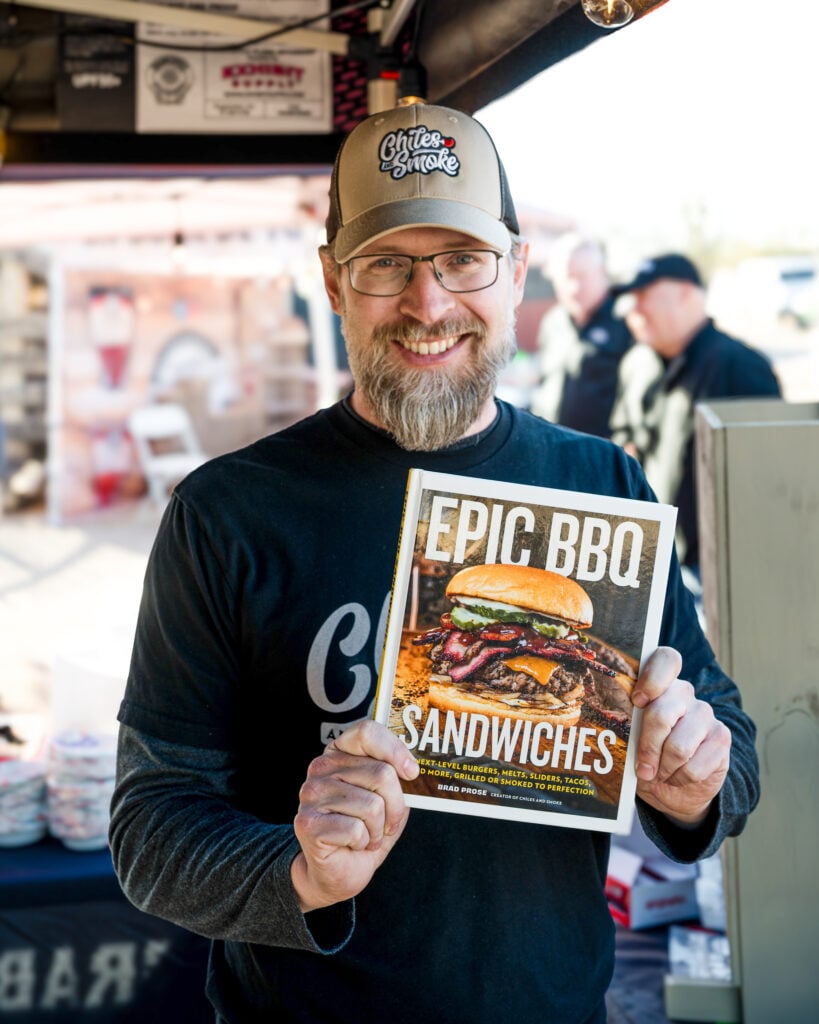
Brad Prose has been crafting recipes over live fire for 20 years. He’s the author of two cookbooks, Chiles and Smoke and Epic BBQ Sandwiches, and the creator of the original smash burger taco, as credited by the Washington Post, TODAY Show, Good Morning America, and Food Network. Brad is the force behind Chiles and Smoke, the home of Sonoran BBQ: bold flavors built around chiles, smoke, and the traditions of the American Southwest. Follow along on Instagram, YouTube, and Facebook.


