
Smoked Carnitas (Butterflied Pork, Crispy Finish)
Last tested on: 5/07/2026
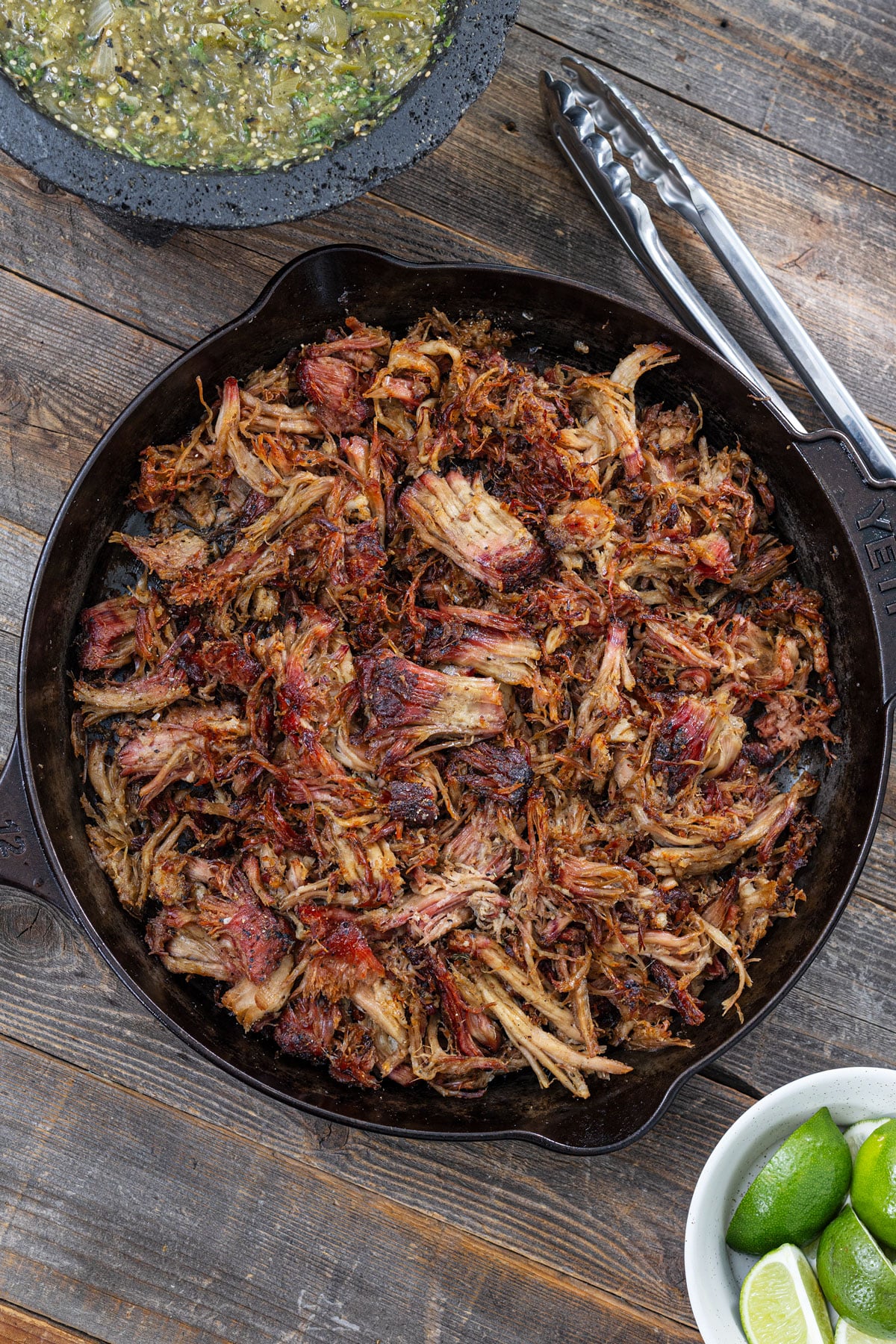
Smoked carnitas are made by butterflying a boneless pork shoulder, coating it in a warm spice blend built around black pepper, brown sugar, cinnamon, and coriander, and smoking it flat at 265°F for about 5 hours until the bark is dark and set. Then you wrap it, finish at 300°F until probe-tender, shred it, and crisp it on a griddle or under the broiler. Right before serving, fresh orange or lime juice goes on top. That last step is the difference between pulled pork and carnitas.
Traditional carnitas are braised in lard. The smoked version gets you something different: deeper bark, more complex flavor from the wood, and that same pull-apart tenderness. But the crispy finish is non-negotiable either way.
I’ve made this enough times to know that the spice blend is the soul of the dish. Cinnamon, coriander, and brown sugar together hit something close to the warm, slightly sweet spice profile of a Mexican Coca-Cola braised carnitas. It just works, and once you taste it you’ll understand why.
Why This Method Works
- Butterflying maximizes bark: Opening the pork flat means every surface gets smoke and seasoning, not just the outside. More bark means more of those crispy, caramelized edges when you hit the griddle. For a full breakdown of why butterflying produces better results, read the Smoked Butterflied Pork Butt post.
- The spice blend does something specific: Cinnamon and coriander together with brown sugar mimic the warm, slightly sweet complexity of a Coca-Cola braise. You get that depth without the braising liquid.
- 16-mesh black pepper builds real bark: Coarser grind, more surface area, better crust. It’s the same reason Texas pitmasters reach for it on brisket. It matters here too.
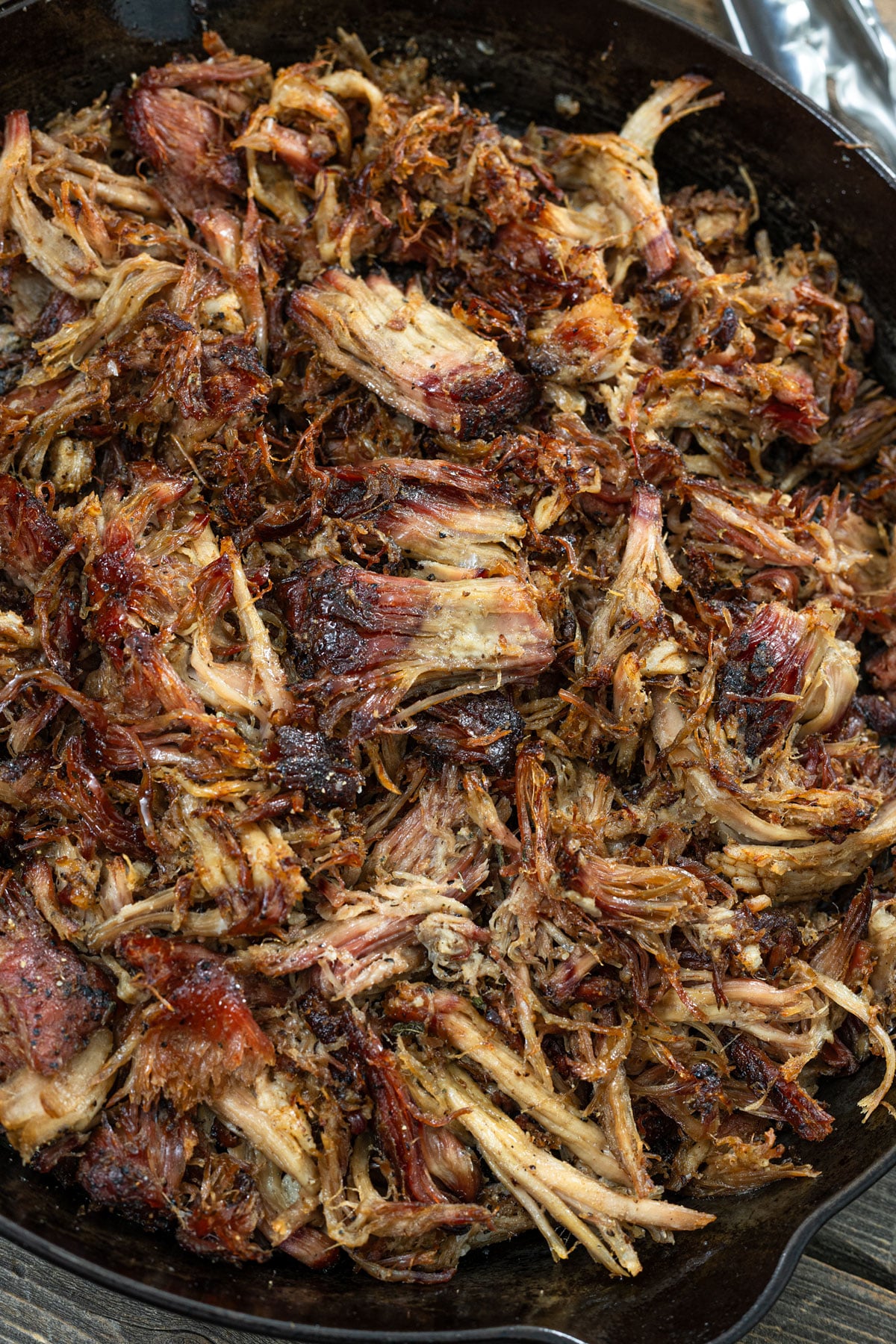
- The crispy finish is mandatory: Shredded smoked pork is great. Shredded smoked pork crisped on a hot griddle with fresh citrus is carnitas. The Maillard reaction on that griddle is a second layer of flavor you can’t get any other way.
- Make-ahead friendly by design: Because you’re crisping the meat to order anyway, carnitas doesn’t need to come straight off the smoker. Smoke it the day before, refrigerate in its juices, and crisp portions when you’re ready. It’s one of the best meal-prep proteins I know.
The Carnitas Spice Blend
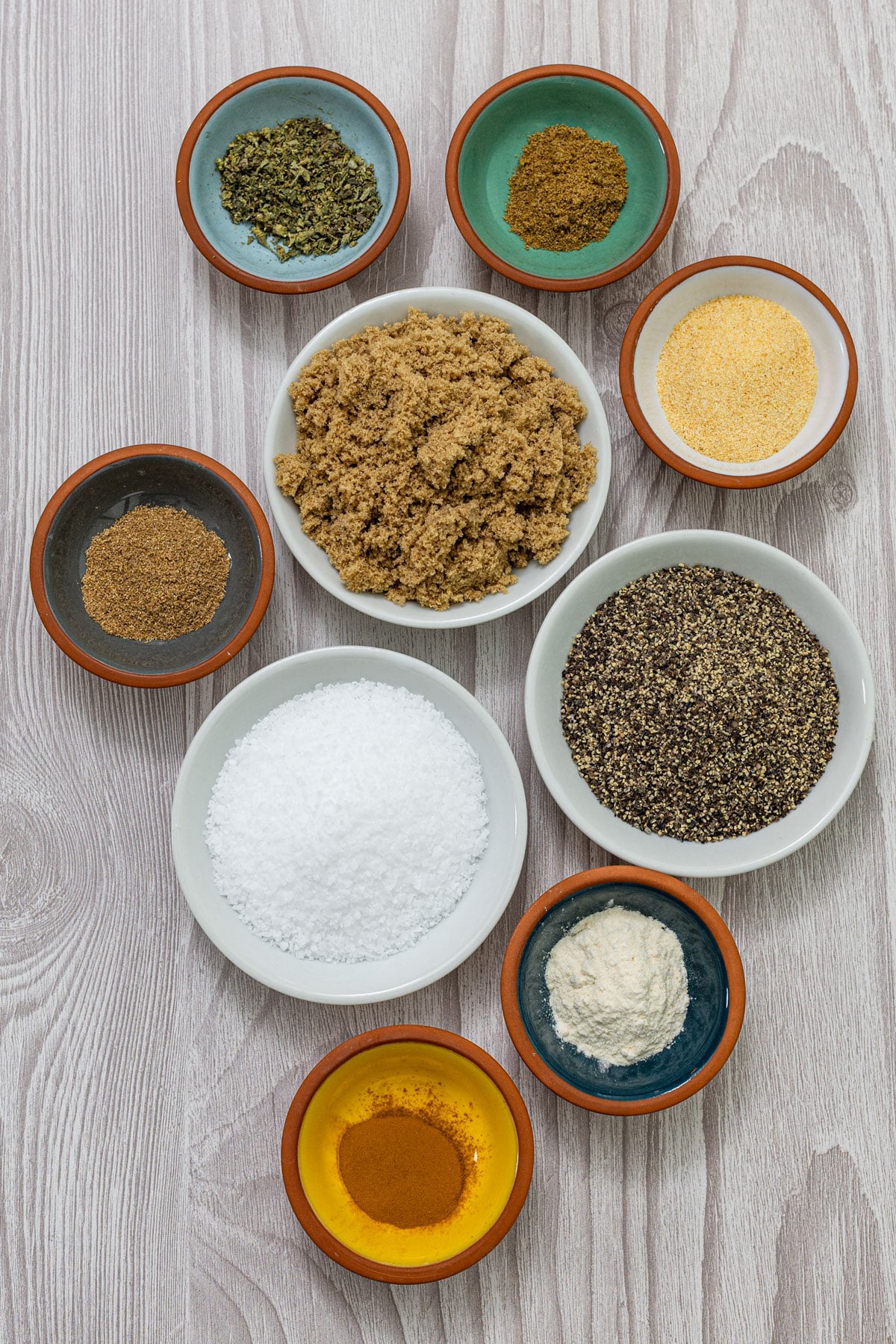
This recipe makes enough for a 6–9 lb pork butt with rub to spare. Store the extra in an airtight container.
- Brown sugar (6 tbsp): Builds bark and caramelization on the smoker and on the griddle. Also part of what gives this blend its Coca-Cola-adjacent sweetness.
- 16-mesh black pepper (4 tbsp): Coarse grind for maximum bark. Standard coarse ground black pepper works if you can’t find 16-mesh, but it’s worth seeking out.
- Kosher salt (4 tbsp): Seasons the meat and draws out moisture to set the bark. Don’t substitute table salt without reducing the amount.
- Granulated garlic (1 tbsp): Earthy depth without the burn of fresh garlic. Granulated distributes more evenly in a dry rub.
- Onion powder (2 tsp): Rounds out the savory base.
- Ground Mexican oregano (2 tsp): More citrusy and earthy than Mediterranean oregano. This is one substitution worth getting right. It’s a fundamentally different herb.
- Ground cumin (1 tsp): Warm and slightly bitter, the backbone of most Mexican spice profiles.
- Ground coriander (1 tsp): Floral and slightly citrusy. Works with the cumin and cinnamon to tie the whole blend together.
- Cinnamon (½ tsp): The sleeper ingredient. Just enough to add warmth and complexity without reading as a dessert spice. This is what makes the blend taste like something specific rather than just pork rub.
A note on black pepper: 16-mesh is worth seeking out — it’s the coarse grind that builds real bark without overpowering the blend. If you can only find fine ground, reduce it to 2 tablespoons. At the full 4 tablespoons, fine ground pepper will dominate everything else in the rub.
How to Make Smoked Carnitas: Step-by-Step
Step 1: Butterfly the Pork Shoulder
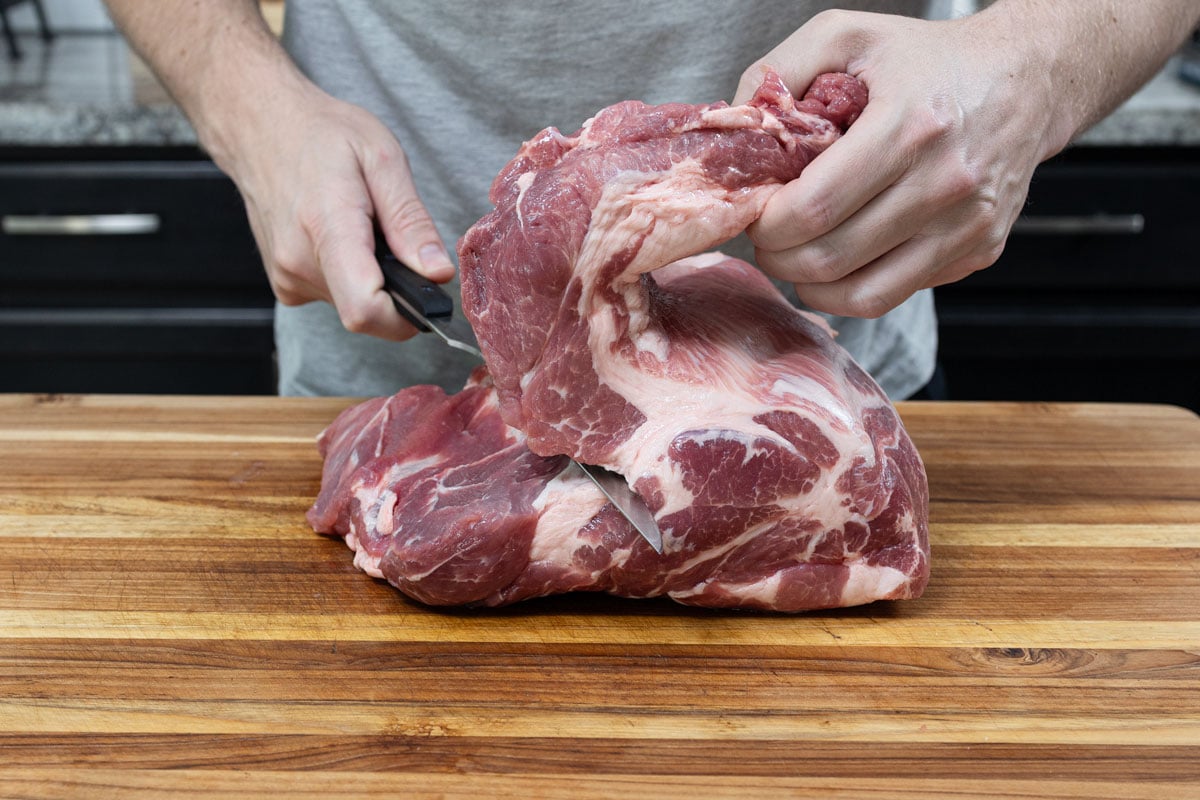
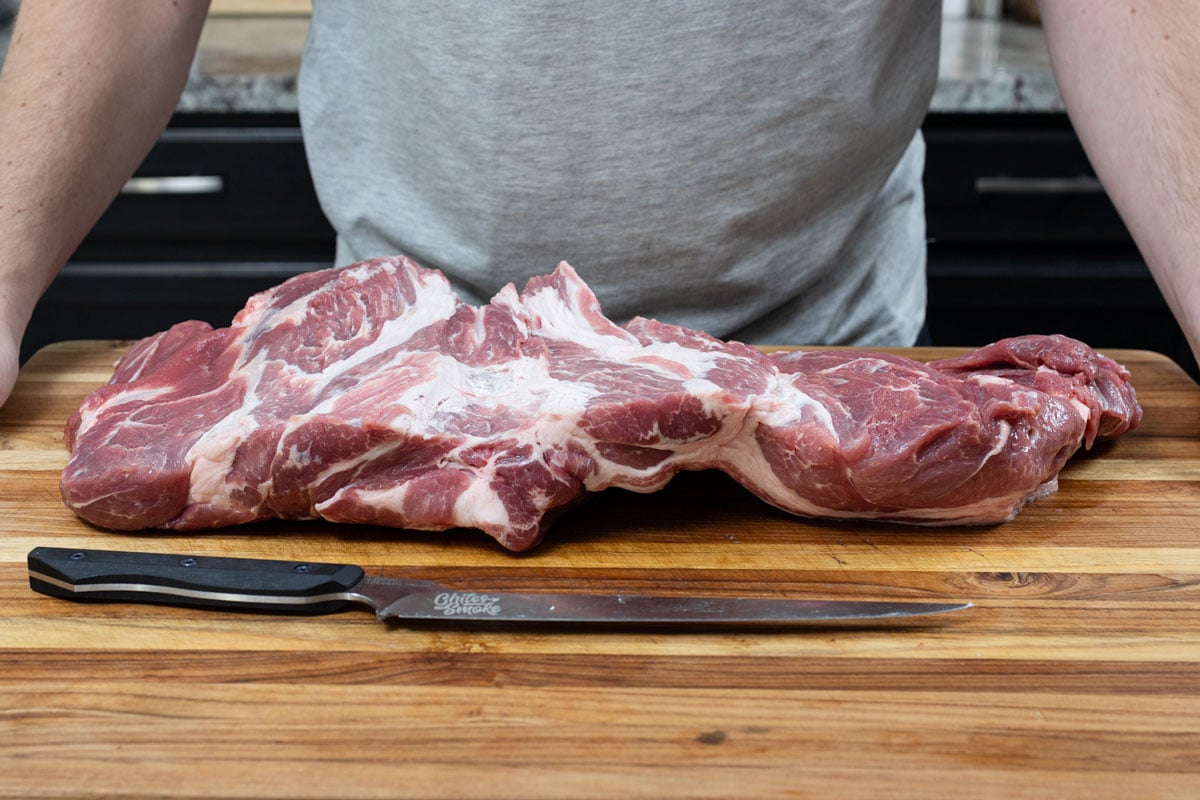
Place the boneless pork butt fat-side down on your cutting board. Follow the natural muscle seams with a sharp knife to open it flat, kind of like unrolling it. You’re aiming for a relatively even thickness, no thicker than 3 inches at the deepest point.
Don’t try to force a uniform shape. The meat will open naturally along the seams if you follow them instead of cutting against them.
Pro tip: Cold meat butterflies cleaner. Pull it from the fridge 30 minutes before you start, butterfly it first while it’s still firm, then let it rest with the rub on while your smoker comes up to temp.

Slice the pork with a sharp knife Flatten it out for seasoning and smoking
Step 2: Apply the Spice Blend
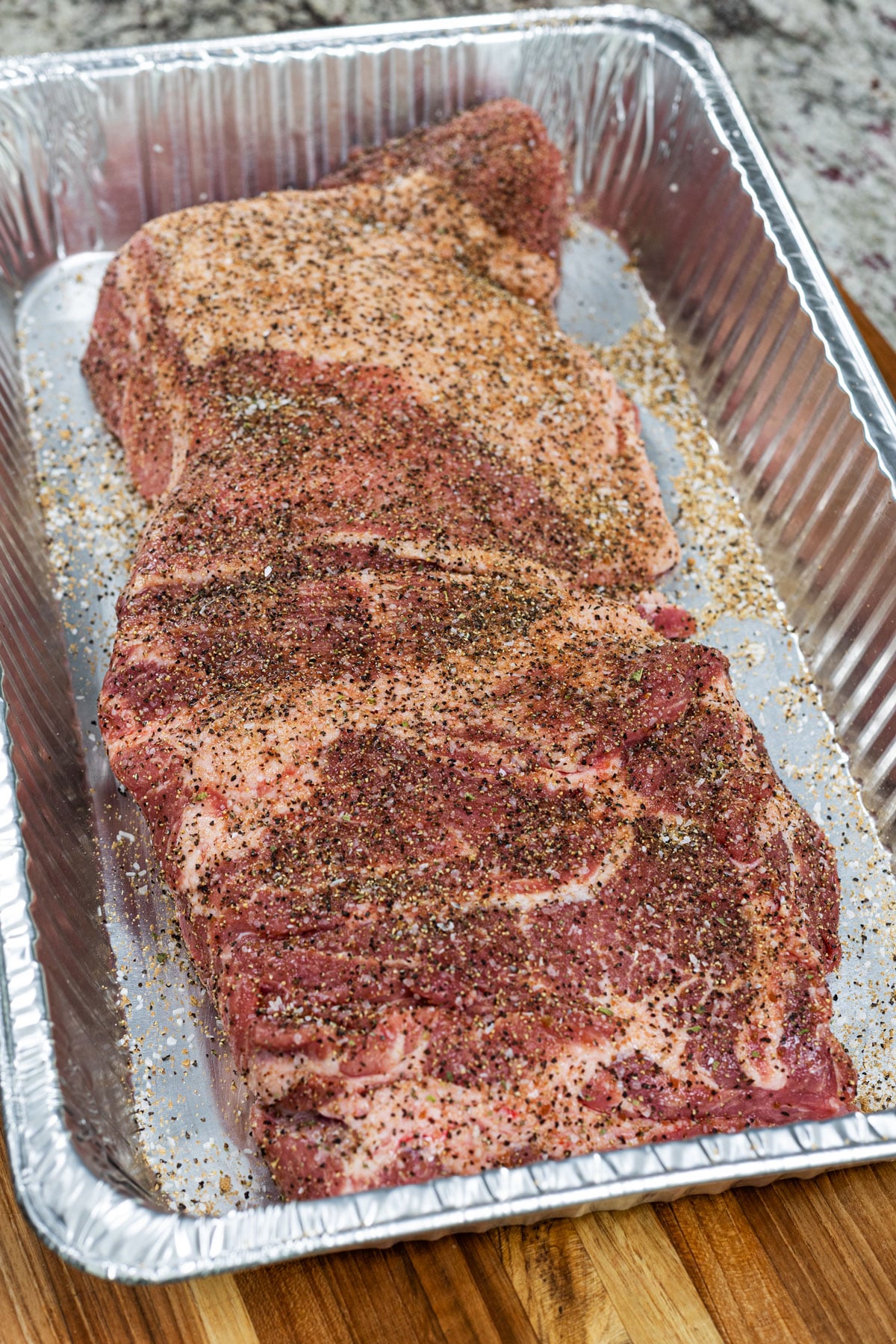
Mix all the spice blend ingredients together and apply generously to every surface — top, bottom, and along the opened seams. Press it in so it adheres rather than just sitting on top. Because the pork is opened flat you have significantly more surface area than a whole butt, so you’ll go through more rub than you expect.
Let it rest at room temperature for 20–30 minutes while the smoker comes up to temperature, or wrap and refrigerate overnight for deeper penetration.
Step 3: Smoke Flat Until the Bark Sets
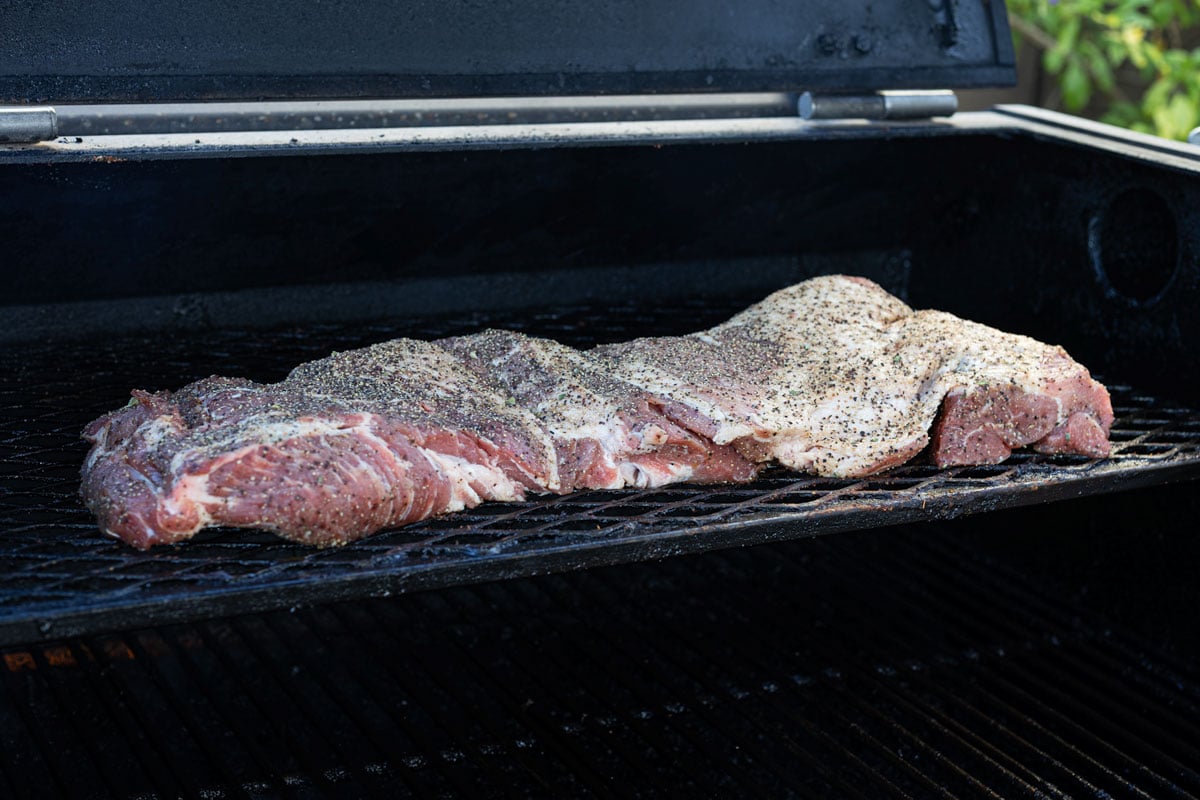
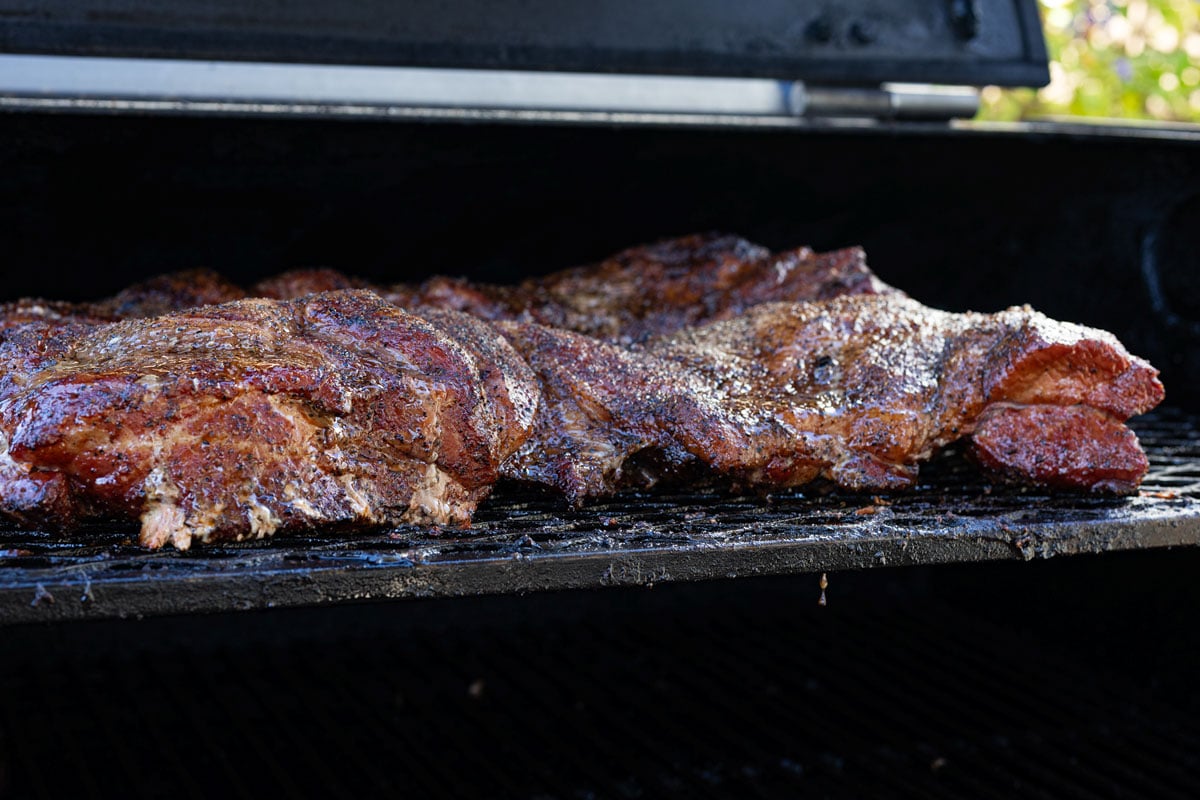
Place the butterflied butt on the smoker fat-side up, laid flat and fully open. Cook at 265°F for approximately 5 hours, or until the bark is dark, firm to the touch, and the internal temperature is in the 165–175°F range. Don’t rush this phase. The flat smoke period is where all the flavor and texture are built. The bark should feel dry and set before you move to the wrap. If it’s still tacky, give it more time.
What you’re looking for: Bark that doesn’t give when you press it with a finger. If it indents and feels soft, it’s not ready.
Step 4: Fold, Wrap, and Finish
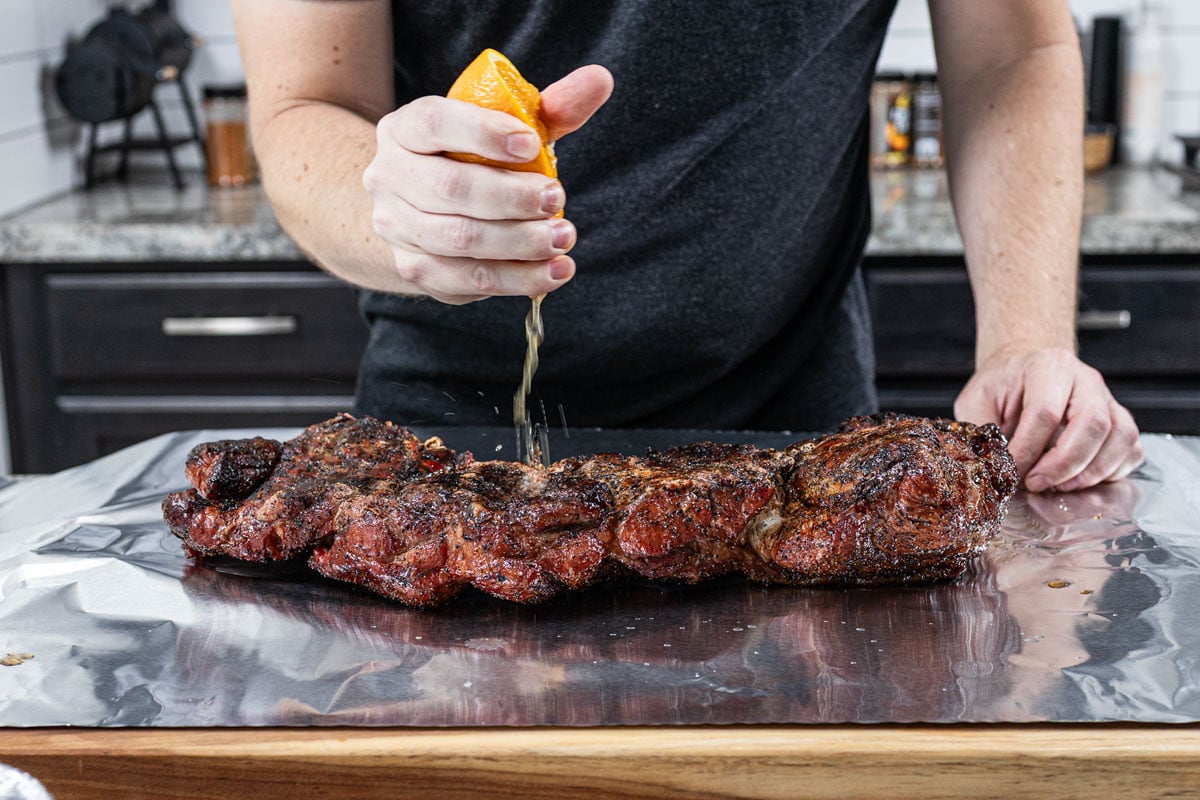
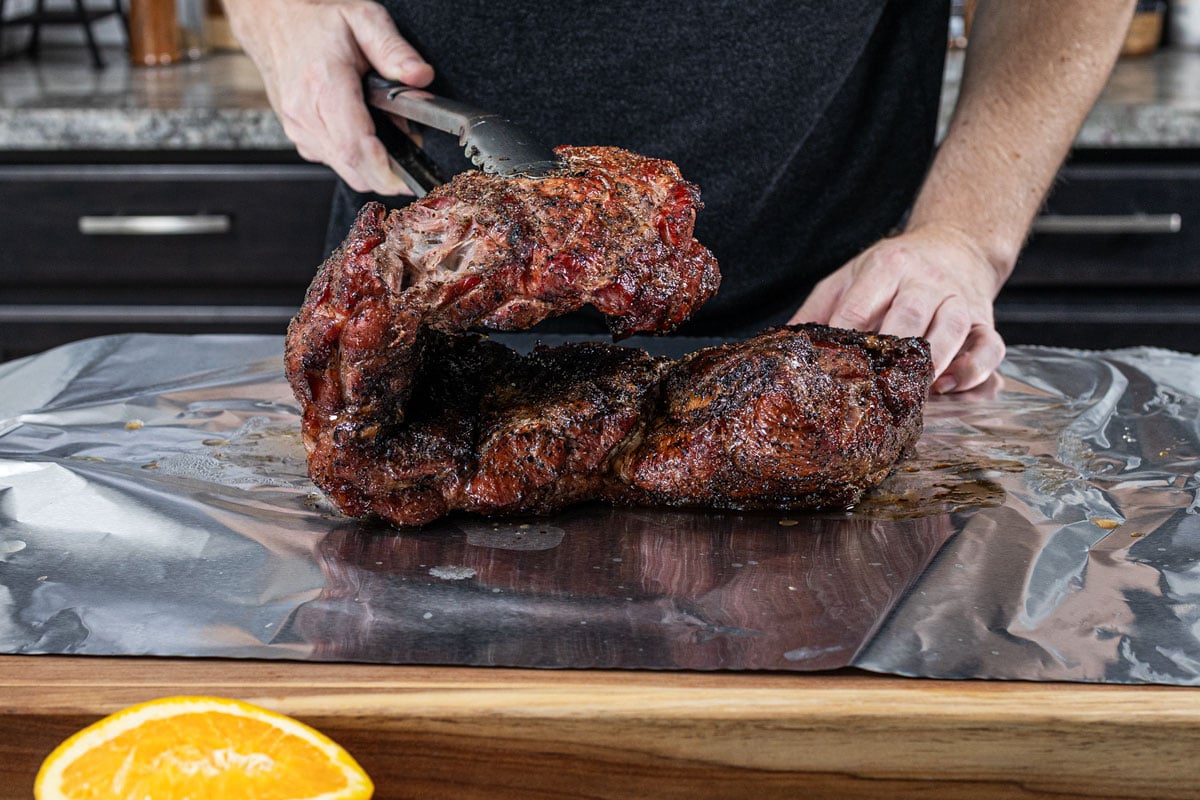
Once the pork is folded back in on itself, squeeze half an orange over the meat before sealing the foil. The juice steams inside the wrap during the finish and adds a subtle citrus note that works beautifully with the cinnamon and coriander in the rub.
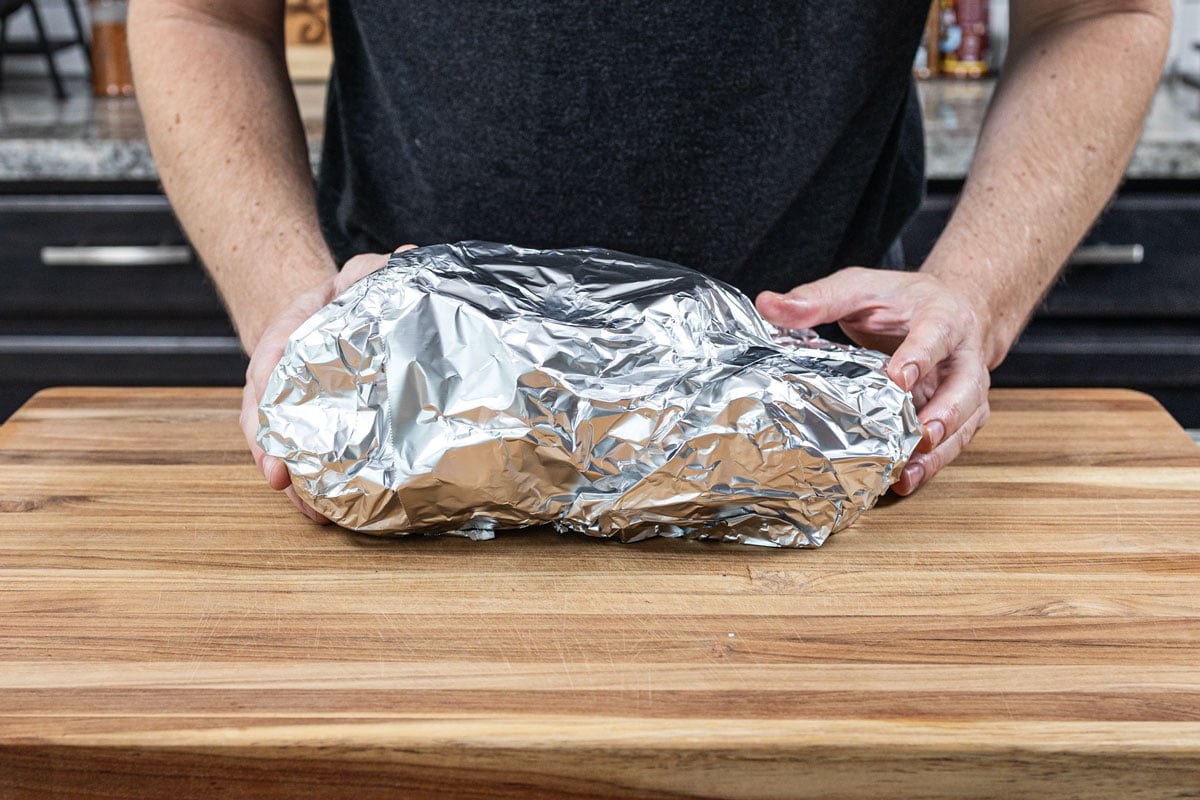
Double-wrap tightly in heavy duty aluminum foil and return to the smoker at 300°F. Cook until probe-tender at 203–208°F, meaning the thermometer slides in with no resistance. This typically takes another 1.5–2.5 hours, depending on size.
Step 5: Rest and Shred
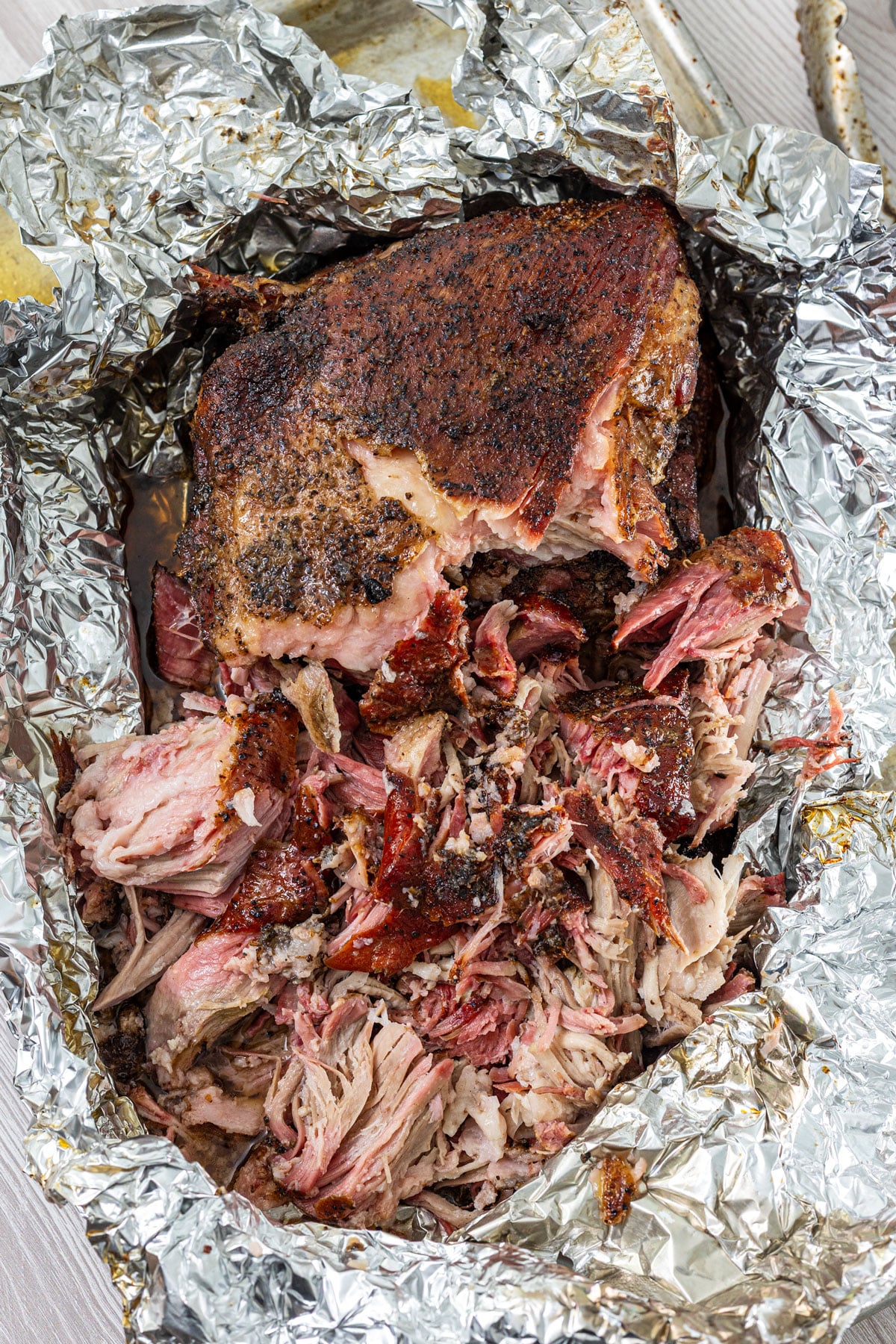
Remove from heat and rest the wrapped pork for 45 minutes. Open the foil carefully and pour any collected juices back over the meat. Shred into rough chunks rather than fine strands. You want irregular pieces with some size to them so you get good caramelization when they hit the griddle. Store the shredded pork in its juices in an airtight container.
If you’re serving same-day, move straight to Step 6. If you’re making ahead, refrigerate overnight and crisp the next day. The overnight rest is the move. The pork softens in its own juices, the texture gets more tender, and cold pork crisps up cleaner and faster in a hot pan.
Step 6: Crisp the Carnitas
This step is mandatory. It’s what makes carnitas carnitas.
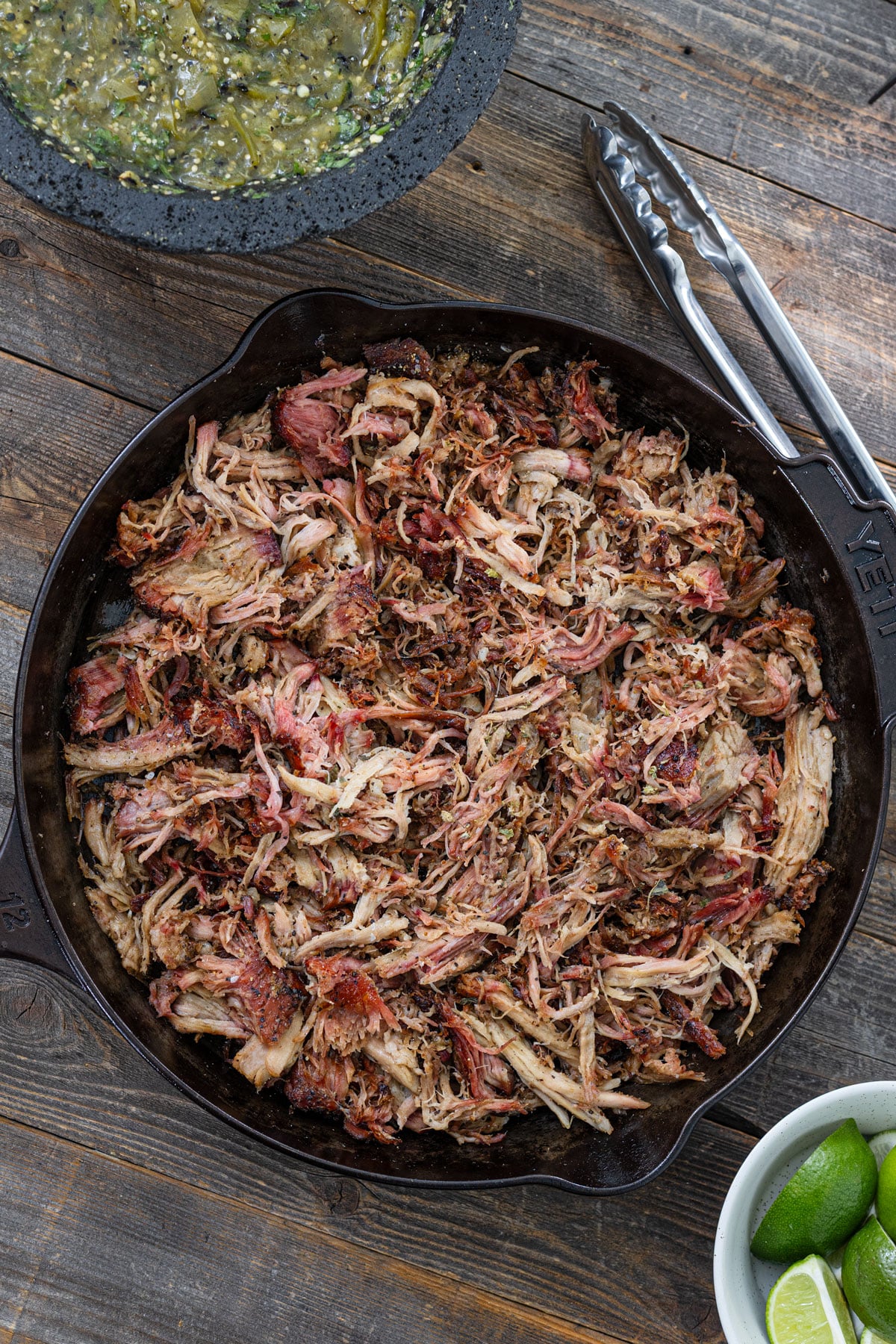
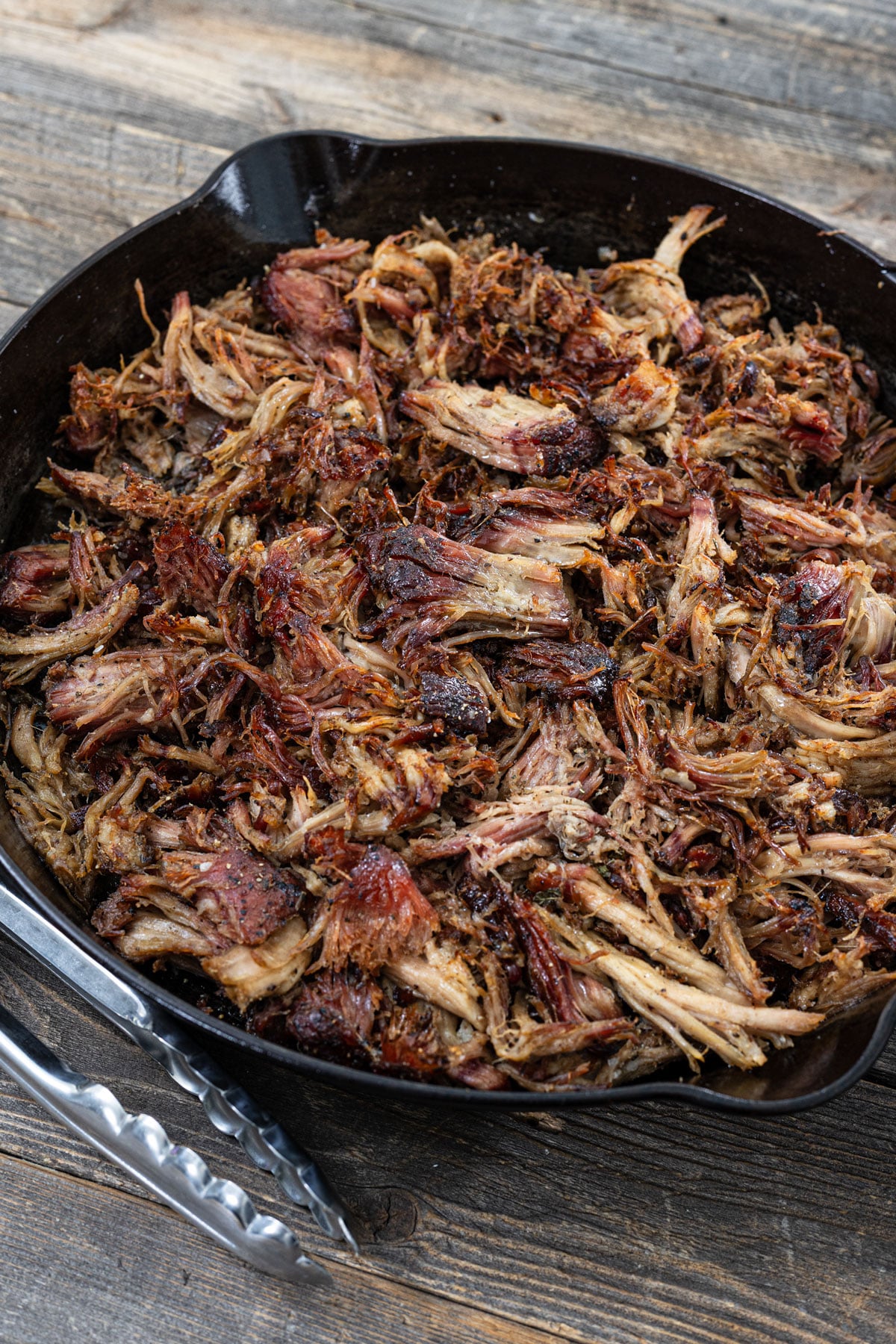
Heat a cast iron skillet or griddle over high heat until it’s very hot. Add the carnitas in a single layer without crowding and let them sit without moving for 2–3 minutes until the edges caramelize and crisp. If working from cold (which is recommended), the pork will release moisture first and then start to brown. Don’t rush it. Work in batches if you need to. Crowding the pan steams the meat instead of crisping it.
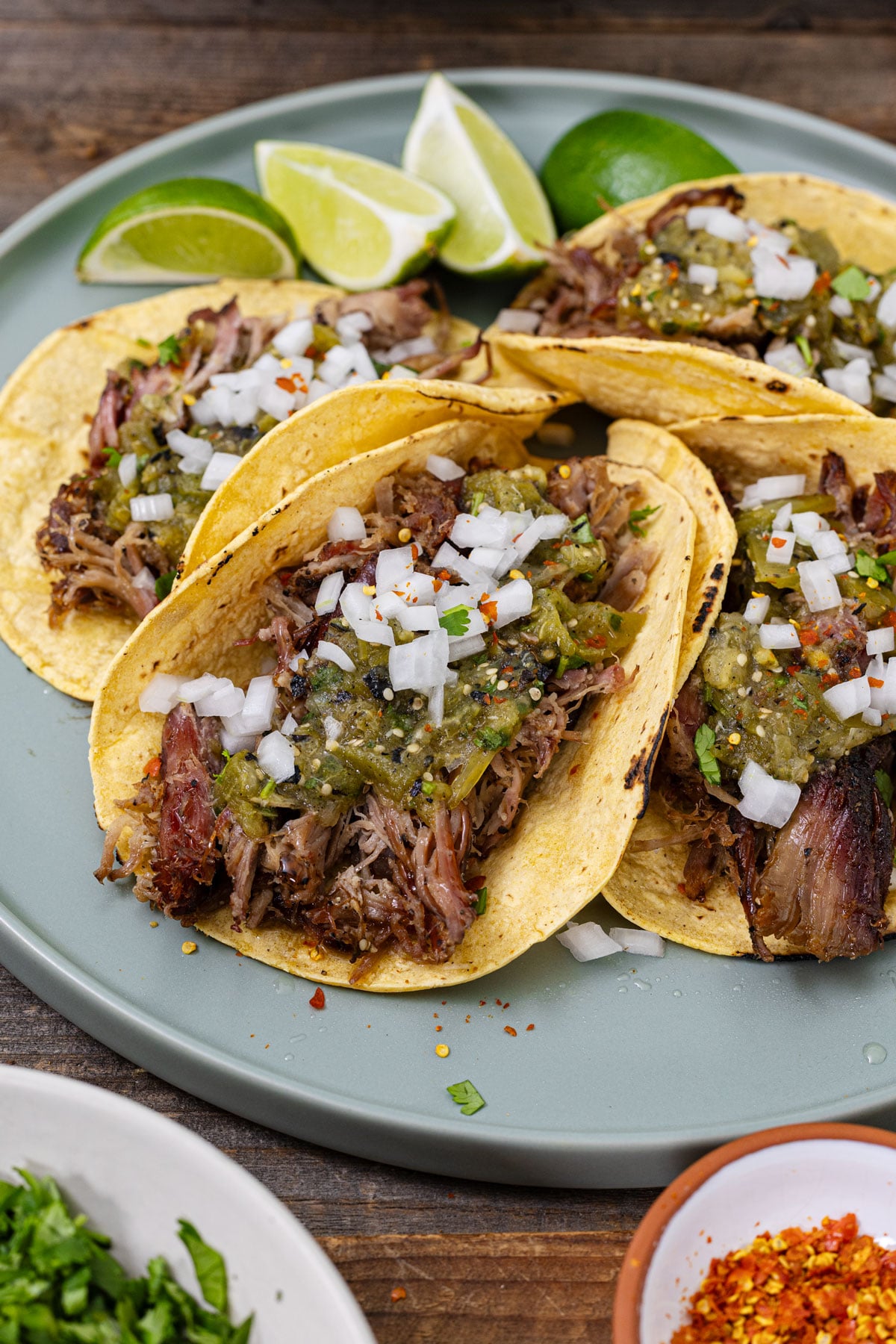
Right before serving, squeeze fresh orange juice over the pork if you’re going the taco route, or hit it with lime if you’re pairing with something brighter. Better yet, spoon on some Roasted Hatch Chile Salsa Verde. The acid wakes the whole thing up. Don’t skip it.

Straight out of the smoker Carnitas crisped up in skillet
Pro Tips from the Pit
- Don’t skip the crispy finish: This is the step that makes carnitas what it is. Shredded smoked pork without the griddle step is just pulled pork with different seasoning. The caramelization you get from that hot surface is a completely different eating experience.
- Shred in chunks, not strands: Fine pulled pork strands don’t crisp well. They dry out instead of caramelizing. Shred into pieces roughly the size of a quarter for the best results on the griddle.
- Fresh citrus right before serving, not before: If you squeeze the citrus too early the acid starts working on the meat and you lose the crispiness. It goes on right as it comes off the heat.
- The foil juices belong in the meat: Pour everything that collected in the foil back over the shredded pork before you crisp it. That rendered fat and juice is flavor you don’t want to leave in the foil.
- Make-ahead is the move: Smoke and shred the day before. Refrigerate in an airtight container with the juices poured over the meat. Crisp portions to order when you’re ready to serve. The flavor is actually better the next day and it makes this one of the easiest party proteins you can pull off.
What to Serve With Smoked Carnitas
- Smoked Carnitas Tacos: The obvious move. Warm tortillas, pickled onions, salsa, and you have a complete meal.
- Carnitas Burrito Bowl: Piled with all of your favorite toppings, this is the ultimate BBQ meal prep bowl.
- Quick Pickled Red Onions: The acid and crunch cut through the richness of the pork perfectly. I always have a jar ready when carnitas is on the menu.
- Roasted Hatch Chile Salsa Verde: A seasonal option when Hatch chiles are available. The earthy heat pairs exceptionally well with the warm spice profile of these carnitas.
- Charred Salsa Verde: The year-round classic salsa that brings the same brightness and acid to the plate.
Frequently Asked Questions
The seasoning and the finish. Pulled pork is typically built around a sweeter BBQ rub and served as-is after shredding. Carnitas uses a warm spice blend built around cumin, coriander, cinnamon, and Mexican oregano, and the defining step is crisping the shredded meat on a hot griddle or under the broiler before serving. That crispy finish is what separates carnitas from pulled pork.
Yes, and honestly I’d recommend it. Smoke and shred the pork up to 2 days ahead and refrigerate in an airtight container with the juices poured over the meat. When you’re ready to serve, crisp portions on a hot griddle directly from the fridge. The flavor develops overnight and you’re only doing 10 minutes of work at serving time. It’s one of the best party proteins you can make for exactly this reason.
A cast iron skillet over high heat is the most reliable method for small batches. For larger quantities, a sheet pan under the broiler works well. Spread the meat in a single layer and broil for 4–5 minutes until the edges caramelize. A griddle is the most efficient option for a crowd. Whatever method you use, don’t stir constantly. Let the meat sit in contact with the heat long enough to develop real color before moving it.
You need a smoker for the first phase. The flat smoke at 265°F is where the bark and smoke flavor develop and that requires actual smoke. The foil-wrapped finish can be done in the oven at 300°F. Place the wrapped pork on a baking sheet to catch any drips and cook until probe-tender. The crisping step at the end is done on the stovetop or under the broiler regardless.
Boneless pork butt, also called pork shoulder. It has the right fat content to stay juicy through a long cook and the muscle seams open easily for butterflying. Avoid pork loin — it’s too lean and will dry out. Bone-in pork butt works but requires deboning before you can butterfly it.
Shredded carnitas stored in an airtight container with the cooking juices will keep for 4 days in the refrigerator. For longer storage, freeze in portions for up to 3 months. Thaw overnight in the fridge and crisp directly from cold. The texture holds up well through freezing and reheating.
Equipment Used
- Smoker (offset, pellet, or kettle): Any smoker that holds a consistent 265°F. A pellet grill makes temperature management straightforward. An offset gives you more smoke flavor control.
- Cast iron skillet, griddle, or sheet pan: For the crisping step. Cast iron holds heat the best for small batches. A sheet pan under the broiler is the most efficient for a crowd.
- Sharp chef’s knife or boning knife: Larger knives work the best, just make sure they are sharp and ready to go.
- Instant-read thermometer: You’re hitting two temperature targets — 165–175°F at the wrap and probe-tender at the finish. A reliable thermometer is non-negotiable.
- Heavy duty aluminum foil: Standard foil tears under the weight of the juices. Use two layers of heavy duty.
- Large cutting board: You need room to butterfly and to shred. A full-size 18×24″ cutting board is ideal.
Try It and Tag Us
Give this one a try, you’ll be making it on repeat. Be sure to have some tortillas and fresh salsa handy. Tag us on Instagram when you do. Leave a rating below if this helped.
Print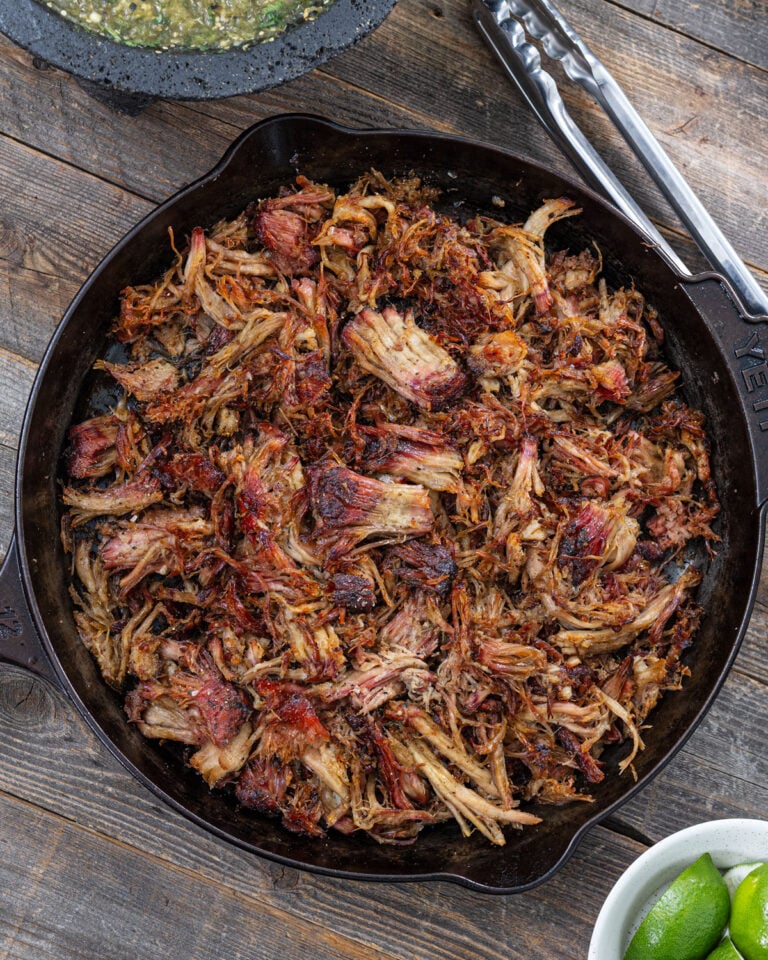
Smoked Carnitas
Butterflied pork shoulder coated in a warm spice blend of cinnamon, coriander, and brown sugar, smoked low and slow for deep bark, then shredded and crisped on a griddle with fresh citrus. Better than braised, make-ahead friendly, and built for tacos.
- Total Time: ~8 hours
- Yield: 10–14 Servings 1x
Ingredients
Carnitas Spice Blend (makes enough for a 6–9 lb butt with extra):
- 6 tablespoons brown sugar
- 4 tablespoons black pepper (16-mesh preferred)
- 4 tablespoons kosher salt
- 1 tablespoon granulated garlic
- 2 teaspoons onion powder
- 2 teaspoons ground Mexican oregano
- 1 teaspoon ground cumin
- 1 teaspoon ground coriander
- ½ teaspoon cinnamon
For the Carnitas:
- 1 boneless pork butt (pork shoulder), 6–9 lbs
- Carnitas spice blend (above)
- 1/2 orange, sliced
- Heavy duty aluminum foil
- Fresh orange or lime juice, for finishing
Instructions
- Mix all spice blend ingredients together in a bowl.
- Butterfly the pork butt by following the natural muscle seams with a sharp knife, opening it flat to no more than 3 inches thick at the deepest point.
- Apply spice blend generously to all surfaces. Press in to adhere. Rest at room temperature for 20–30 minutes, or refrigerate overnight.
- Preheat smoker to 265°F. Place the butterflied pork fat-side up, fully open and flat on the grates. Smoke at 265°F for approximately 5 hours, until bark is dark, firm, and dry, and internal temperature reads 165–175°F.
- Remove from smoker. Squeeze half an orange over the meat. Fold the pork back in on itself and double-wrap tightly in heavy duty aluminum foil.
- Return to smoker (or oven) at 300°F. If finishing in the oven, place on a baking sheet. Cook until probe-tender at 203–208°F, approximately 1.5–2.5 hours more.
- Rest wrapped for 45 minutes. Open foil, pour juices back over meat, and shred into rough chunks rather than fine strands.
- Refrigerate shredded pork in its juices overnight if making ahead. This is the recommended approach.
- Heat a cast iron skillet or griddle over high heat until very hot. Add carnitas in a single layer without crowding and let sit for 2–3 minutes until edges caramelize and crisp. Work in batches. Do not move the pieces before the crust forms.
- Right before serving, squeeze fresh orange juice or lime juice over the carnitas, or spoon on salsa verde. Serve immediately.
Notes
-
Make-ahead: This recipe is designed to be made ahead. Smoke and shred the pork up to 2 days in advance, store cold in its juices, and crisp to order. The texture is better the next day.
16-mesh black pepper: Produces better bark than standard coarse ground. If using fine ground, reduce to 2 tablespoons or the pepper will overpower the blend.
Mexican oregano: More citrusy and earthy than Mediterranean oregano. Worth sourcing correctly. It’s a different herb.
Crisping options: Cast iron skillet on the stovetop works best for small batches. A sheet pan under the broiler (preheated, very hot) works well for a crowd.
Storage: Keeps 4–5 days refrigerated in juices. Freezes well up to 3 months. Thaw overnight and crisp from cold.
Citrus finish: Orange juice adds warmth and leans into the Mexican spice profile. Lime is brighter and works well if pairing with a fresh salsa. Add citrus right before serving, not during crisping.
- Prep Time: 20
- Cook Time: 6-7 hours
- Category: Pork
- Method: smoking
- Cuisine: American BBQ, Barbecue, Mexican
- Diet: Dairy-Free, Gluten-Free
Nutrition
- Serving Size:
- Calories: 288
- Sugar: 0.4 g
- Sodium: 620.3 mg
- Fat: 12.1 g
- Carbohydrates: 2.4 g
- Protein: 41.6 g
- Cholesterol: 133.7 mg

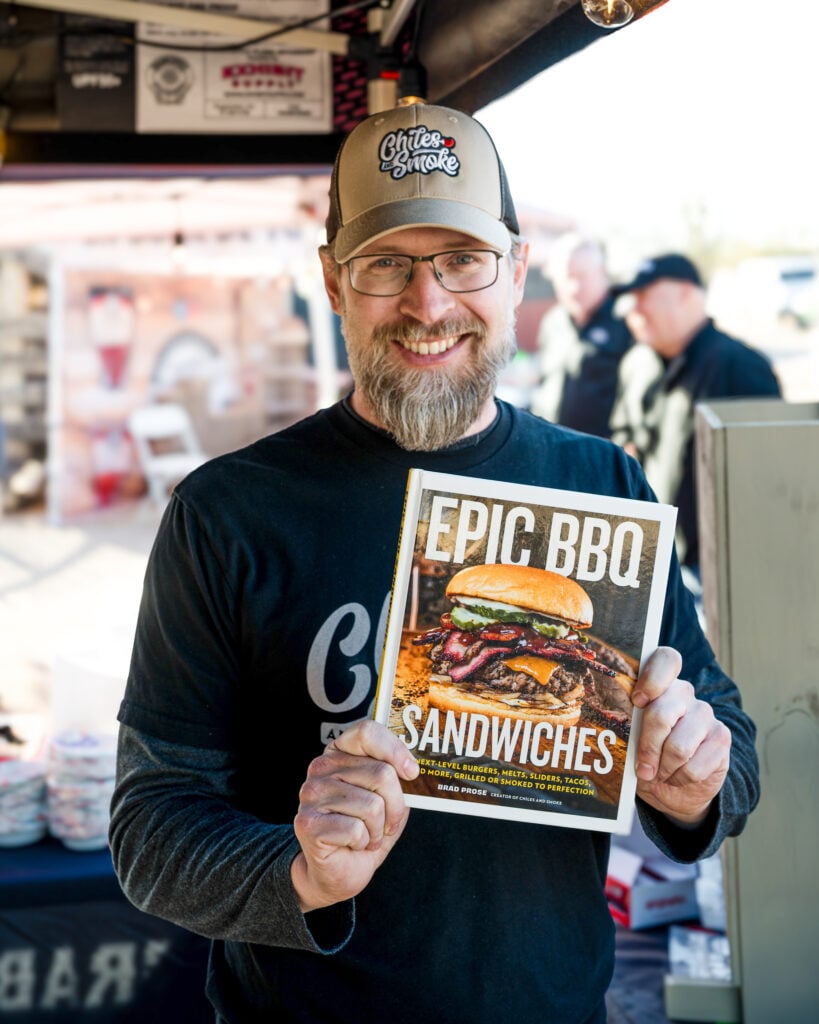
Brad Prose has been crafting recipes over live fire for 20 years. He’s the author of two cookbooks, Chiles and Smoke and Epic BBQ Sandwiches, and the creator of the original smash burger taco, as credited by the Washington Post, TODAY Show, Good Morning America, and Food Network. Brad is the force behind Chiles and Smoke, the home of Sonoran BBQ: bold flavors built around chiles, smoke, and the traditions of the American Southwest. Follow along on Instagram, YouTube, and Facebook.


