Smoked Butterflied Pork Butt
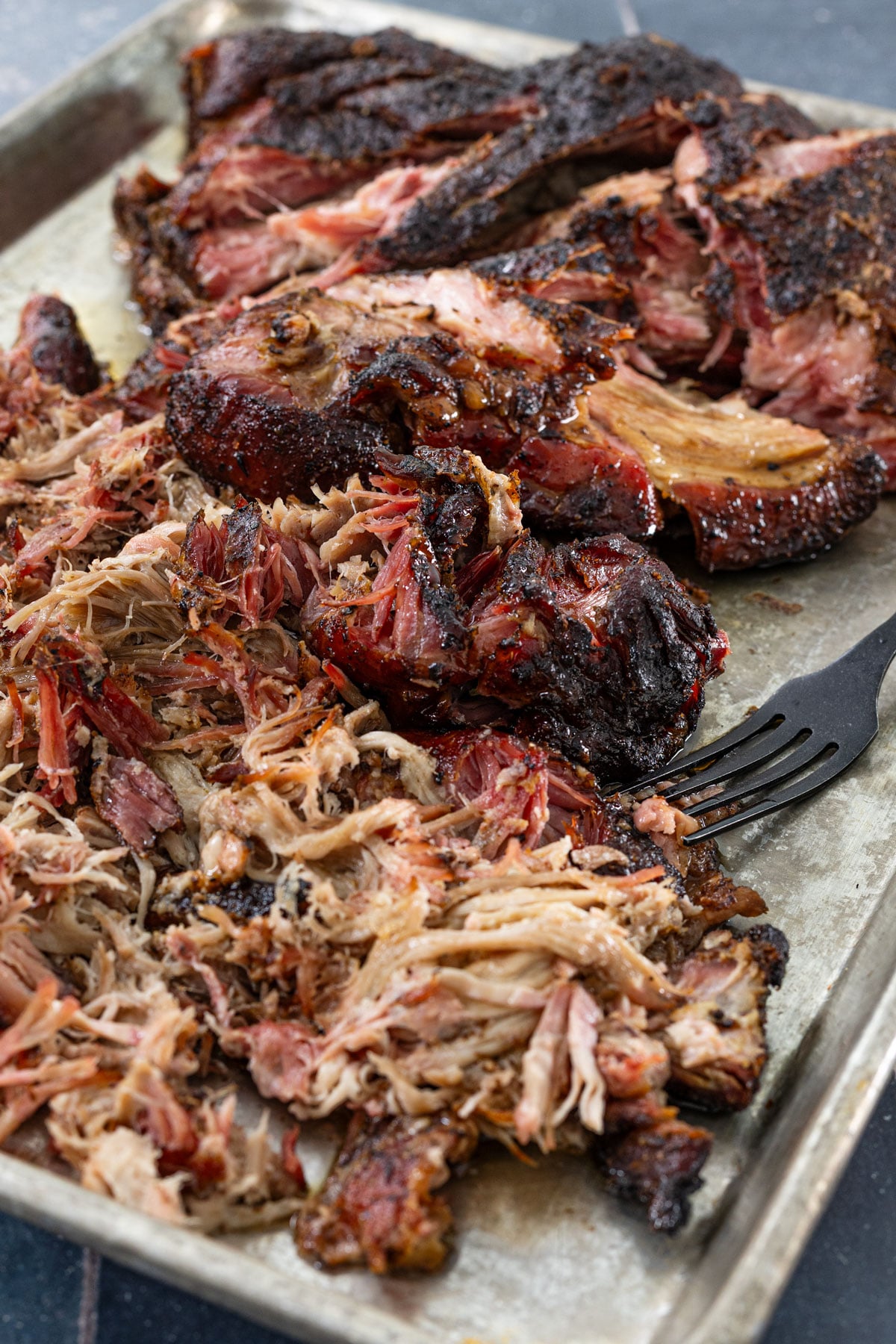
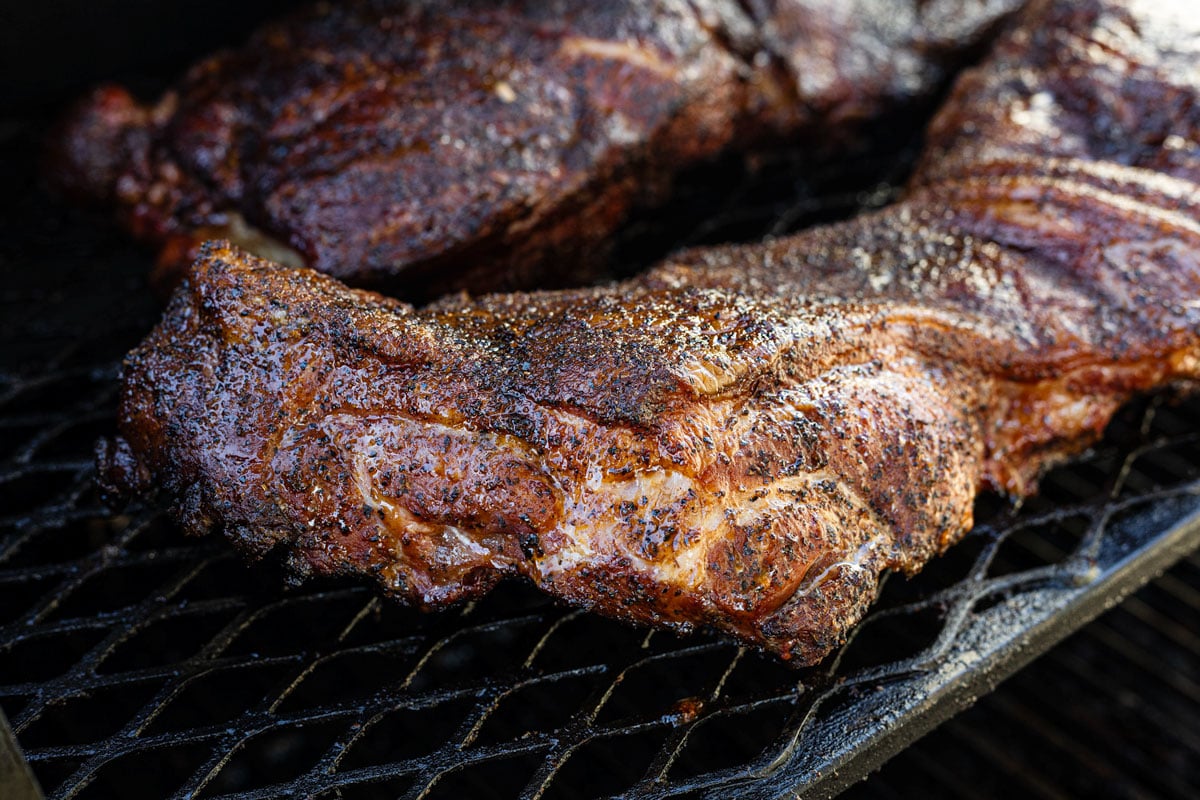
Butterflied pork butt is a boneless pork shoulder opened flat along the bone seams, seasoned on all sides, and smoked at 265°F for about 5 hours until the bark is dark and firm. Then you fold it back up, wrap it in foil, and finish at 300°F until probe-tender at 203–208°F. The result is significantly more bark than a whole butt, with smoke and seasoning reaching every inch of the meat.
You’ll see this technique framed as a time-saving trick everywhere you look. And yeah, it is faster. But that’s not why I do it. I butterfly because a whole pork butt is basically a sphere: most of the seasoning sits on the outside, most of the interior steams in its own moisture, and half the cook is just getting heat to the center. Opening it flat changes all of that. Every surface becomes bark surface. Every bite gets crust. That’s the real reason to do this, and it’s why this method makes fundamentally better pulled pork.
Try making Smoked Carnitas using this recipe! They make the best carnitas tacos. Or, check out this guide to traditional Smoked Pulled Pork if you’re sticking with the classic.
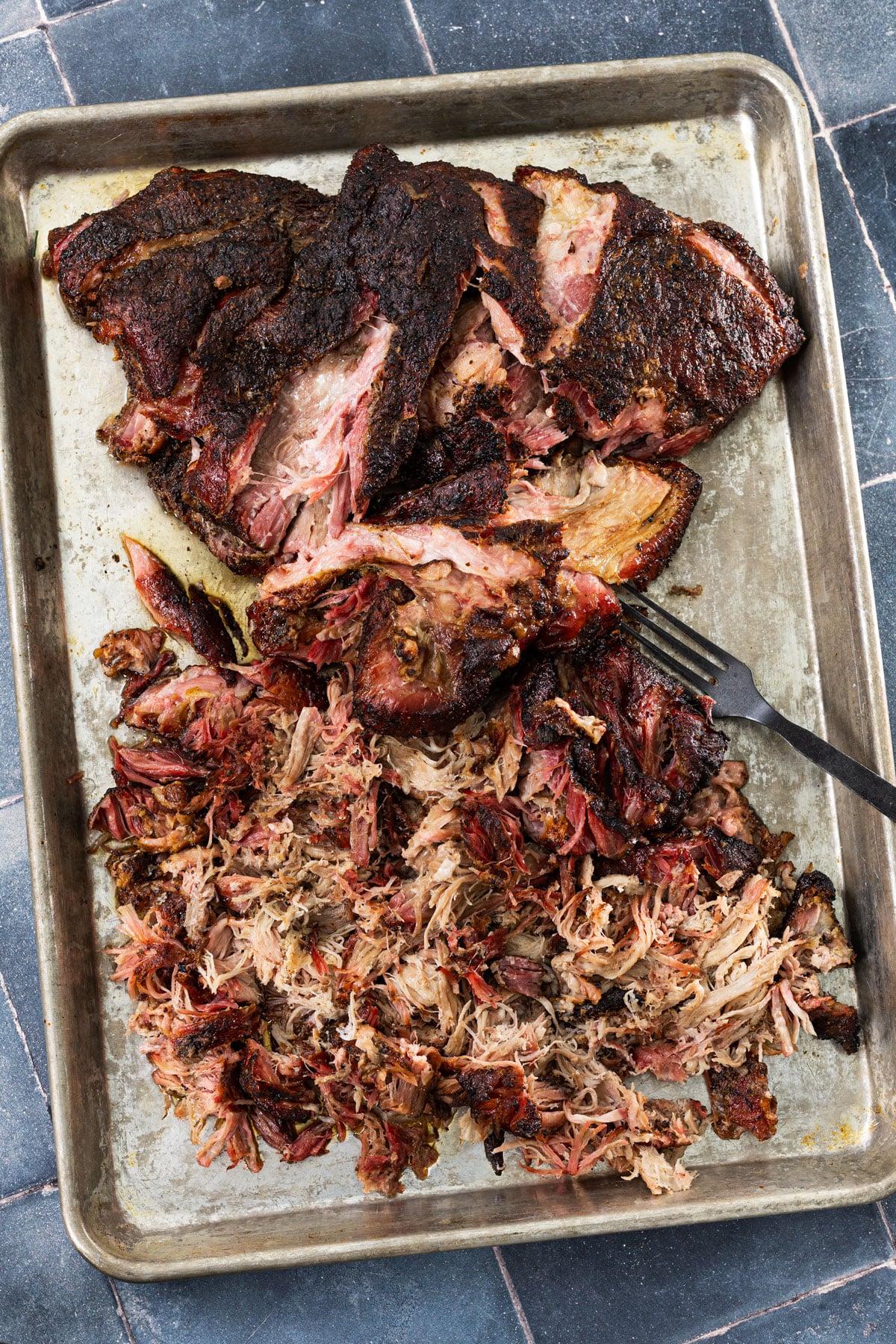
Why Butterflying Produces More Bark
- Dramatically more surface area: A whole 8-pound butt has roughly one-third of its mass exposed to airflow. Butterflied, nearly every inch is open to smoke and heat. More surface means more Maillard reaction, which means more bark.
- Seasoning gets into the seams: When you follow the natural muscle seams to open the butt, the rub coats surfaces that were previously interior. Every bite carries seasoning all the way through, not just the outer layer.
- Smoke actually reaches the center: A whole pork butt can take 10–14 hours partly because heat has to travel through 4–6 inches of dense meat. Opened flat, the thickest section drops to 2–3 inches and the smoke works all of it.
- The two-stage cook gives you everything: The flat smoke phase builds bark and flavor. The foil-and-finish phase renders the collagen and gets you the pull. You don’t give up any texture here. You gain it.
Key Ingredients
- Boneless pork butt (pork shoulder), 6–9 lbs: The boneless cut is what makes butterflying straightforward. It’s already been removed from the bone at the processor, so the seams are right there to follow. Bone-in will work, but requires more knife work to open flat.
- Your rub: Use whatever you’d normally reach for with pulled pork. A good starting point for this cut is roughly 2 tablespoons of rub per pound of meat, since you’re coating more total surface. Don’t underdose it. I use Canyon Crust Beef Seasoning for a central Texas-style bark with a Sonoran twist. There’s no sugar, which lets the meat and smoke do the talking. If you’re after a sweeter, more traditional Kansas City profile, Signature Sweet & Smoky Rub is the move.
- Heavy duty aluminum foil: Standard foil tears when you’re wrestling a hot, juicy pork butt at the wrap stage. Heavy duty isn’t optional.
How to Smoke a Butterflied Pork Butt: Step-by-Step
Step 1: Butterfly the Pork Butt
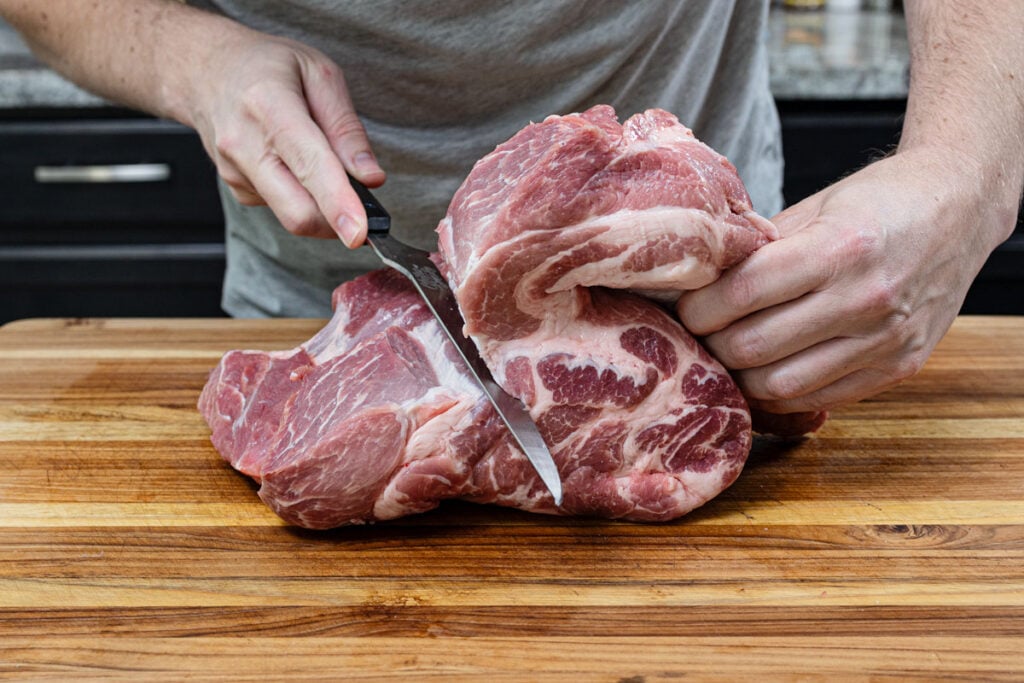
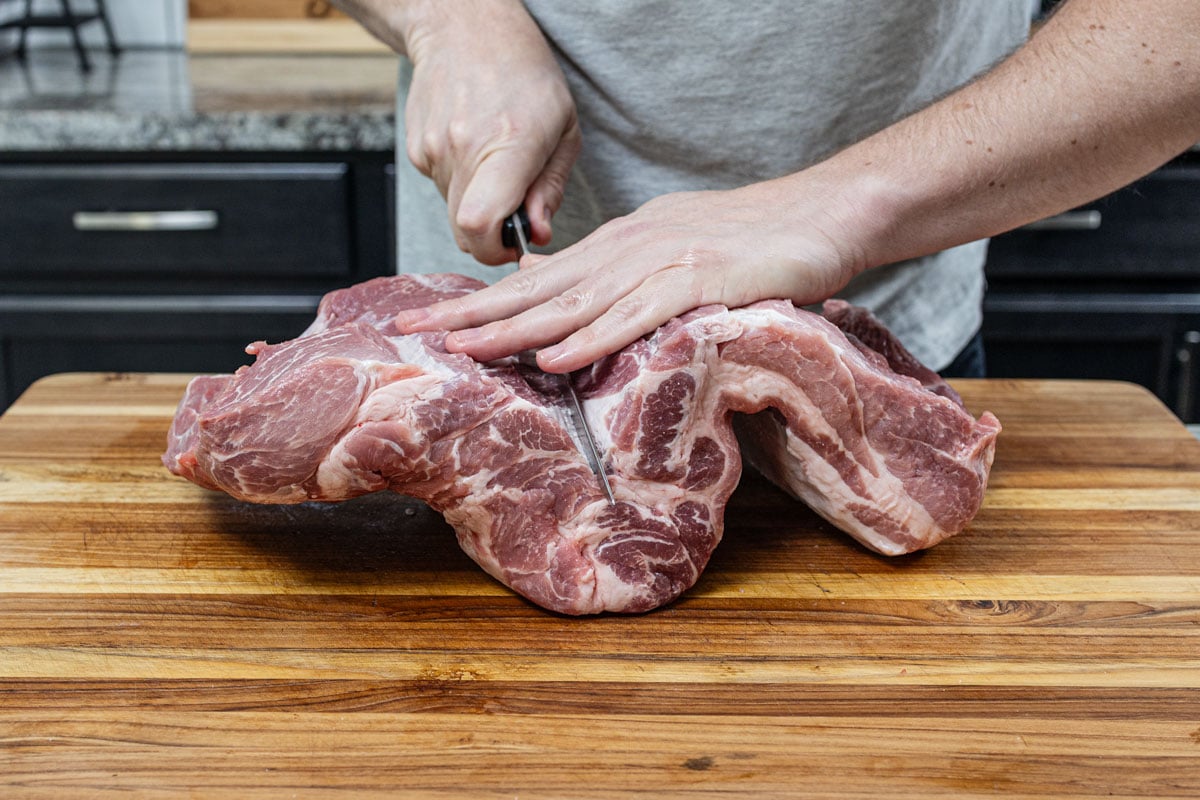
Place the boneless pork butt fat-side down on your cutting board. You’ll see natural seams where the muscles separate, and those are your guide. Using a sharp knife, follow those seams to open the butt flat, kind of like unrolling it.
The goal is a relatively even thickness across the whole piece, no thicker than 3 inches at the deepest point. Don’t try to force a perfect rectangle.
Pro tip: Cold meat butterflies cleaner. Pull the butt from the fridge 30 minutes before you plan to cook, butterfly it first while it’s still firm, then let it come up slightly in temp while it rests with the rub on.
Step 2: Season Generously on All Sides
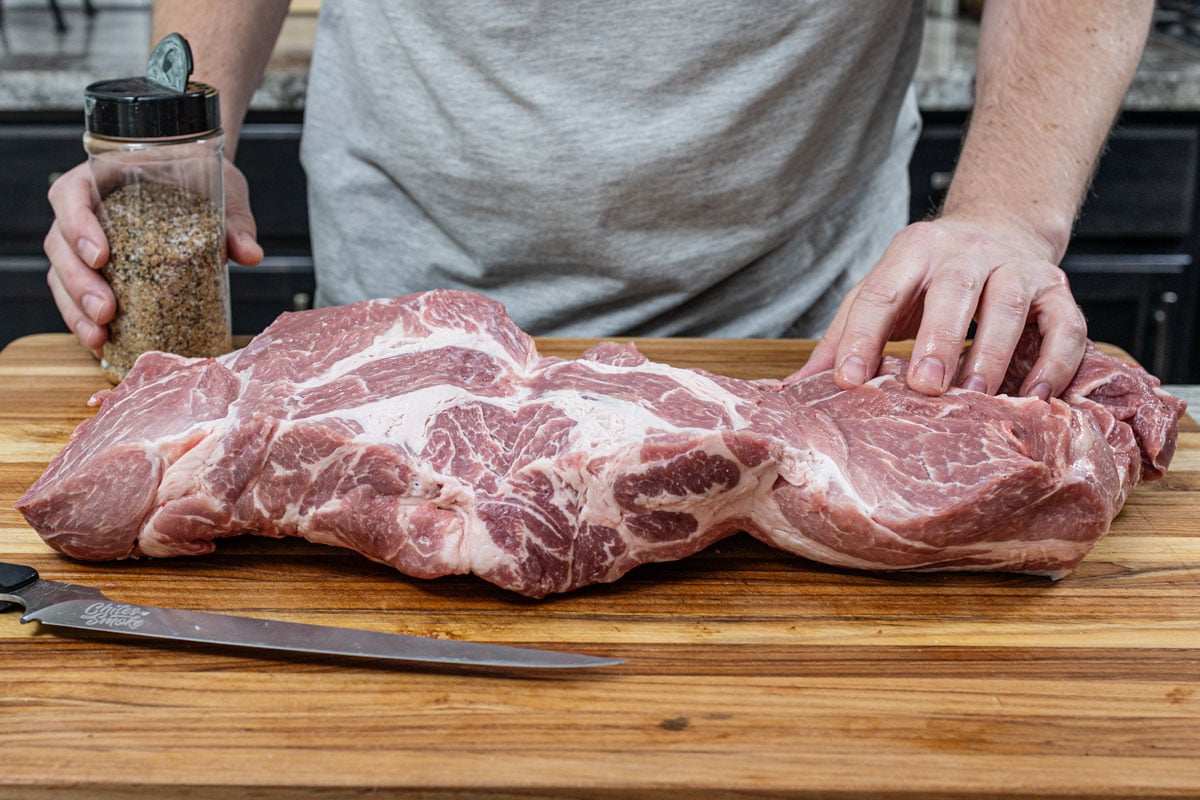
Apply your rub to every exposed surface: top, bottom, and along the opened seams. Because you have significantly more surface area than a whole butt, you’ll use more rub than you expect. Press it in so it adheres. Don’t just dust it on.
Let the seasoned butt rest at room temperature for 20–30 minutes while your smoker comes up to temperature, or wrap and refrigerate overnight for deeper penetration.
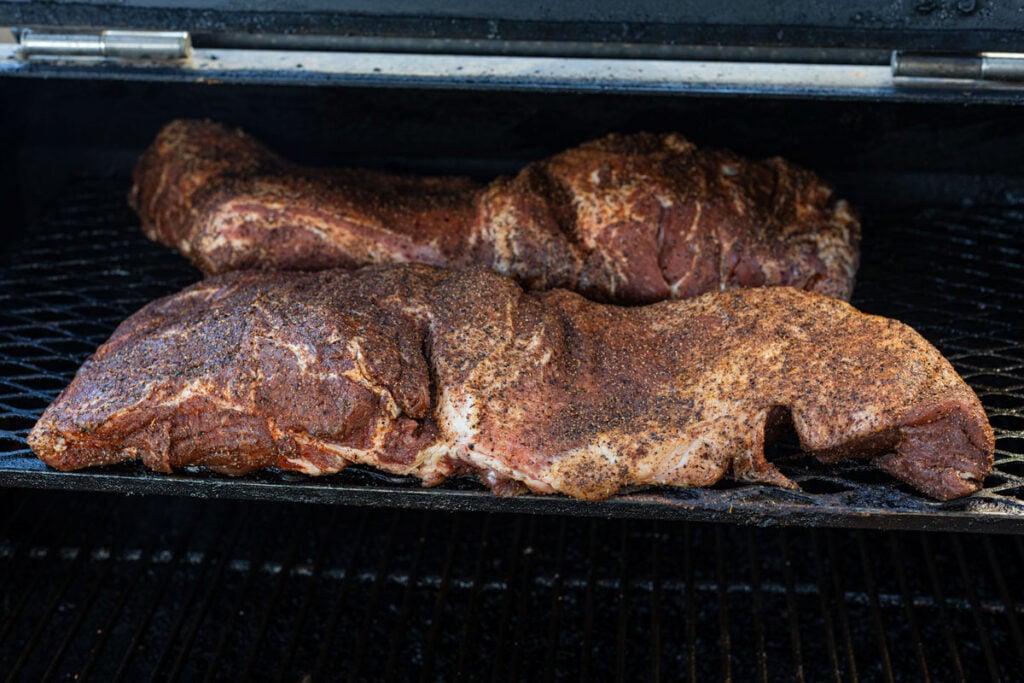
Step 3: Smoke Flat at 265°F Until the Bark Sets
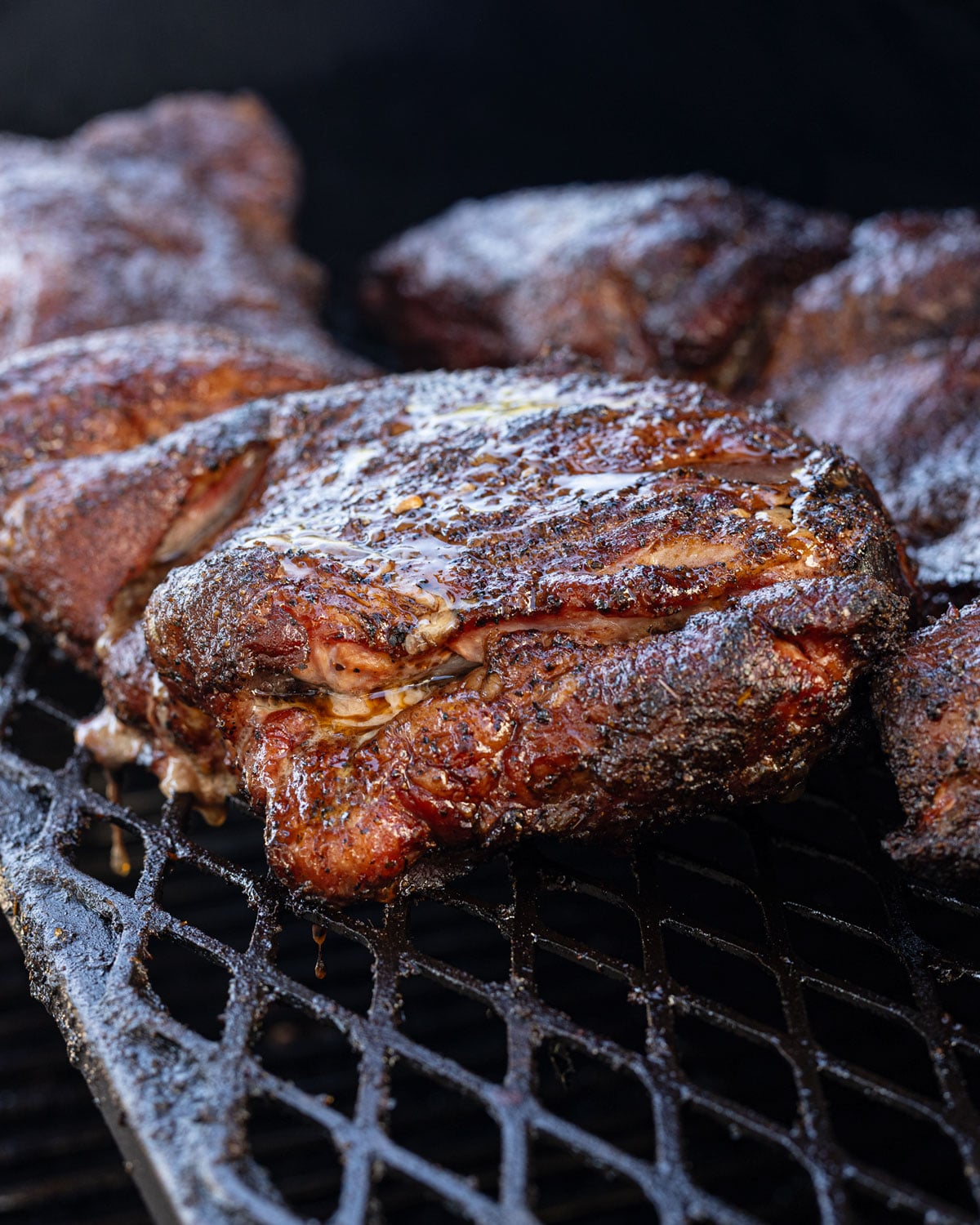
Place the butterflied butt on the smoker fat-side up, laid flat and fully open. Cook at 265°F for approximately 5 hours, or until the bark is dark, firm to the touch, and the internal temperature is in the 165–175°F range. Don’t rush this phase. The flat smoke period is where all the flavor and texture gets built. The bark should feel dry and set before you move to the wrap. If it’s still tacky, give it more time.
What you’re looking for: Bark that doesn’t give when you press it with a finger. If it indents and feels soft, it’s not ready.
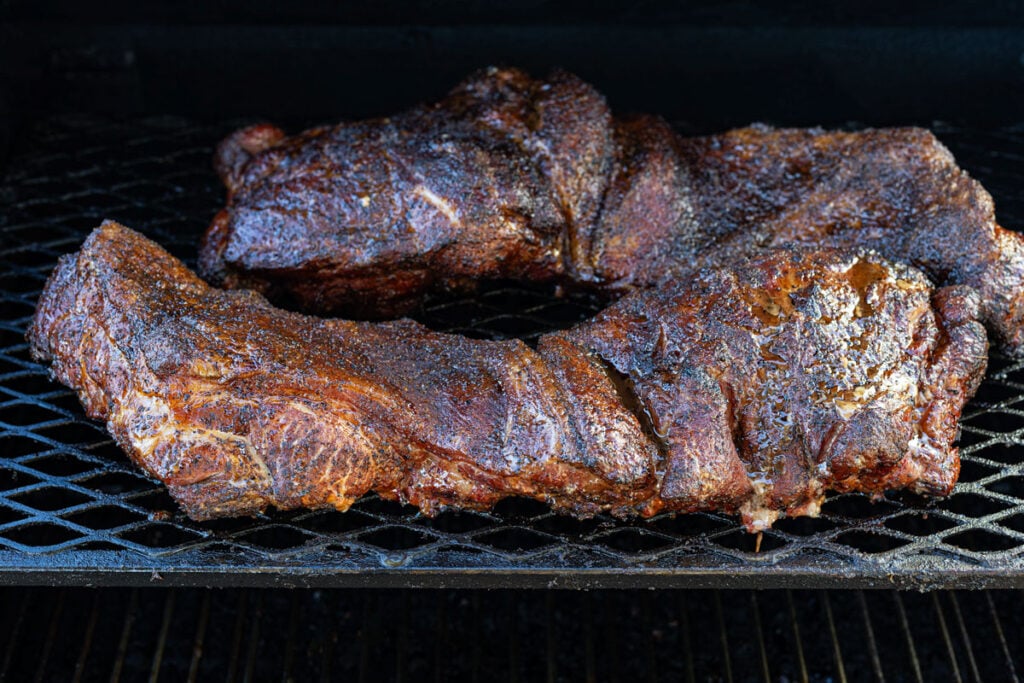
Step 4: Fold, Wrap, and Finish at 300°F
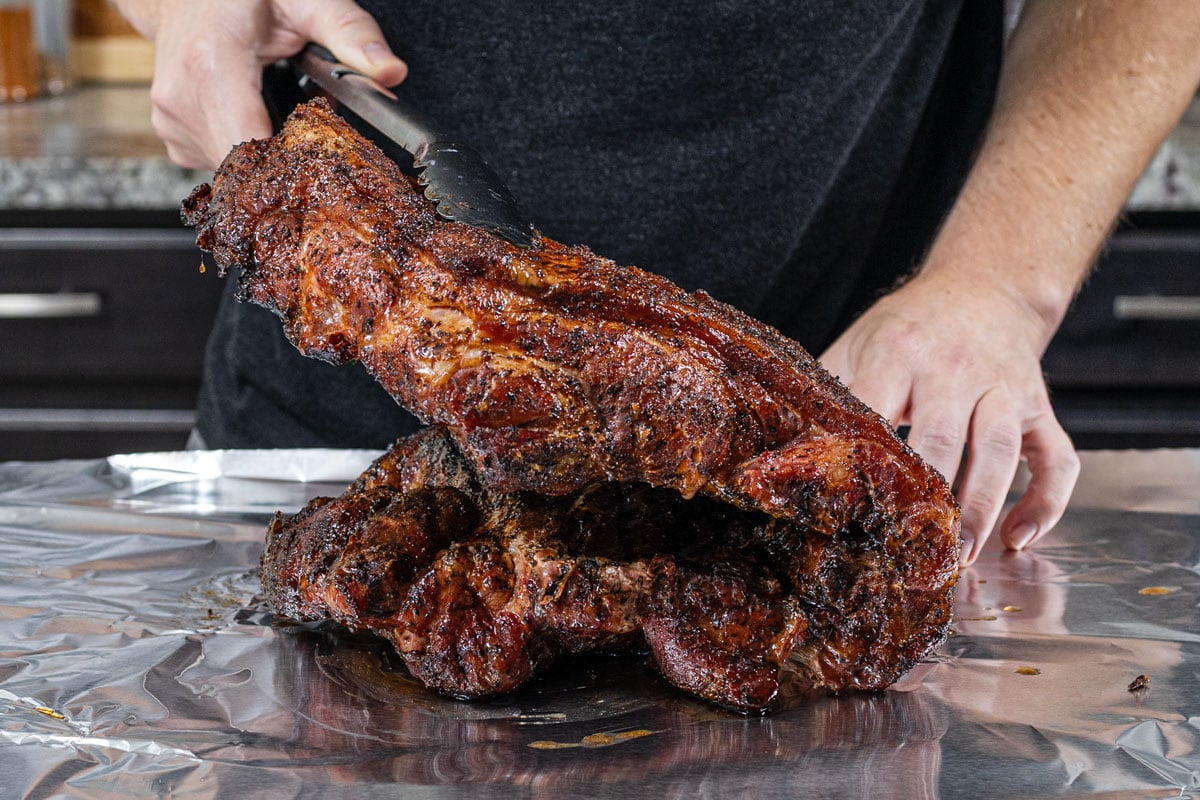
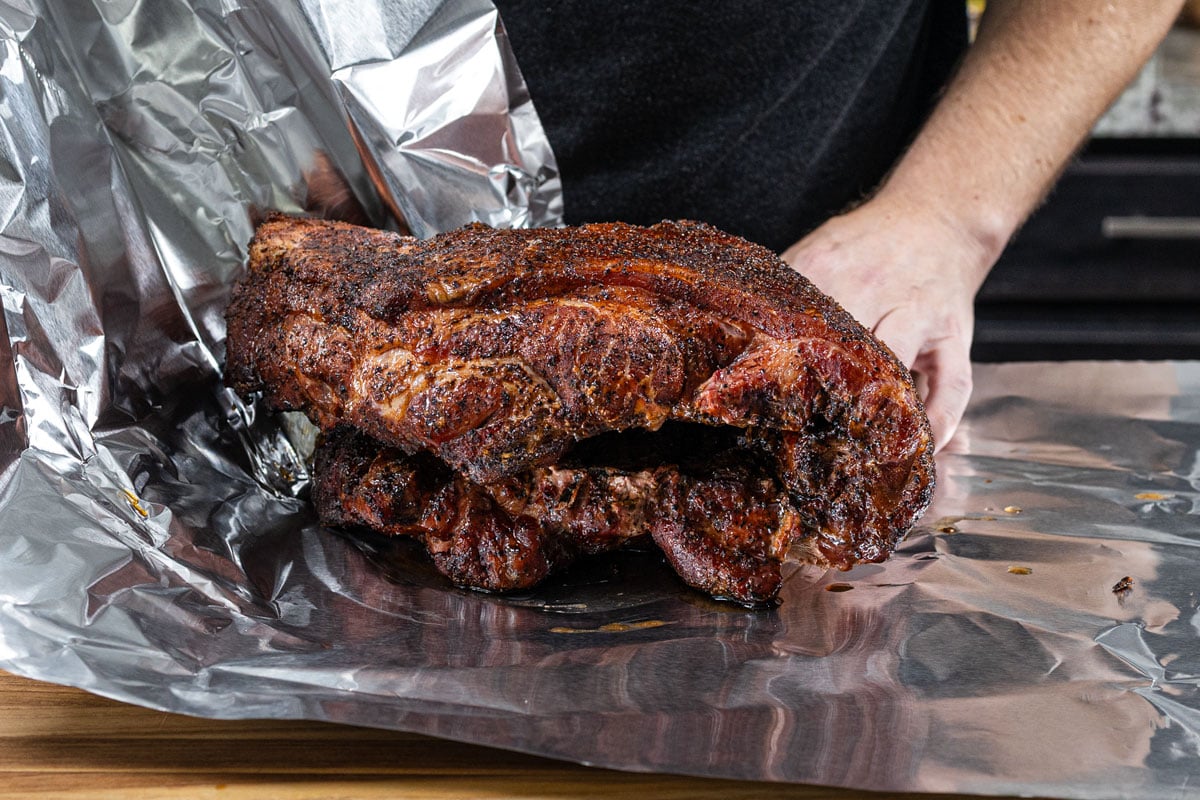
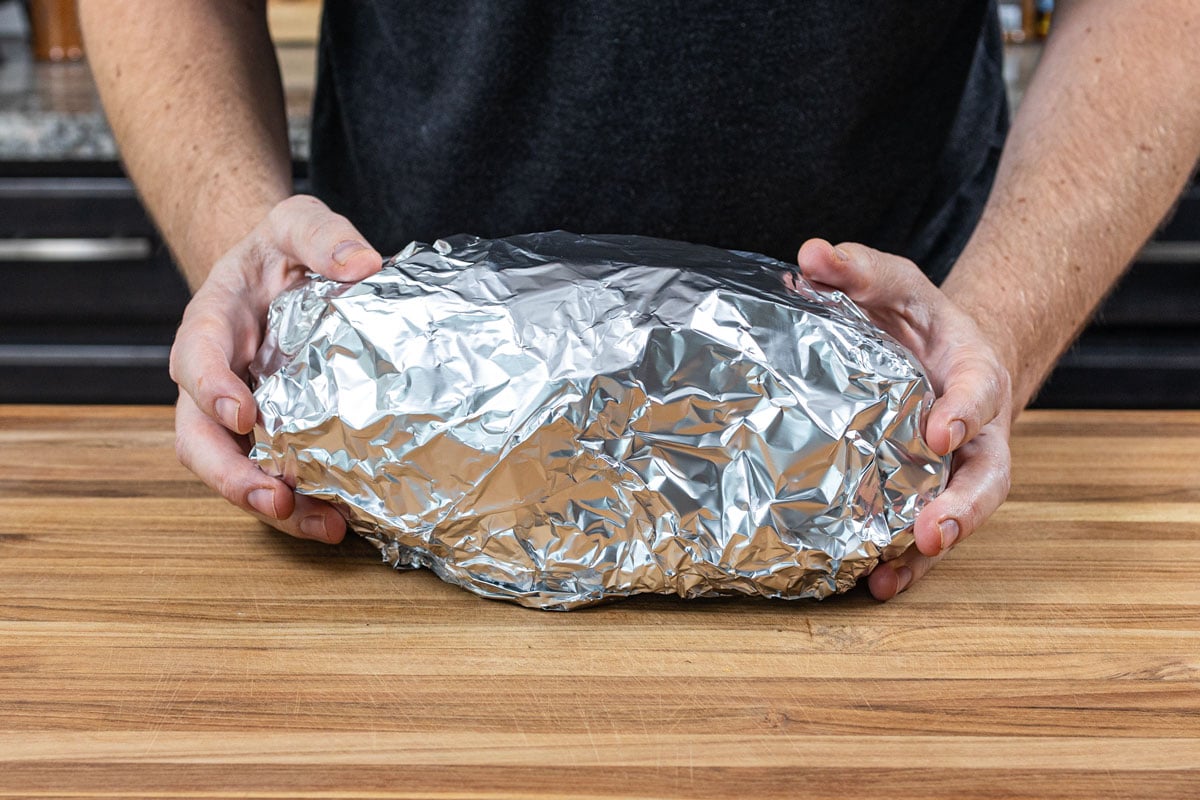
Once the bark is set and the meat is 165–175°F, pull it off the smoker. Fold the butt back in on itself. It won’t look like a perfect ball, but you’re just bringing the mass back together so it retains moisture in the wrap. Double-wrap tightly in heavy duty aluminum foil and return to the smoker at 300°F. Cook until probe-tender, meaning the thermometer should slide in with no resistance, at an internal temp of 203–208°F. This typically takes another 1.5–2.5 hours depending on size.
Pro tip: Once it’s wrapped in foil you can finish this in the oven at 300°F instead of the smoker. The bark is already set at that point and the foil is doing all the work. Place it on a baking sheet to collect any juices that leak out — trust me on that one. Living in Arizona, I do this more often than not in the summer. There’s no reason to stand over a smoker in 110 degree heat when your oven gets the job done just as well.

Carefully fold the pork over Use heavy duty foil to completely wrap Place the wrapped pork shoulder back into the smoker
Step 5: Rest 45 Minutes Before Shredding
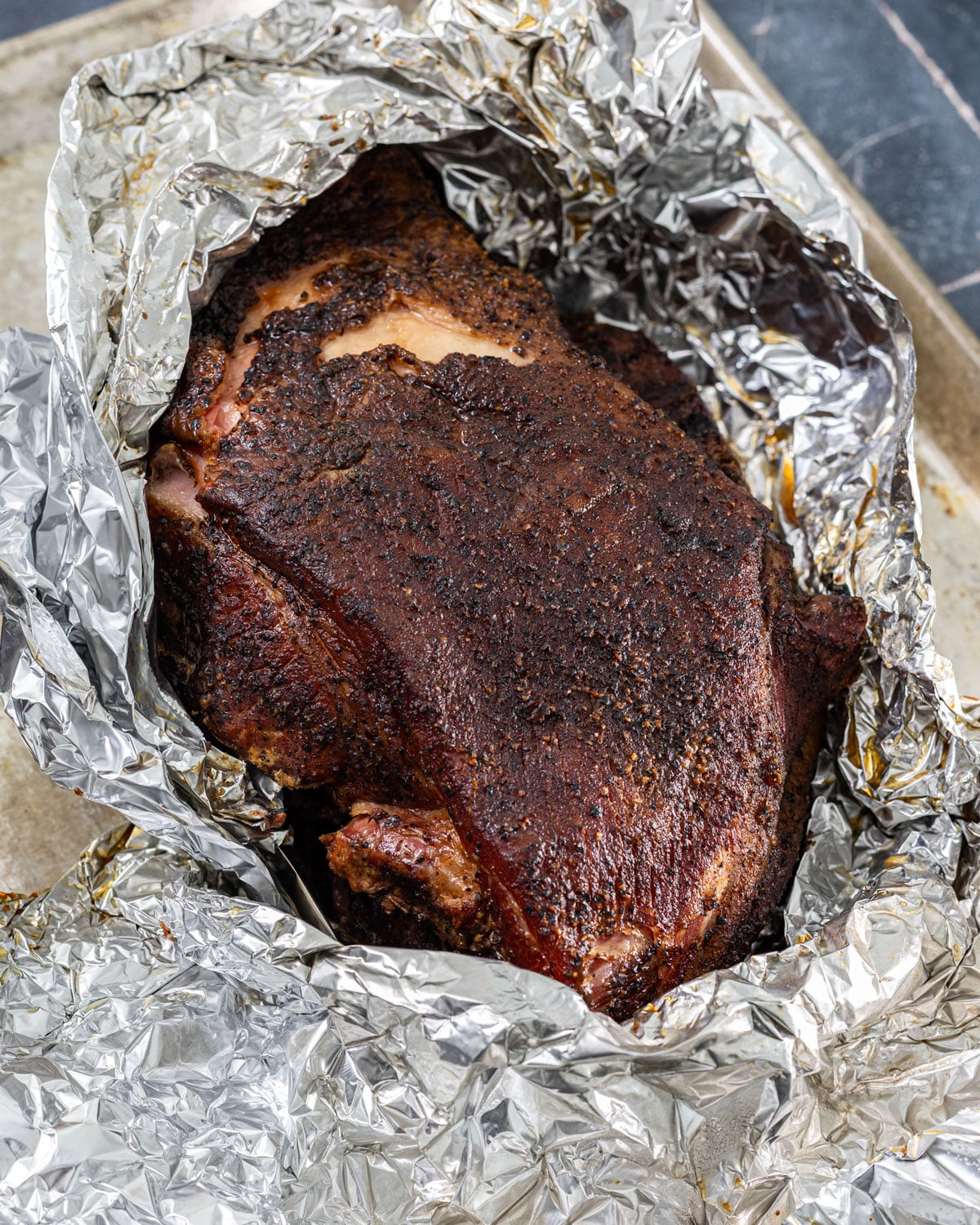
Pull the wrapped butt off the smoker and let it rest undisturbed for at least 45 minutes. This is not optional. Resting allows the internal juices to redistribute and the collagen to finish converting. If you shred immediately, you’ll lose juice and the meat will be tighter. Keep it wrapped during the rest.
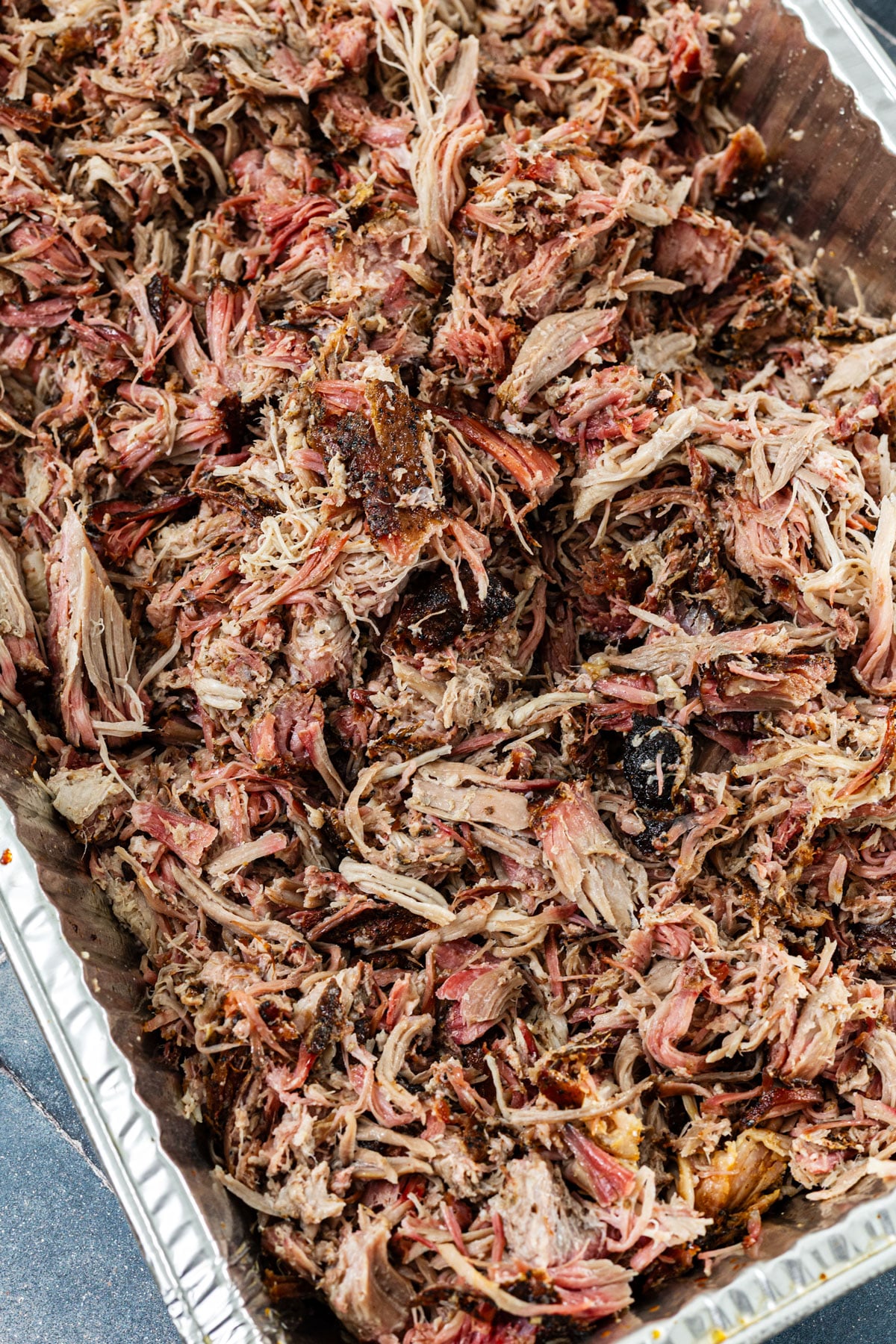
After 45 minutes, open the foil, pour any accumulated juices back over the meat as you shred, and pull it into your preferred texture. Chunky or fine, your call.
Pro Tips from the Pit
- Follow the seams, not a straight line: The biggest butterflying mistake is trying to make a uniform cut across the whole butt. The muscle groups don’t care about uniformity. Follow where the meat naturally wants to open, and you’ll get a better spread with less effort and fewer thin spots that can dry out.
- Don’t skip the bark check before wrapping: The bark is the whole point of this method. Wrapping too early traps steam under the foil and softens everything you worked to build. If you’re at 165°F but the bark still feels soft, back off the temperature slightly and give it another 30–45 minutes unwrapped.
- The juices in the foil are gold: When you open the foil after resting, there will be a pool of rendered fat and juice at the bottom. Pour it over the shredded meat as you work. On a whole butt, that flavor drips into the drip pan, and you never see it again. Here it stays with the meat.
- Bark pieces should go in the mix: Don’t treat the bark as decoration. Pull it into the shredded meat so every scoop gets pieces of crust. That’s the whole point of building it.
- Storage: Store shredded pulled pork in an airtight container with the juices poured over it. It reheats well on low heat with a splash of apple juice or water to loosen. Keeps refrigerated for 4 days and freezes well for up to 3 months.
What to Serve With Smoked Butterflied Pork Butt
- Creamy Smoked Mac and Cheese: The richness holds up to the deep bark flavor in a way lighter sides don’t.
- Southwestern Coleslaw: Acid and crunch cut through the fat of the pulled pork perfectly. Don’t skip a crunchy side.
- Smoked Baked Beans: A classic pairing, and a good use for the drip pan drippings if you collect them.
- BBQ Sauce: pulled pork and BBQ sauce are non-negotiable. The only question is which one. Smoky Sweet Heat Sauce brings the kick without burying the smoke. If you want to lean into the Sonoran flavors already in the rub, Smoky Sonoran Sauce is the natural pairing. Either way, keep it thin and vinegar-forward so it doesn’t mask the bark you worked to build.
- Pickles: Traditional cucumbers, or even Quick Pickled Red Onions, it’s up to you. Pickles add that vinager pop that enhances the natural pork flavors. Try the Sweet and Spicy Pickles for a classic bite, especially if you’re building pulled pork sandwiches.
Frequently Asked Questions
Yes, significantly more. A whole pork butt has most of its mass interior to the smoke, with bark only forming on the outer surface. Butterflying opens the meat flat so nearly the entire surface is exposed to airflow and smoke for the full first phase of the cook. The result is bark throughout every bite of the final pulled pork, not just the outer pieces.
Plan for 6–7 hours of active cook time. The flat smoke phase at 265°F takes roughly 5 hours to build bark and reach 165–175°F internal temp. The foil-wrapped finish at 300°F takes another 1.5–2.5 hours to reach probe-tender at 203–208°F. Add a 45-minute rest before shredding. Total elapsed time from fire-up to table is typically 7.5–8.5 hours, compared to 10–14 for a whole butt.
Two temperatures. Start at 265°F for the open flat phase where bark builds, then bump to 300°F after wrapping in foil to push through to probe-tender faster. The lower temp during the bark-building phase gives smoke more time to work and keeps the outer surfaces from overcooking before the interior catches up. Once the foil goes on, the higher temp is fine because the moisture is trapped and you’re just finishing the collagen.
Yes, but you’ll need to remove the bone first. Use a sharp boning knife and follow the bone around its circumference until it pulls free, then proceed the same way you would with a boneless butt. The seams left by the bone will actually guide your butterfly cut nicely. It’s extra work, but bone-in butts can have great flavor from the bone during the initial smoke phase if that’s what you’re working with.
Wrap when the bark is set and firm, which typically lands between 165–175°F. Don’t use temperature alone as your trigger. Use the bark test: press the surface with a finger. If it springs back and feels dry and firm, it’s ready. If it indents or still feels tacky, give it more time unwrapped even if the temp is in range. The bark won’t improve after the foil goes on.
Three things: don’t push past probe-tender, rest it in the foil for a full 45 minutes before opening, and pour the foil juices back over the meat as you shred. A butterflied butt has more exposed surface than a whole butt, which is exactly what makes it great for bark. That same exposure means you want to be attentive at the wrap stage and not extend the cook longer than needed.
They come from the same primal cut. “Pork butt” and “pork shoulder” get used interchangeably at the grocery store, but technically the butt is the upper portion and the shoulder (picnic) is the lower. For this recipe, you want the upper butt portion. It has more even fat distribution and the muscle seams open more cleanly for butterflying. A picnic shoulder has more connective tissue and a shape that’s harder to open flat.
Equipment Used
- Smoker (offset, pellet, or kettle): Any smoker that holds a consistent 265°F works. A pellet grill makes temperature management easy. An offset gives you more smoke flavor control.
- Sharp chef’s knife or boning knife: The butterflying step is where knife quality actually matters. A dull knife tears instead of following the seams.
- Instant-read thermometer: You’re tracking two temperature targets (165–175°F at the wrap, 203–208°F at the finish) plus doing a bark feel-test, so a reliable thermometer is non-negotiable. ThermoWorks Thermapen or similar.
- Heavy duty aluminum foil: Standard foil is too thin for this wrap. The juices are hot and heavy and you need two solid layers. Buy heavy duty.
- Large cutting board: You need space to butterfly and then to shred. A full-size 18×24″ cutting board is ideal.
Try It and Tag Us
Shred up some juicy pork and build BBQ sandwiches, tacos, or a tasty bowl. Tag us on Instagram when you do. Leave a rating below if this helped.
Print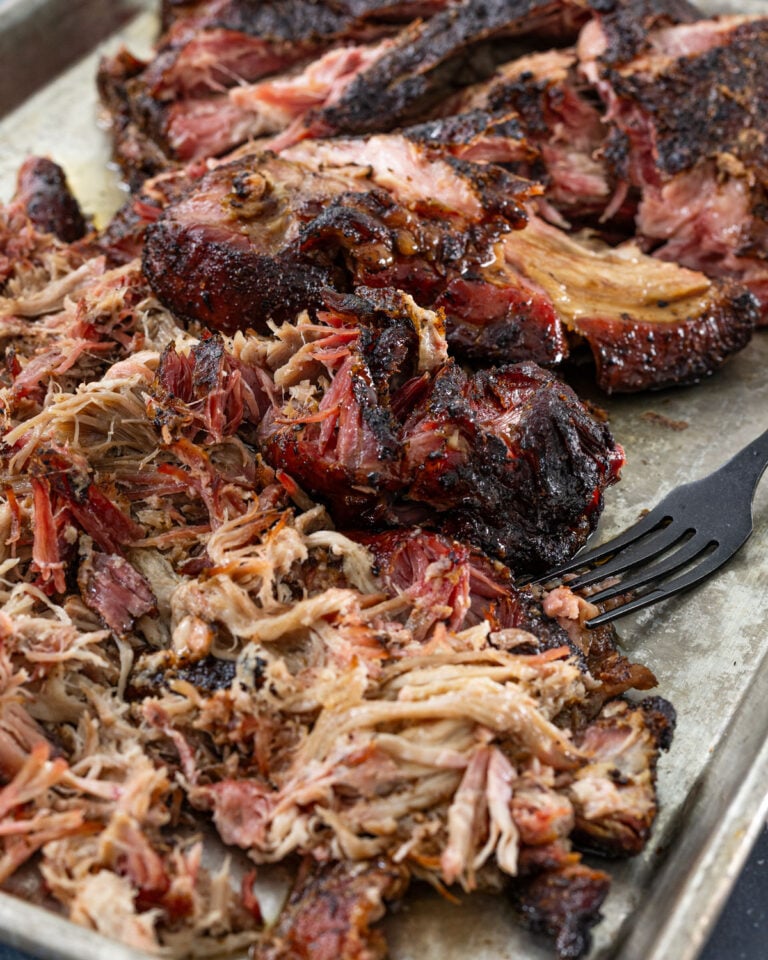
Smoked Butterflied Pork Butt
Butterflied pork butt smoked low and slow for maximum bark on every surface, then wrapped and finished until probe-tender. The method that produces better pulled pork than a whole butt every time.
- Total Time: ~8 hours
- Yield: 10–14 1x
Ingredients
- 1 boneless pork butt (pork shoulder), 6–9 lbs
- Your rub of choice, approximately 2 tablespoons per pound
Instructions
- Butterfly the pork butt by following the natural muscle seams with a sharp knife, opening it flat to no more than 3 inches thick at the deepest point.
- Apply rub generously to all surfaces — top, bottom, and along the seams. Press in to adhere. Rest at room temperature for 20–30 minutes, or refrigerate overnight.
- Preheat smoker to 265°F.
- Place the butterflied butt fat-side up, fully open and flat on the grates. Smoke at 265°F for approximately 5 hours until bark is dark, firm, and dry, and internal temperature reads 165–175°F.
- Remove from smoker. Fold the butt back in on itself and double-wrap tightly in heavy duty aluminum foil.
- Return to smoker or oven at 300°F. If finishing in the oven, place on a baking sheet to catch drips. Cook until probe-tender at 203–208°F, approximately 1.5–2.5 hours more.
- Rest wrapped for 45 minutes. Open foil, pour juices back over meat, and shred. Mix bark pieces throughout.
Notes
- Make-ahead: Season and butterfly the night before. Refrigerate uncovered for up to 12 hours. The overnight rest improves bark formation.
- Storage: Refrigerate pulled pork with juices for up to 4 days. Reheat covered on low with a splash of apple juice or water. Freezes well for 3 months.
- Substitutions: Bone-in pork butt works — remove the bone before butterflying. A picnic shoulder can be used but is harder to open flat.
- Oven finish: Once wrapped in foil, you can finish at 300°F in the oven instead of the smoker. Place on a baking sheet to catch any drips.
- Prep Time: 20 minutes
- Rest Time: 45 minutes
- Cook Time: 6-7 hours
- Category: Pork
- Method: smoking
- Cuisine: American BBQ, BBQ
- Diet: Gluten-Free
Nutrition
- Serving Size:
- Calories: 288
- Sugar: 0.4 g
- Sodium: 620.3 mg
- Fat: 12.1 g
- Carbohydrates: 2.4 g
- Protein: 41.6 g
- Cholesterol: 133.7 mg

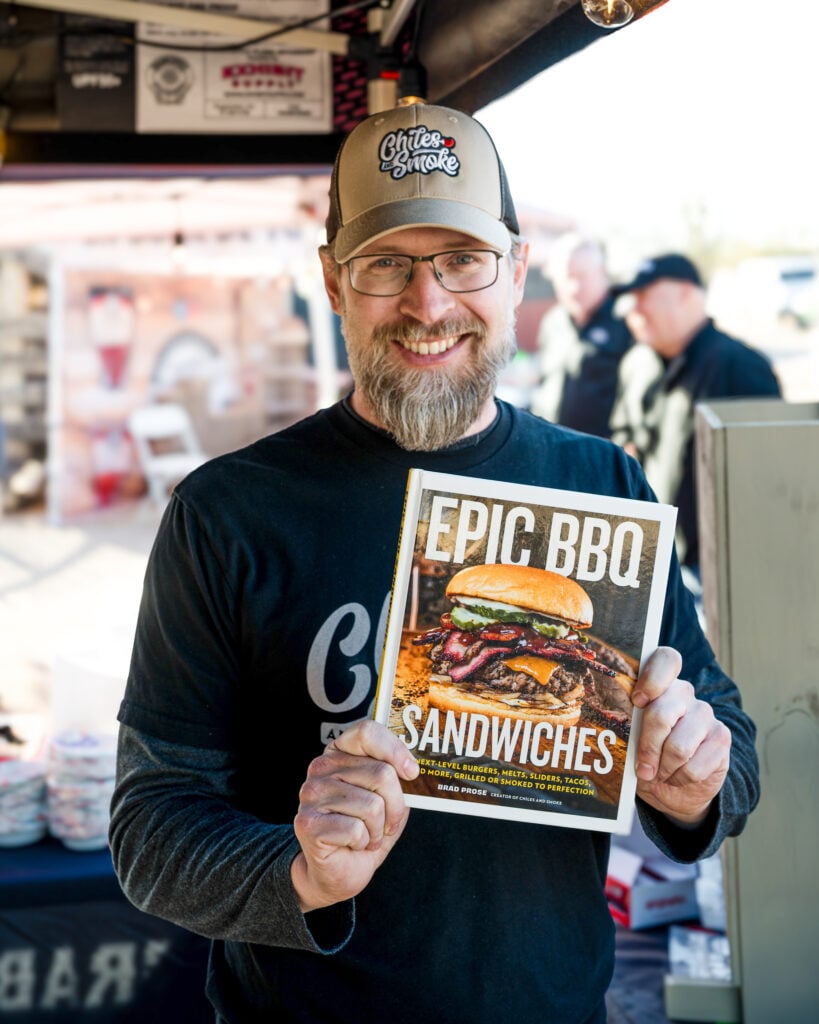
Brad Prose has been crafting recipes over live fire for 20 years. He’s the author of two cookbooks, Chiles and Smoke and Epic BBQ Sandwiches, and the creator of the original smash burger taco, as credited by the Washington Post, TODAY Show, Good Morning America, and Food Network. Brad is the force behind Chiles and Smoke, the home of Sonoran BBQ: bold flavors built around chiles, smoke, and the traditions of the American Southwest. Follow along on Instagram, YouTube, and Facebook.