
Red Chimichurri Sauce
Last tested July 2026
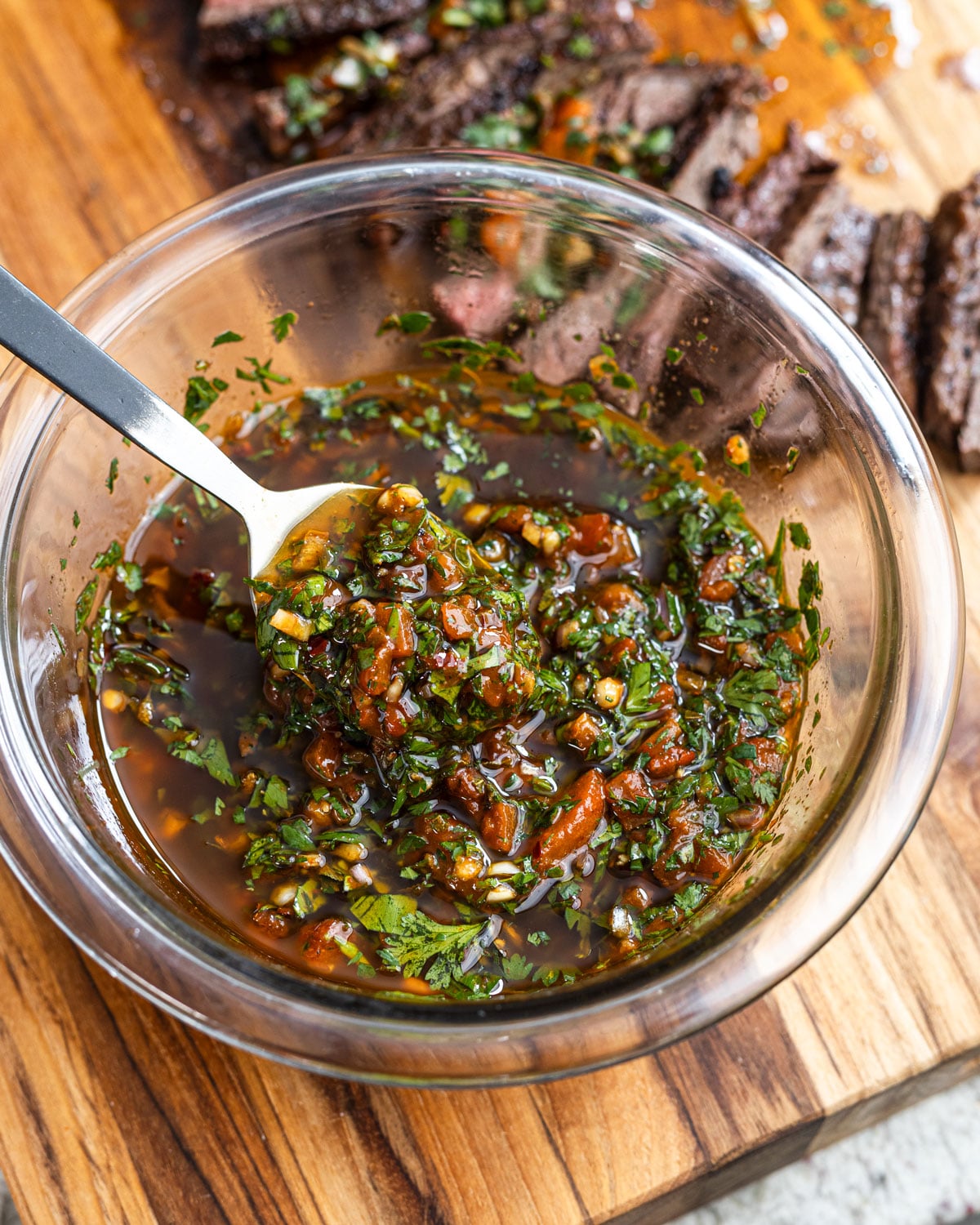
Red chimichurri, or chimichurri rojo, is the smoky, spicy version of the classic Argentinian green sauce. It’s built on a roasted red bell pepper, chipotles in adobo, and smoked paprika, with parsley, cilantro, garlic, and red wine vinegar folded in. Spoon it over grilled steak or smoked pork, and give it time to rest so the flavors settle before serving.
I originally developed this recipe while writing my first cookbook, Chiles and Smoke. I wanted something that could stand up to bigger cuts of beef than a traditional green chimichurri, and roasting the peppers turned out to be exactly what it needed.
Check out our Authentic Chimichurri recipe for all of the tips, tricks, and other flavor alternatives while you’re at it.
What Is Red Chimichurri?
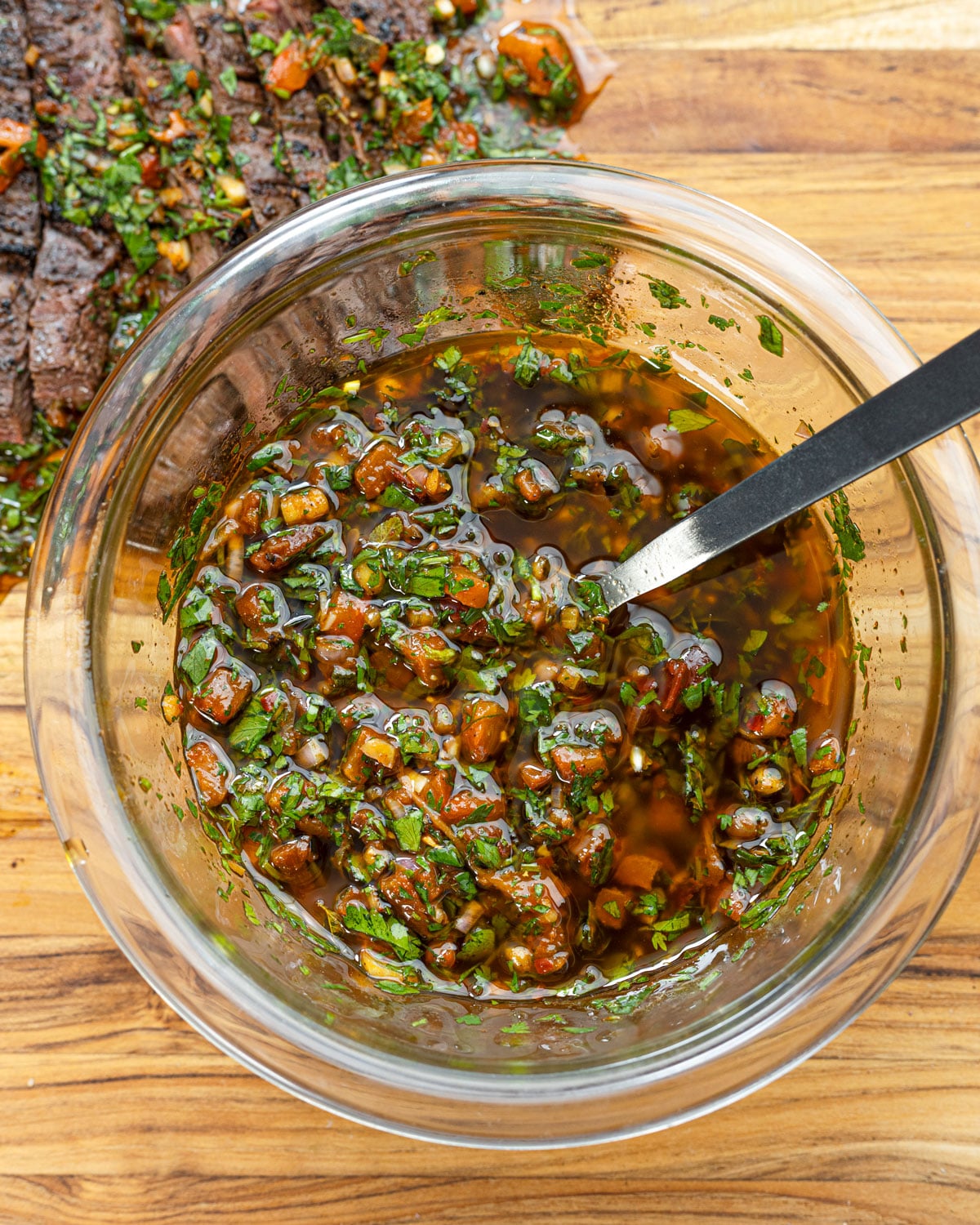
Chimichurri comes from Argentina, where it’s the standard sauce for grilled meat. The green version most people know is parsley, garlic, red wine vinegar, and olive oil, bright and tangy and made for almost anything off the grill.
Red chimichurri, chimichurri rojo, takes that same base and pushes it toward smoke and heat. A roasted red pepper adds sweetness and body, chipotles in adobo and smoked paprika bring the smoke, and red pepper flakes set the heat. It’s the one to reach for when the food can handle it, smoked lamb, spiced pork, or a fatty, well-charred steak.
Why This Recipe Works
- Roasting the pepper builds the base. A charred, peeled red pepper turns sweet and soft, and that roasted sweetness rounds out the chipotle and smoke.
- The smoke comes from two places. Chipotles in adobo and smoked paprika stack a deep, smoky heat into the sauce that a green chimichurri simply doesn’t have.
- Hand chopping keeps it a sauce, not a paste. Chopped by hand, it stays spoonable and textured, instead of blending into a smooth purée.
Key Ingredients
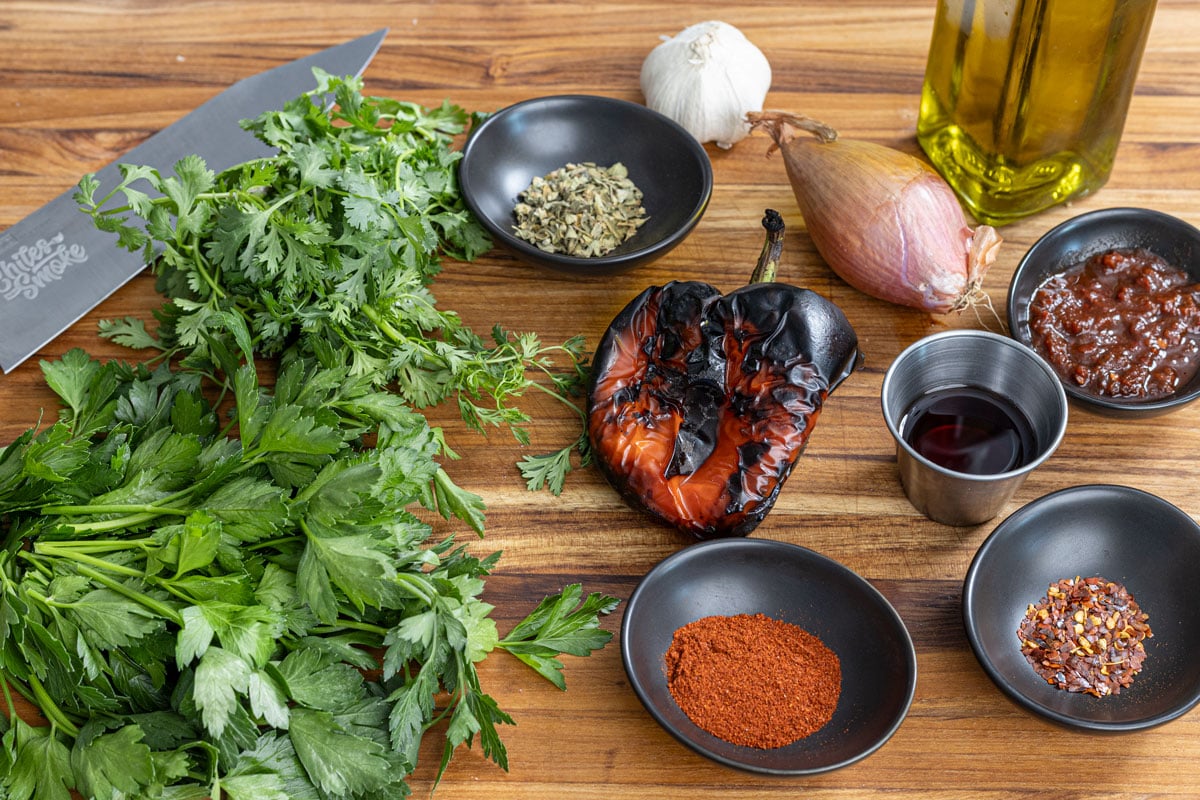
- Roasted red bell pepper: The sweet, soft base of the sauce. Char and peel your own, or use jarred; just drain them well.
- Chipotles in adobo: Most of the smoke and heat. Use the canned kind, finely diced, and add more for a hotter sauce.
- Smoked paprika: Backs up the chipotle with a rounder smoke. Sweet paprika works if that’s what you have.
- Dried Mexican oregano: Earthier and more citrusy than Italian oregano. Regular dried oregano fills in.
- Parsley and cilantro: Flat-leaf parsley keeps it tasting like chimichurri, and cilantro adds a citrusy lift. Skip curly parsley.
- Garlic and shallot: Raw garlic for the pungent backbone, shallot for a milder onion note.
- Red wine vinegar: The acid that makes it chimichurri. Rice wine or white wine vinegar sub in best. Skip distilled white and balsamic.
- Olive oil: You taste it here, so use one you’d actually want to. It carries the smoke and herbs.
How to Make Red Chimichurri: Step by Step
Step 1: Roast the red pepper
Char the whole pepper over a grill or under the broiler, turning it until the skin is blistered and black all over. Drop it into a covered bowl or a sealed bag to steam for about 10 minutes, then peel off the skin and pull out the stem and seeds.
Step 2: Chop everything
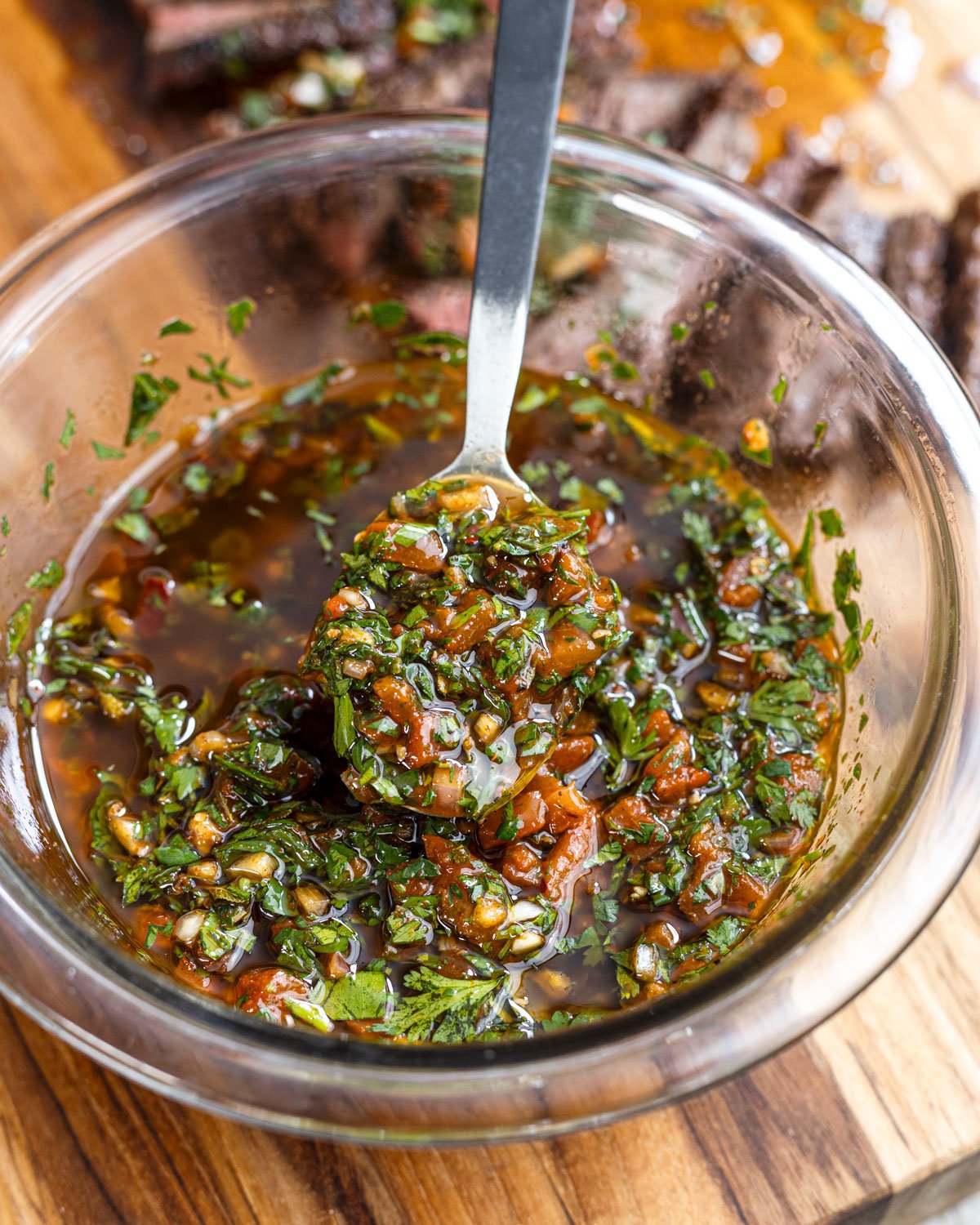
Finely dice the roasted pepper, parsley, cilantro, shallot, and chipotles, and mince or press the garlic. Keep the pieces small and even. If you use a food processor, pulse it a few times and stop while it’s still chunky. Run it too long and it turns into a dressing that slides off the meat.
Step 3: Combine with the vinegar and spices
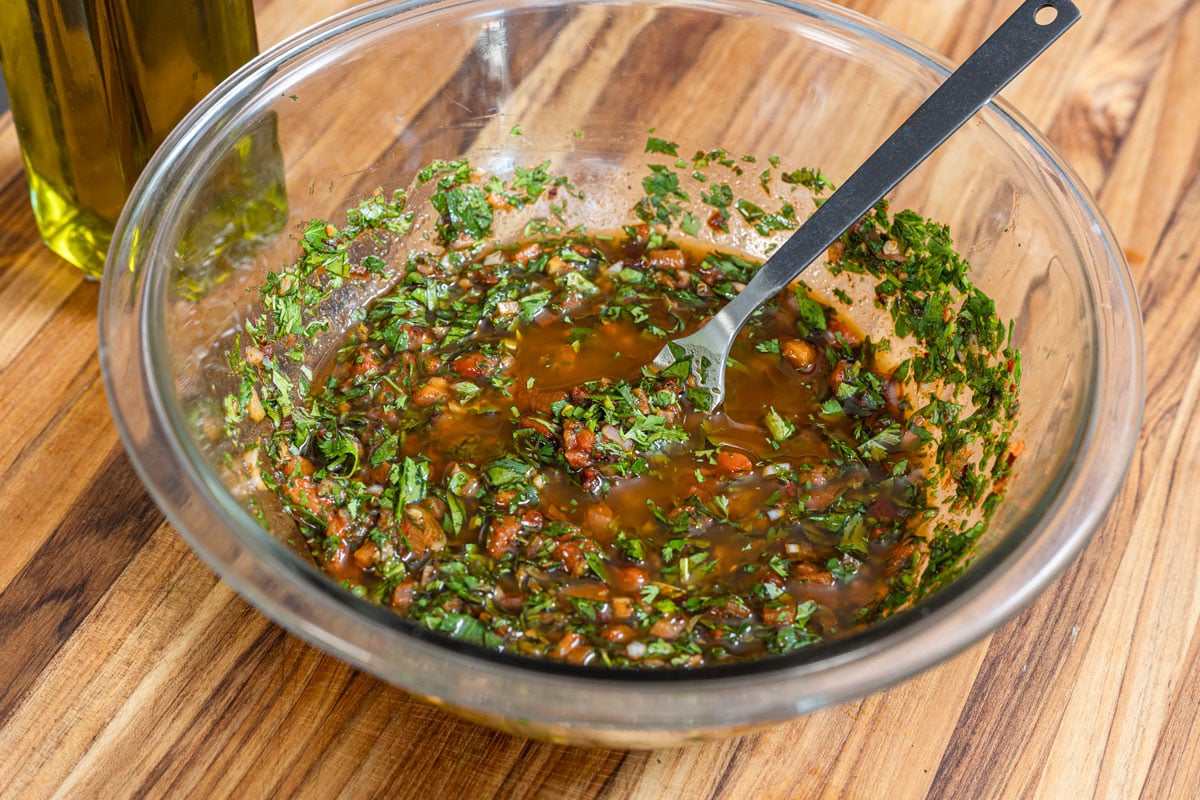
Move the chopped pepper, herbs, and aromatics to a bowl. If you used a food processor to chop, empty it into the bowl now, since the vinegar and oil go in by hand from here, not in the processor. Add the red wine vinegar, Mexican oregano, smoked paprika, and red pepper flakes, and stir together before the oil goes in.
Step 4: Stir in the oil
Slowly pour in the olive oil and stir with a fork until it looks combined and a little cloudy. Add just enough to coat the herbs, not drown them. Season with salt and pepper.
Step 5: Rest before serving
Let it rest at least 20 minutes at room temp to allow the flavors to develop and meld. Taste and adjust with salt or vinegar as needed. Store in the fridge once it has rested if not using.
Watch the Recipe
If you’re more of a visual cook, I’ve included the full video in the recipe card below so you can see the texture, consistency, and chopping technique before you start.
Make-Ahead and Storage
Red chimichurri is a make-ahead sauce by design. It needs the rest anyway, so making it in advance only helps.
- Make-ahead: A 20-minute rest is enough to serve, but it’s even better made a day ahead. The smoke and chipotle keep developing overnight.
- Room temperature: Serve it at room temp. Pull it from the fridge ahead of time so the oil loosens and the smoke and heat open back up.
- Fridge: Keeps about a week in an airtight container. The color deepens and the flavor intensifies as it sits.
- Freezer: Freeze it in an ice cube tray, then pop out a portion when you need one. It holds for a couple of months. The texture softens after thawing, so use it as a finishing sauce rather than expecting it fresh out of the tray.
What to Serve It With
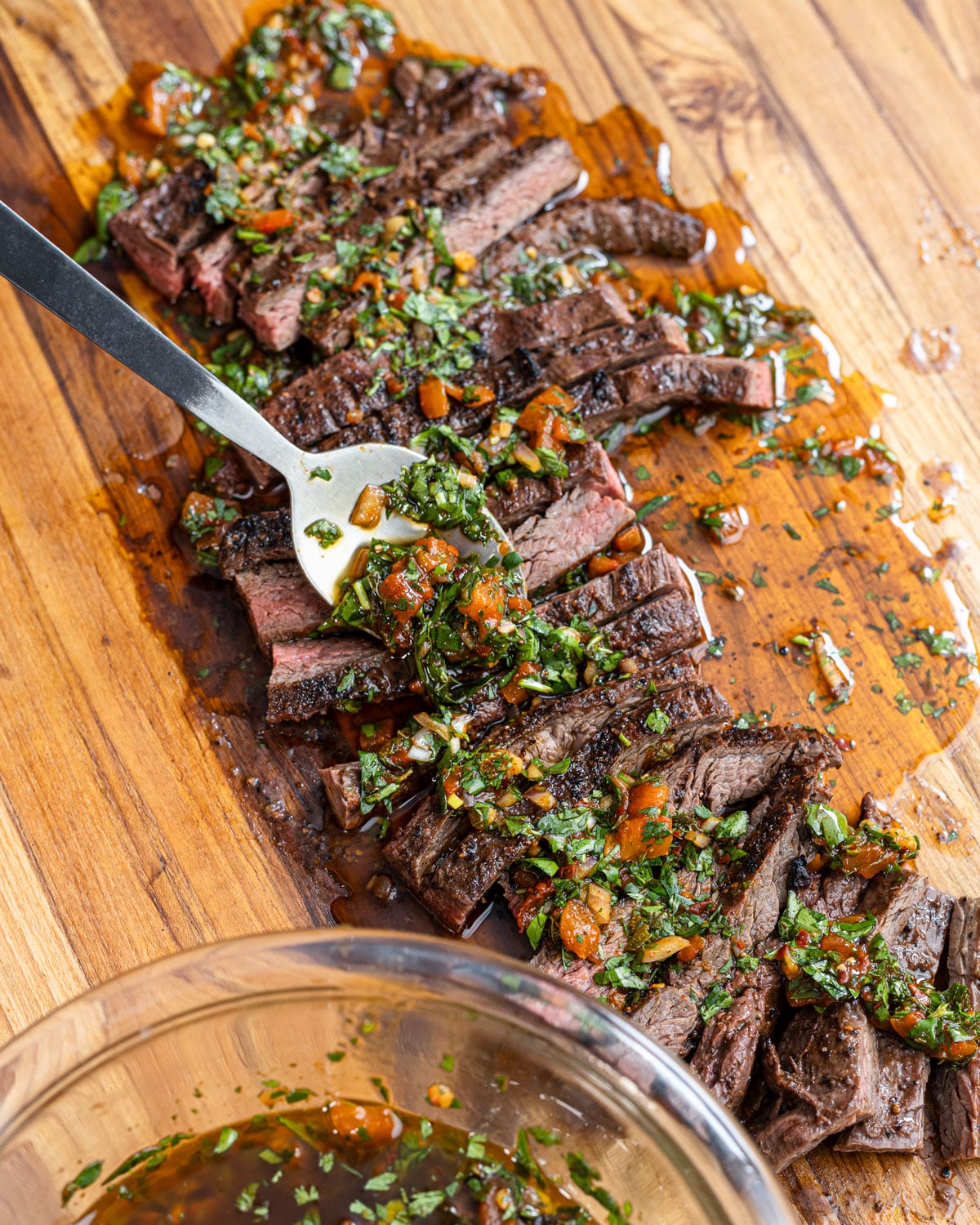
Red chimichurri is built for heavier, richer cooking, but it goes well beyond steak. Where I use it:
- Beef: Reverse-Seared Tri-Tip, Smoked Prime Rib, and Reverse-Seared Picanha.
- Pork: Smoked Rack of Pork and Grilled Pork Belly.
- Poultry: Smoked Turkey Breast, where it wakes up a mild bird.
- Seafood: grilled shrimp, salmon, or scallops.
- Vegetables: Grilled Corn Ribs, Smoked Baked Potatoes, or grilled zucchini and eggplant.
A spoonful over scrambled eggs or with crusty bread never hurts either.
Frequently Asked Questions
Yes. Drain them well and dice them, and you skip the roasting step entirely. A little residual oil isn’t a problem, since the sauce is built on oil anyway. Fresh-roasted has a bit more depth, but jarred gets you most of the way there.
A teaspoon of chipotle powder plus a little extra smoked paprika gets you close on smoke and heat. For a milder sauce, cut the chipotle back or leave it out and lean on the smoked paprika. You lose some heat, not the smoky character.
Moderate, from the chipotles and red pepper flakes. It’s easy to steer. Add more of either to push the heat up, or pull them back for something milder. The roasted pepper and smoked paprika carry the flavor even at a lower heat.
About a week in an airtight container in the fridge, and the flavor deepens over the first day or two. Let it come back to room temperature before serving so the oil loosens and the smoke opens back up.
Room temperature. Cold from the fridge the oil firms up and the flavor flattens, so set it out about 30 minutes before you need it. There’s no cooking involved. It’s a raw sauce that just needs to lose the chill.
Which Chimichurri Should You Make?
If you’re not sure which version to make, here’s where I use each one.
- Classic Chimichurri: the original, parsley-forward, bright, and tangy. It’s the one I reach for on almost anything off the grill, from steak to chicken to vegetables.
- Red Chimichurri: the smoky, spicy one you’re looking at. Roasted red pepper and chipotle give it the body to stand up to bigger, richer cuts like prime rib and pork belly.
- Hatch Chile Chimichurri: the Southwest version, with roasted Hatch green chile folded into the herbs. It’s milder and earthier, and made for Hatch season.
- Cranberry Chimichurri: tart and a little sweet, the one I run in the fall. It’s built to cut through a rich holiday roast or smoked turkey.
Try It and Tag Us
Make a batch the next time you’ve got something rich on the grill. Spoon it over a fatty steak or smoked pork and see where it takes you. Tag us on Instagram when you do. Leave a rating below if this helped.
Red Chimichurri Sauce Recipe
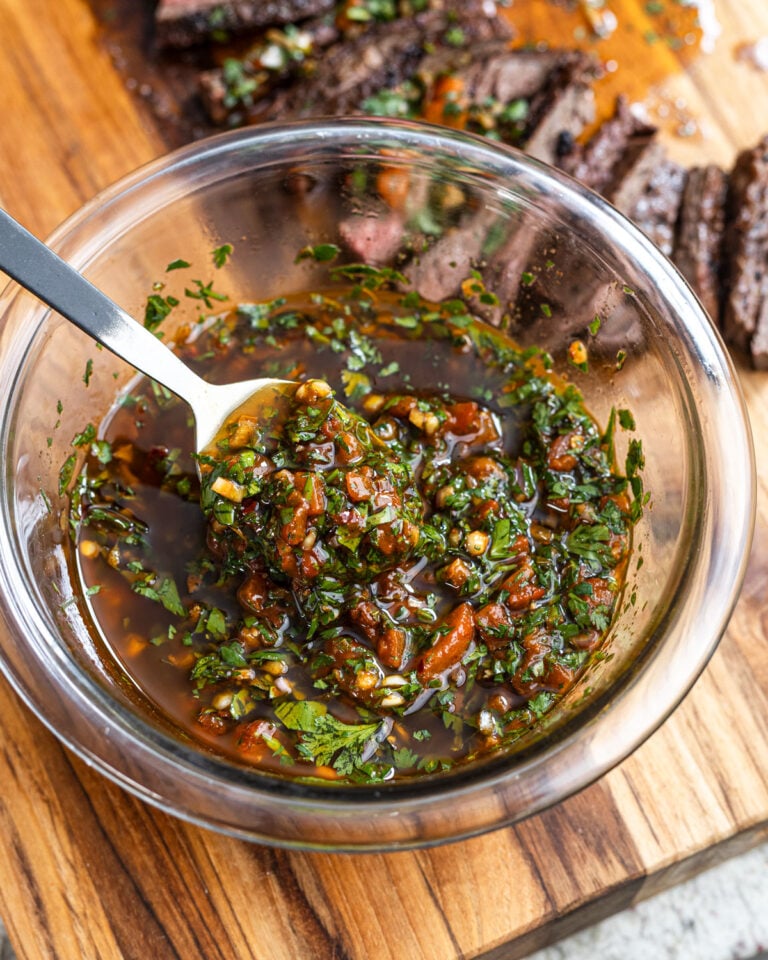
Smoky, spicy red chimichurri (chimichurri rojo) built on roasted red bell pepper, chipotles in adobo, and smoked paprika, with parsley, cilantro, garlic, and red wine vinegar. Made for grilled and smoked meats.
- Total Time: 35 minutes
- Yield: About 2 cups 1x
Ingredients
- 1 red bell pepper
- 1 bunch flat-leaf parsley, large stems removed, finely chopped
- 1/2 bunch cilantro, large stems removed, finely chopped
- 1 tablespoon dried Mexican oregano
- 1 tablespoon finely diced chipotles in adobo
- 1 tablespoon smoked paprika
- 1/2 teaspoon red pepper flakes
- 2 tablespoons minced shallot
- 4 cloves garlic, minced
- 2 tablespoons red wine vinegar
- 1/2 cup extra virgin olive oil
- 1/2 teaspoon kosher salt, more to taste
- 1/2 teaspoon black pepper
Instructions
- Char the red pepper over a grill or under the broiler until the skin is blistered and blackened all over. Steam it in a covered bowl or sealed bag about 10 minutes, then peel and remove the stem and seeds.
- Finely dice the roasted pepper, parsley, cilantro, shallot, and chipotles, and mince the garlic. Add to a large bowl.
- Add the red wine vinegar, Mexican oregano, smoked paprika, and red pepper flakes. Stir together before the oil goes in.
- Slowly pour in the olive oil and stir with a fork until combined and slightly cloudy. Season with salt and pepper to taste.
- Rest at room temperature at least 20 minutes. Taste, adjust the salt and vinegar, and stir again before serving.

Notes
- Jarred roasted red peppers work if you’re short on time. Use about 1/2 cup, drained well.
- Sweet paprika can stand in for smoked paprika. You lose a little of the smoky edge.
- It’s ready after a 20-minute rest, and even better made a day ahead.
- Adjust the chipotle and red pepper flakes up or down for heat.
- Store in an airtight container in the fridge for up to a week. Freeze in an ice cube tray for longer storage.
- Prep Time: 15 minutes
- Rest Time: 20 minutes
- Category: Sauces & Salsas
- Method: Mixing
- Cuisine: Argentine
- Diet: Gluten-Free, Vegan
Nutrition
- Serving Size: 2 tablespoons
- Calories: 70
- Sugar: 0.6 g
- Sodium: 42.3 mg
- Fat: 7.1 g
- Carbohydrates: 1.7 g
- Protein: 0.4 g
- Cholesterol: 0 mg

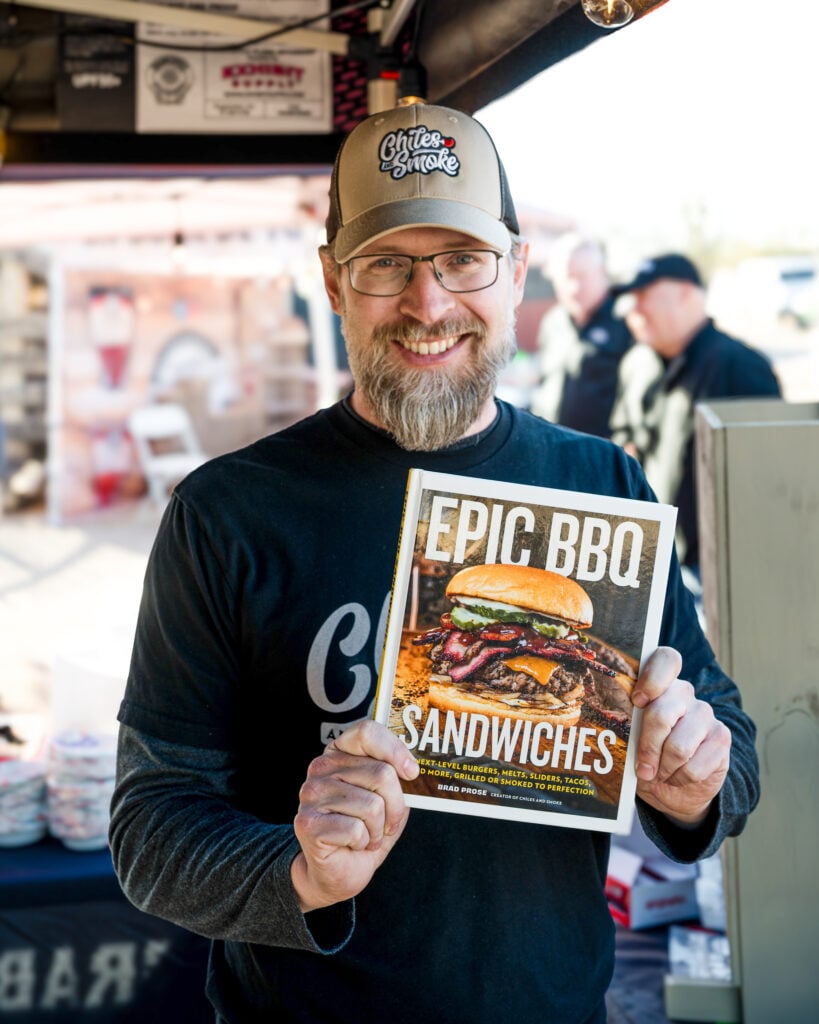
Brad Prose has been crafting recipes over live fire for 20 years. He’s the author of two cookbooks, Chiles and Smoke and Epic BBQ Sandwiches, and the creator of the original smash burger taco, as credited by the Washington Post, TODAY Show, Good Morning America, and Food Network. Brad is the force behind Chiles and Smoke, the home of Sonoran BBQ: bold flavors built around chiles, smoke, and the traditions of the American Southwest. Follow along on Instagram, YouTube, and Facebook.




LOVED it. I used normal oregano since it was on hand. I paired it with the Santa Maria Tri-Tip recipe. My friends and I were very happy with the results! This and the tri-tip are going to be go to recipes in the future.
Awesome!! Thanks for sharing
Takes time to prepare, but there’s more depth to the flavor. Love it on smoked turkey especially.
Can you use normal oregano to replace mexican oregano?
Yes you can!