Authentic Chimichurri Sauce
Last tested July 2026
Chimichurri is one of those recipes that is almost impossible to overthink, but people manage to anyway. Fresh parsley, garlic, oregano, olive oil, and red wine vinegar come together with nothing more than a quick stir before resting to let the flavors meld. No cooking, no special equipment, and about 15 minutes is all it takes.
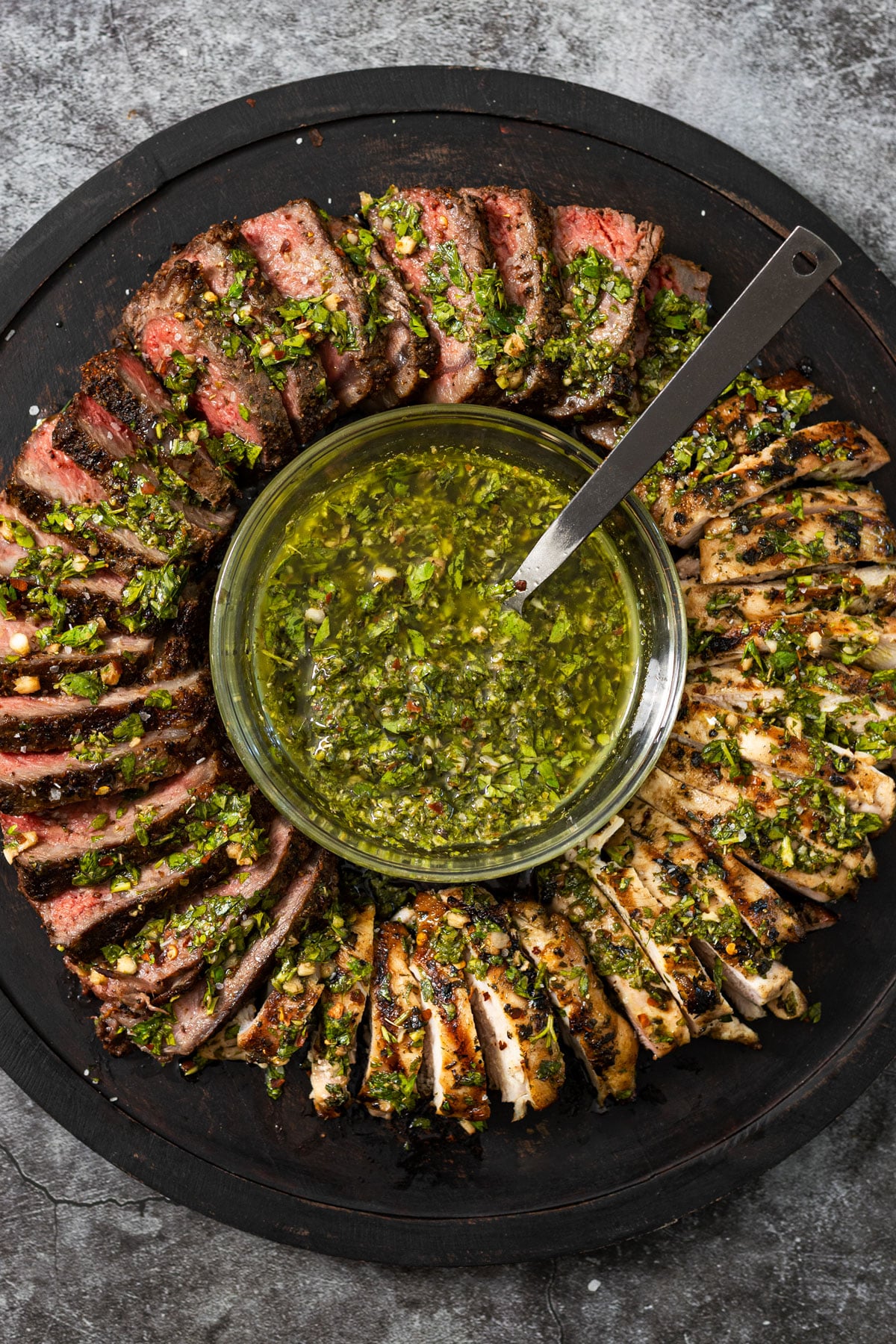
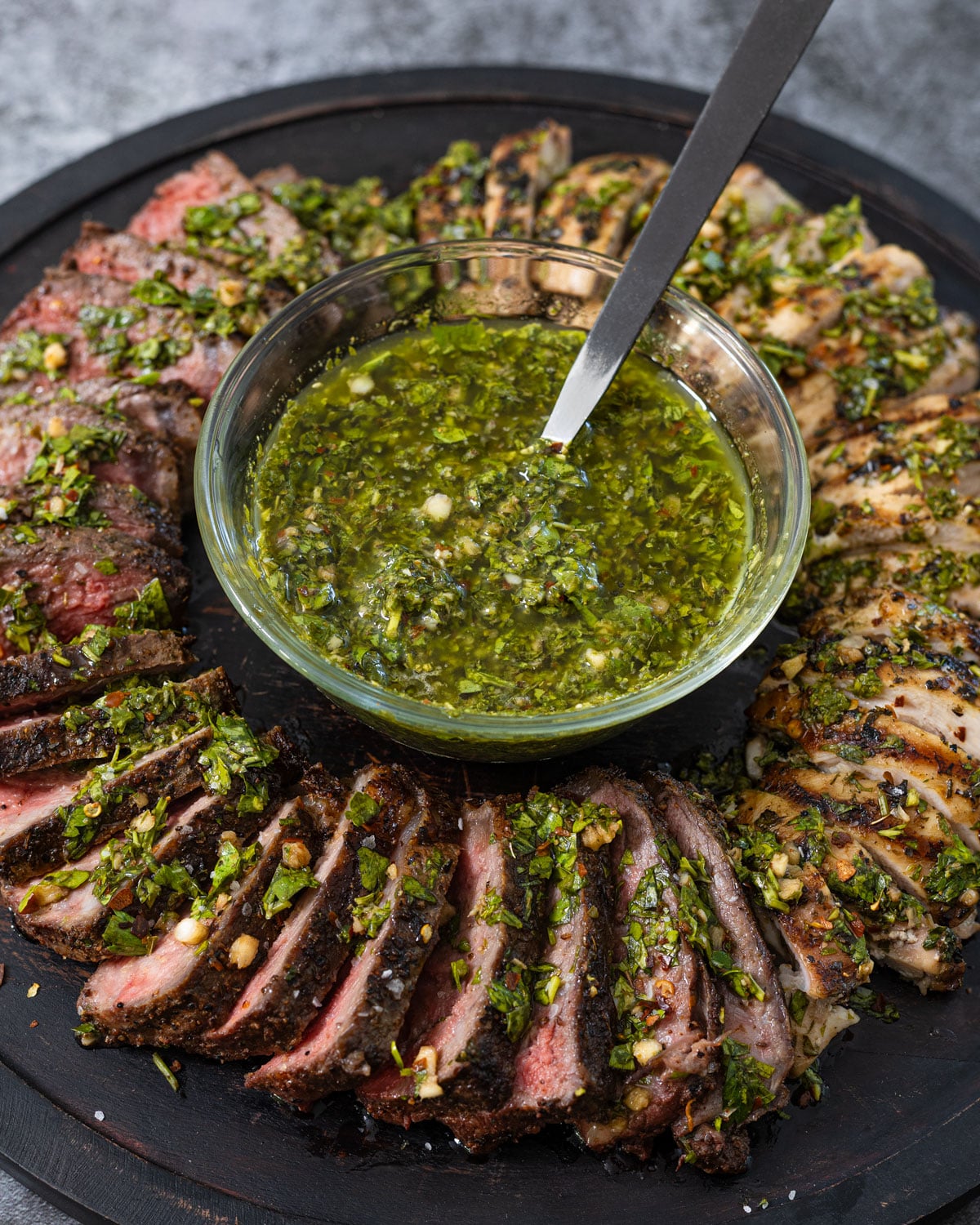
While grilled steak is the classic pairing, I’ve ended up using it on just about everything that comes off my grill, from chicken thighs and seafood to vegetables and pork. This is the fresh-herb version most cooks make today. There is also an older dried-herb tradition with its own history, and I get into that below.
I have been making chimichurri and experimenting with different versions for well over a decade. What started as a way to dress up grilled vegetables back when my wife was still mostly vegetarian quickly became one of the most-used sauces in our kitchen. I have published several chimichurri variations over the years, but this classic recipe is still the one I come back to most often because it respects the Argentine tradition while pairing with just about everything I cook over live fire.
Why This Method Works
- A brighter, fresher sauce you can actually taste: hand chopping keeps the parsley and oregano distinct instead of a green paste, so every bite reads as herbs, garlic, and vinegar rather than one flat note. A blender emulsifies the oil and garlic and leaves it heavier and a little bitter.
- It tastes better with almost no extra effort: give it 20 minutes and the sauce goes from good to noticeably better, since the short rest lets the garlic, vinegar, and herbs settle into each other. The wait does more than any extra ingredient.
- One bowl feeds two jobs: the same mixture finishes grilled meat with a spoonful or marinates it beforehand, so you get a finishing sauce and a marinade without making anything twice.
- You set the heat, not the recipe: the red pepper flakes are yours to adjust, so it comes out as mild or as fiery as you like without touching anything else.
Key Ingredients
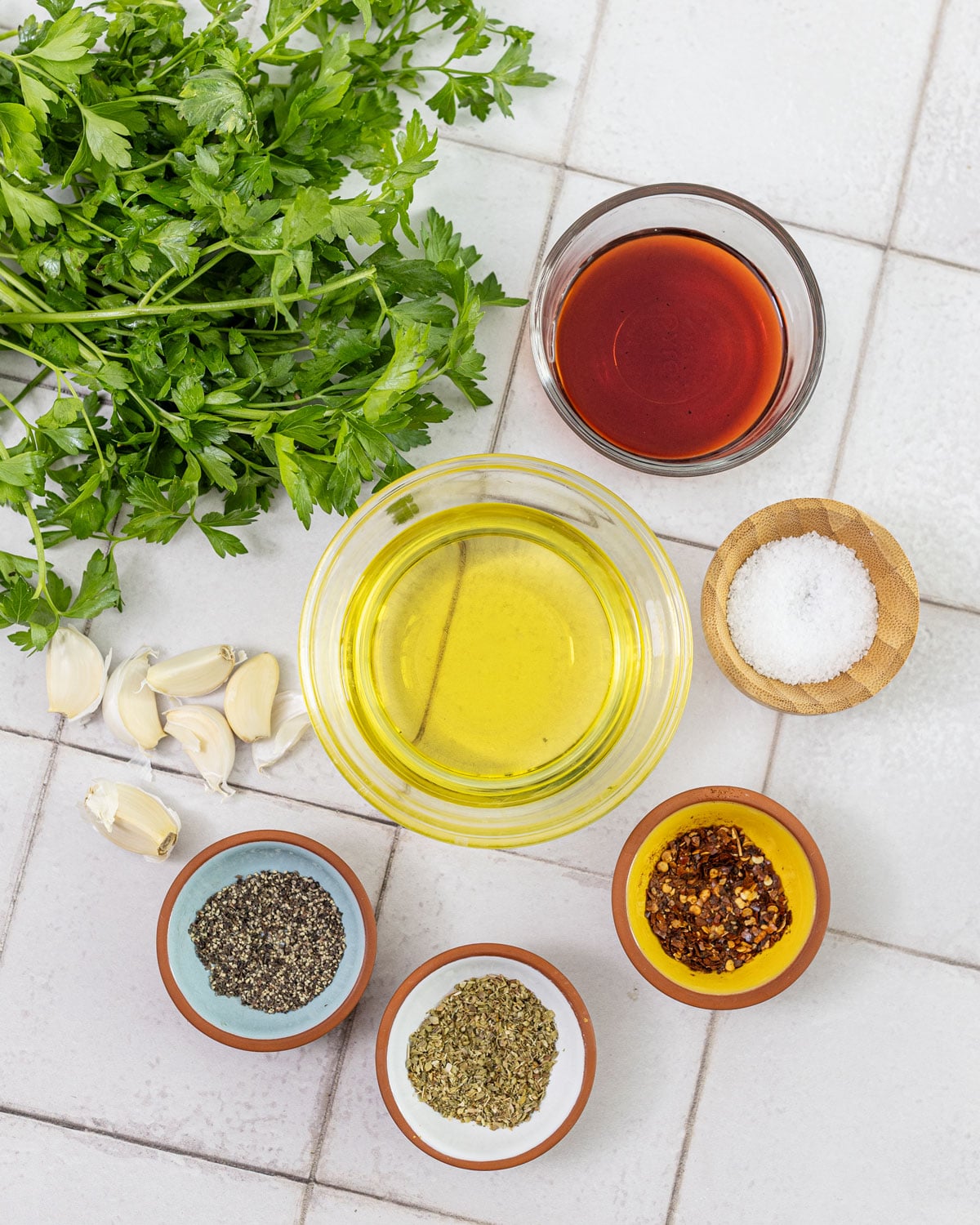
- Flat-leaf parsley is the backbone, so use flat-leaf and not curly, since it chops cleaner and carries more flavor.
- Dried oregano is what I use here, and it is closer to how a lot of Argentine cooks actually make it, since the concentrated flavor stands up to grilled beef. Use about a tablespoon of dried, or double that if you go fresh.
- Garlic goes in raw and minced fine, and this sauce is meant to be garlic-forward, so use 4 to 5 cloves, not one or two. Mince it with a knife rather than pressing it, since a press turns it sharp and watery in a raw sauce.
- Red wine vinegar is the tang that makes it chimichurri, and it is the traditional acid, so skip white vinegar, which runs harsh. Use about 3 parts oil to 1 part vinegar, and add more if you like it sharper.
- Extra virgin olive oil is the body, and you taste it straight here, so use one you actually like.
- Red pepper flakes bring the heat, and a fresh minced red chile works if you want it brighter.
- Black pepper is completely optional. I do not consider it part of a classic chimichurri, but I often stir in a teaspoon when I am serving richer cuts like beef or lamb.
How to Make Chimichurri: Step by Step
Step 1: Chop the herbs and garlic by hand
Finely chop the parsley and oregano and mince the garlic. Take your time and keep the pieces small and even. Hand chopping is the step that separates authentic chimichurri from the blender version, since it keeps the texture and stops the herbs from going bitter.
You can use a garlic press, which speeds up the process. I highly recommend this garlic rocker as it’s easy to use, and simple to clean.
Step 2: Combine the base
Add the chopped herbs and garlic to a bowl with the red wine vinegar, red pepper flakes, and salt, and stir it before the oil goes in so the vinegar coats the herbs first. That order matters more than it looks.
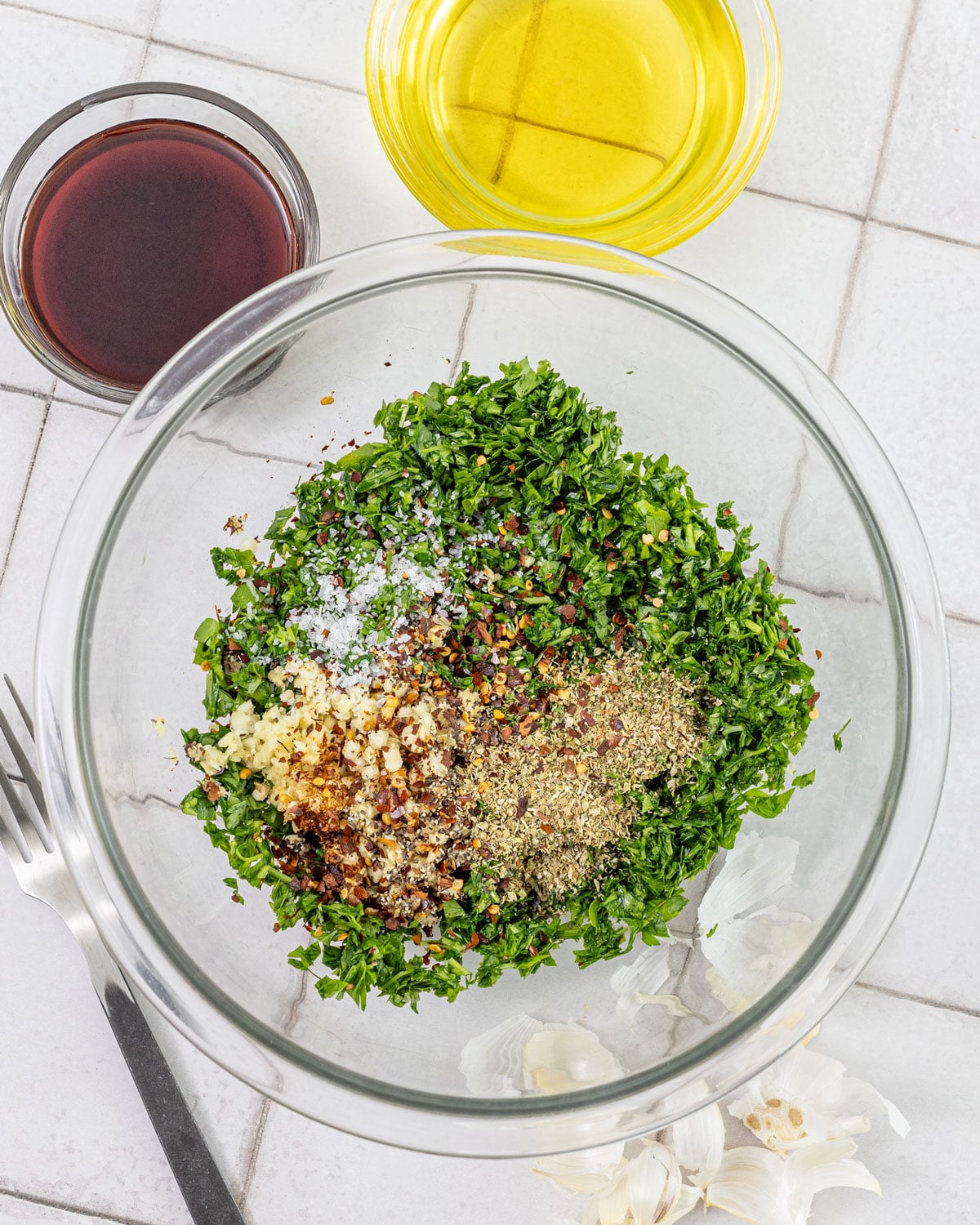
Step 3: Stir in the oil
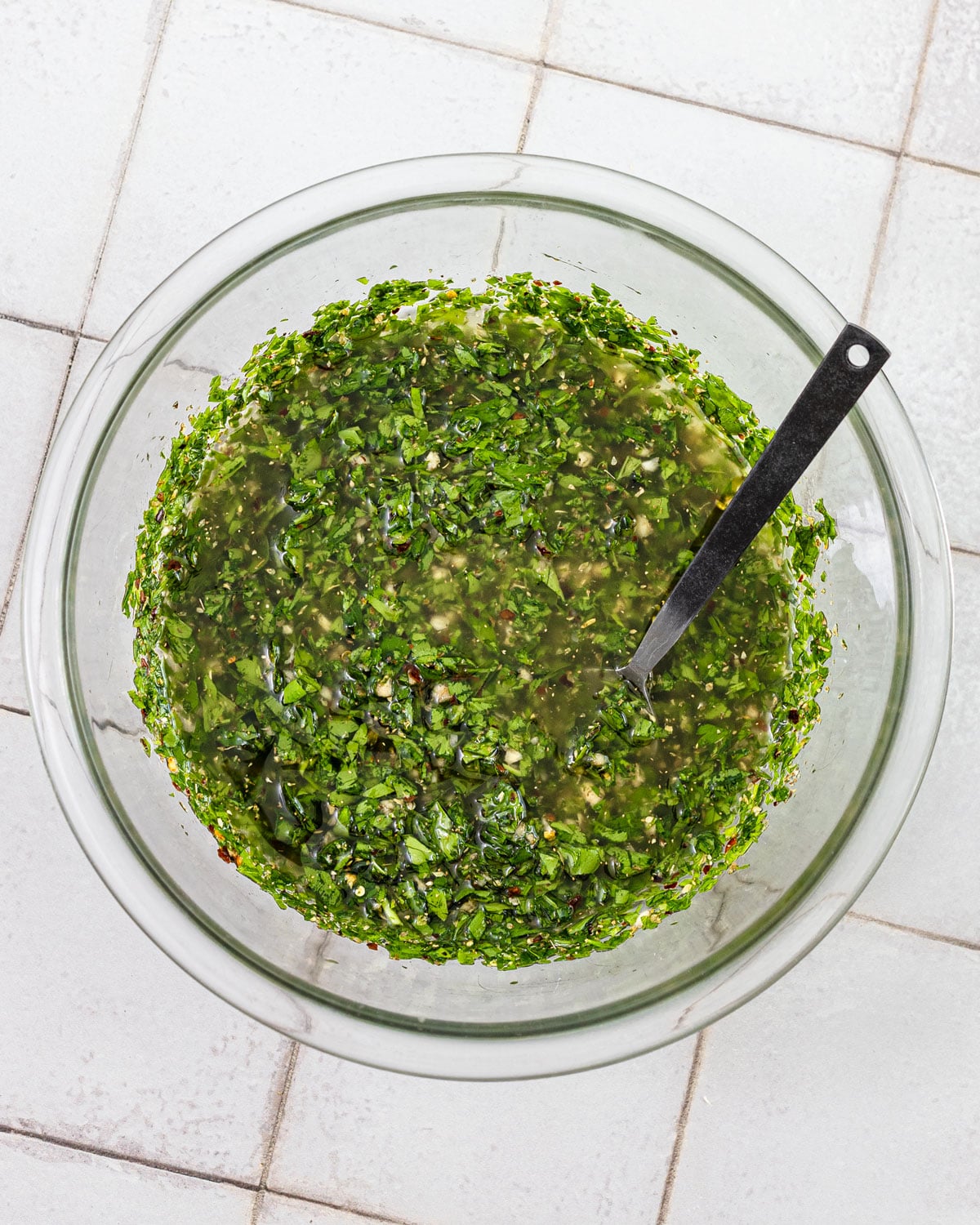
Pour in the olive oil and stir until everything is combined and the sauce looks glossy and spoonable. It will not hold together like a thick dressing, and it does not need to.
Chimichurri is meant to be loose, with the oil settling around the herbs rather than whipped smooth. If it separates as it rests, that is normal, just give it a stir before serving.
Step 4: Rest before serving
Let the sauce rest at room temperature for at least 20 minutes before you serve it. I know it is tempting to dig in right away, but that short rest is what lets the garlic settle down and the flavors pull together, and it makes a real difference.
Once it has rested, taste it. I treat the measurements as a starting point every single time, since chimichurri is a sauce you dial in to your own liking. If it tastes flat, it usually needs salt before anything else, then a little more vinegar. Want more punch? Add garlic or red pepper flakes. Get it where you like it, and that is your chimichurri.
Can You Make Chimichurri in a Blender?
You can, but I would not. Blending breaks down the chlorophyll in the parsley and turns the sauce bitter, and it emulsifies the oil and garlic into a heavy base when good olive oil is meant to be tasted on its own. You also lose the texture and the individual ingredients, which makes chimichurri so tasty.
So chop by hand. If you are short on time, pulse a food processor two or three times and stop well before it turns smooth.
See the Difference
I made the same chimichurri two ways so you can see it for yourself. Same parsley, same garlic, same oil and vinegar, same everything. The only thing I changed was how the herbs got broken down.

Hand-chopped chimichurri Prepared in a food processor
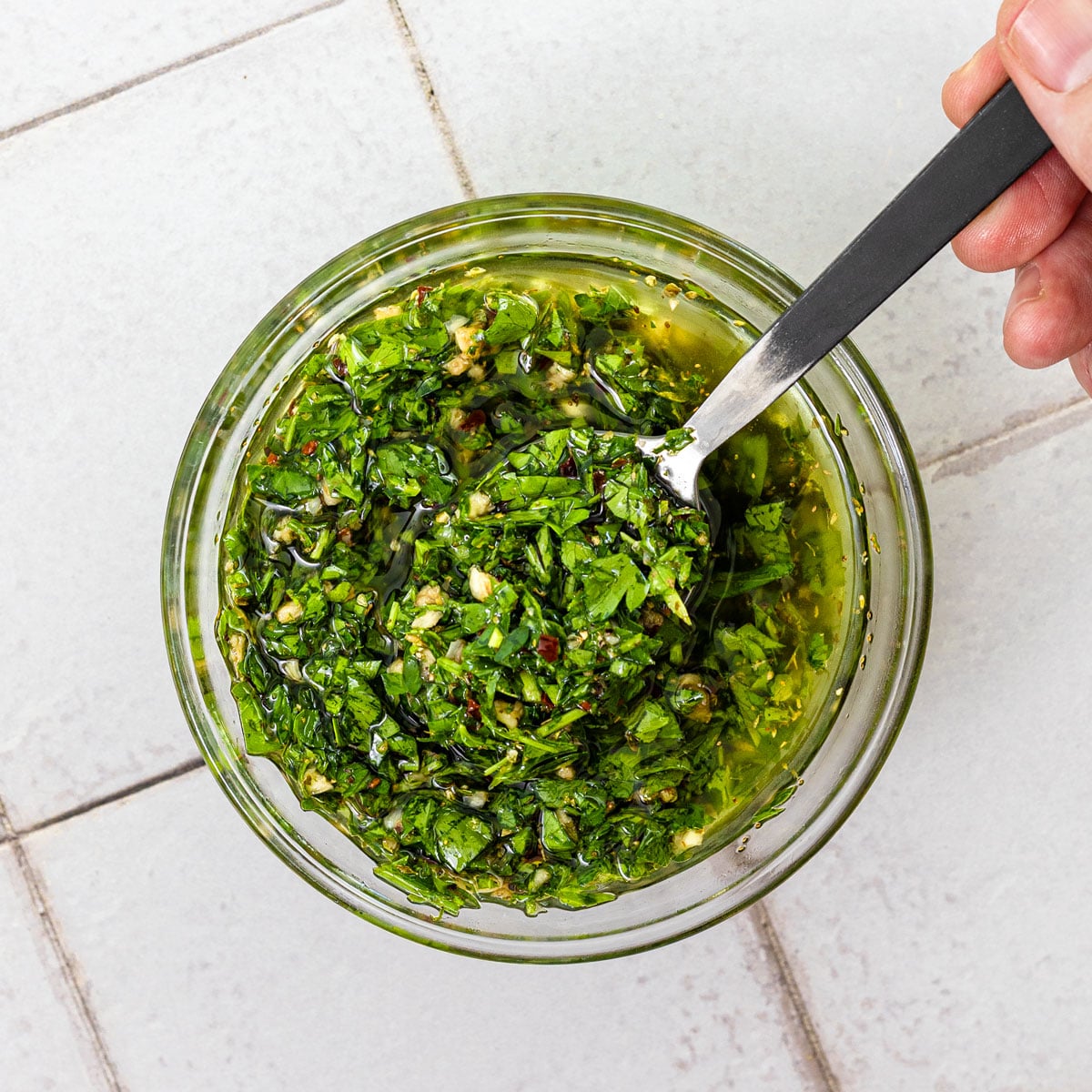
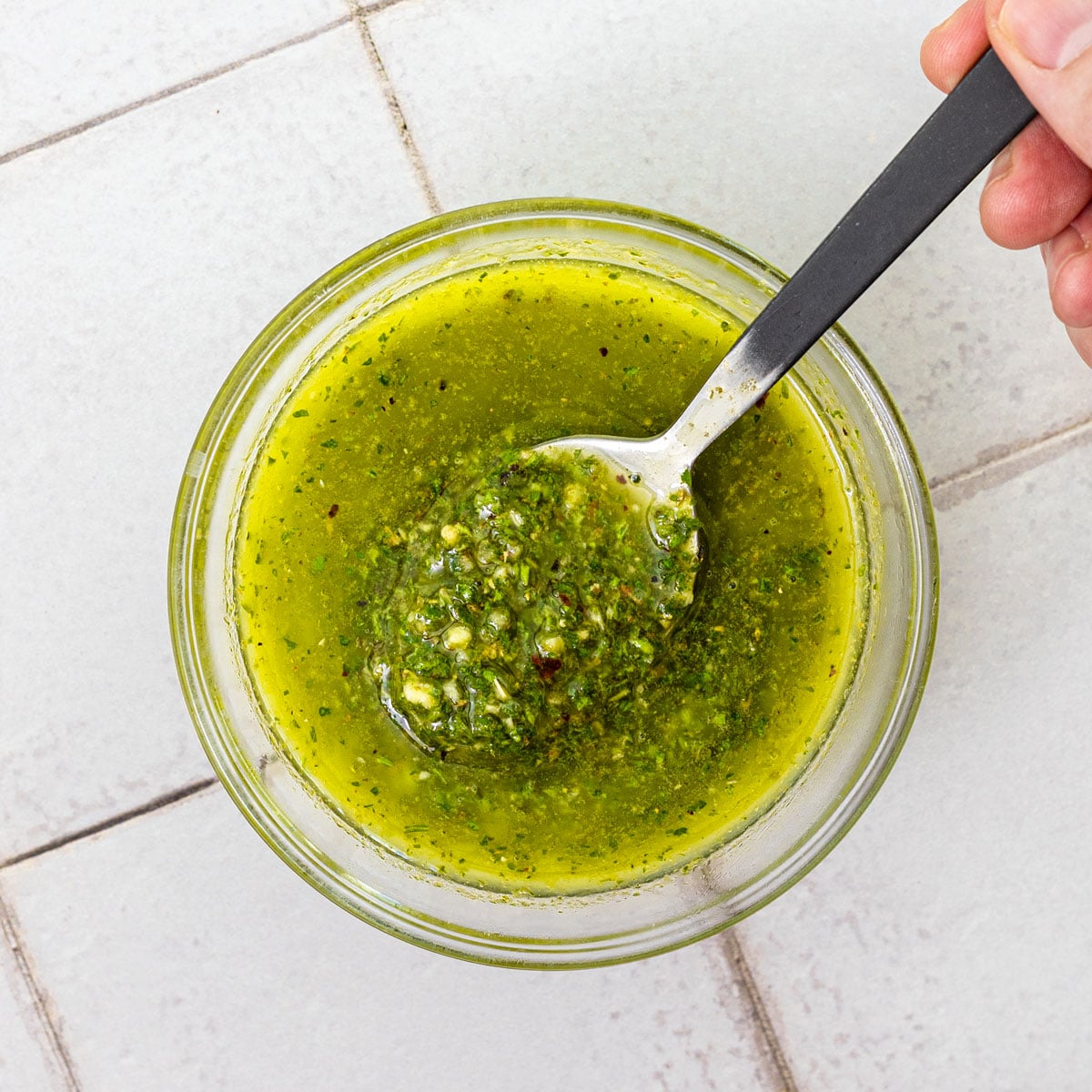
Tasting them side by side was not even close. The hand-chopped version stayed bright and fresh, and I could pick out the parsley, oregano, garlic, and vinegar individually with each bite. The processed version was not bad, but it felt heavier, the garlic came across harsher, and the herbs blended into one uniform flavor. If I were using it as a salad dressing, I would be happy with it. For grilled steak, the hand-chopped version wins every time.
None of this means you cannot use a food processor. If that is what you can manage, go for it, it still tastes good, closer to a dressing than a classic chimichurri. Just know it will not cling to meat and vegetables the same way the hand-chopped version does, and it can come out a little more bitter.
Fresh vs Dried: A Note on What Authentic Means
There are really two traditions here, and it is worth knowing both. Chimichurri started as a gaucho field sauce, something to flavor meat cooked over open fires out on the pampas. Fresh herbs spoiled out there, so the original version leaned on dried herbs, dried garlic, vinegar, and oil, and you can still buy it in Argentina as a dry blend in pouches. That is why a lot of Argentine cooks still reach for dried oregano. The concentrated flavor stands up to grilled beef.
The history goes back further than the sauce most people picture. The Argentine historian Daniel Balmaceda traces the name to Quechua, the indigenous language of northern Argentina, and notes that the earliest chimichurri was closer to a brine of water, salt, garlic, and bay leaf before it became the vinegar-and-oil emulsion we know now. The name itself is debated. The leading theories point to either a Basque term or that Quechua root, and the popular “Jimmy McCurry” story has no real evidence behind it.
The fresh-herb version I make here is what most cooks reach for today, including plenty of Argentines, because fresh parsley and oregano give it a brighter, greener edge. So this is not the only authentic chimichurri. It is the fresh tradition, and I make it fresh because I like it best. A few markers hold true across both: it is always parsley and never cilantro in the Argentine style, red wine vinegar is the classic acid, and the older versions used a neutral oil like sunflower since olive oil was not widely available in Argentina early on. I use olive oil for the flavor, the way many cooks do now.
Make-Ahead and Storage
Serve it at room temperature. Pull it out of the fridge ahead of time and let it warm up before it hits the table. The olive oil thickens when cold and the flavor is muted straight from the fridge, so this matters more than it sounds. It can sit out for the length of a meal without any issue.
Fridge: Store leftovers in an airtight container. It is best in the first few days but keeps for about a week, and the vinegar helps preserve it as it goes. The herbs dull in color after the first day, which is normal and does not mean it has gone off. It also intensifies as it sits, more so if you went heavier on the garlic or red pepper flakes.
Freezer: Freeze it in an ice cube tray and thaw a portion at a time for longer storage.
What to Serve Chimichurri With
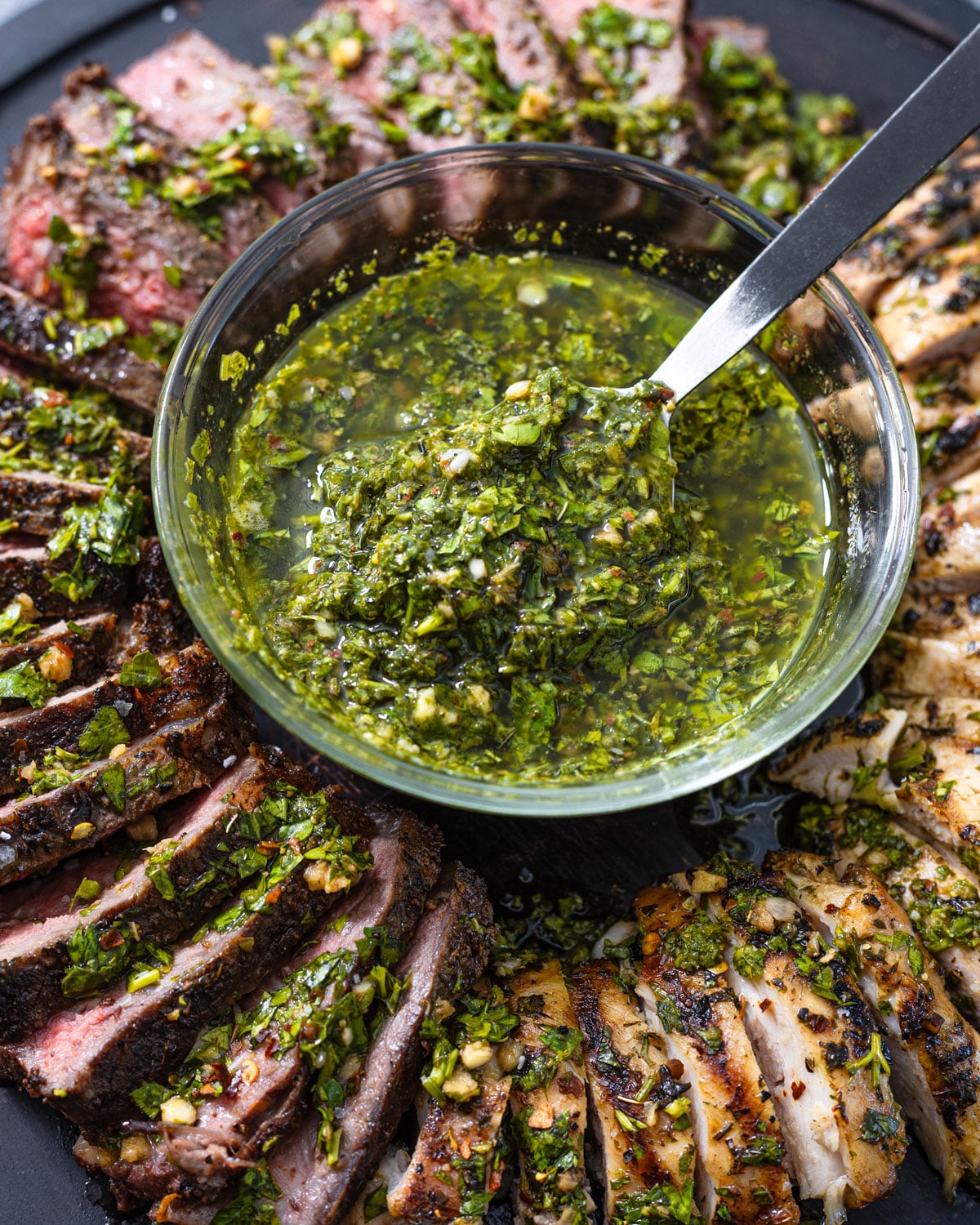
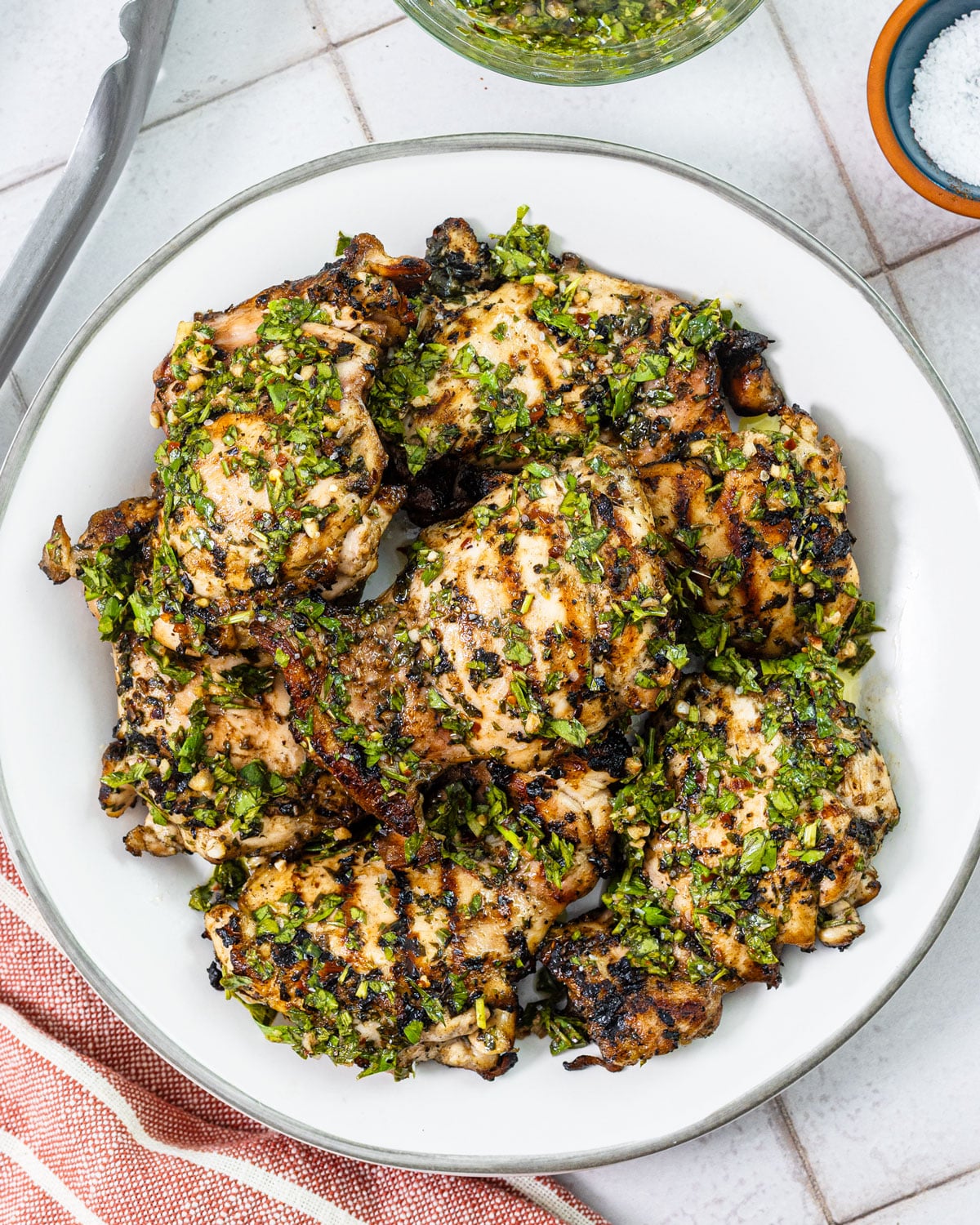
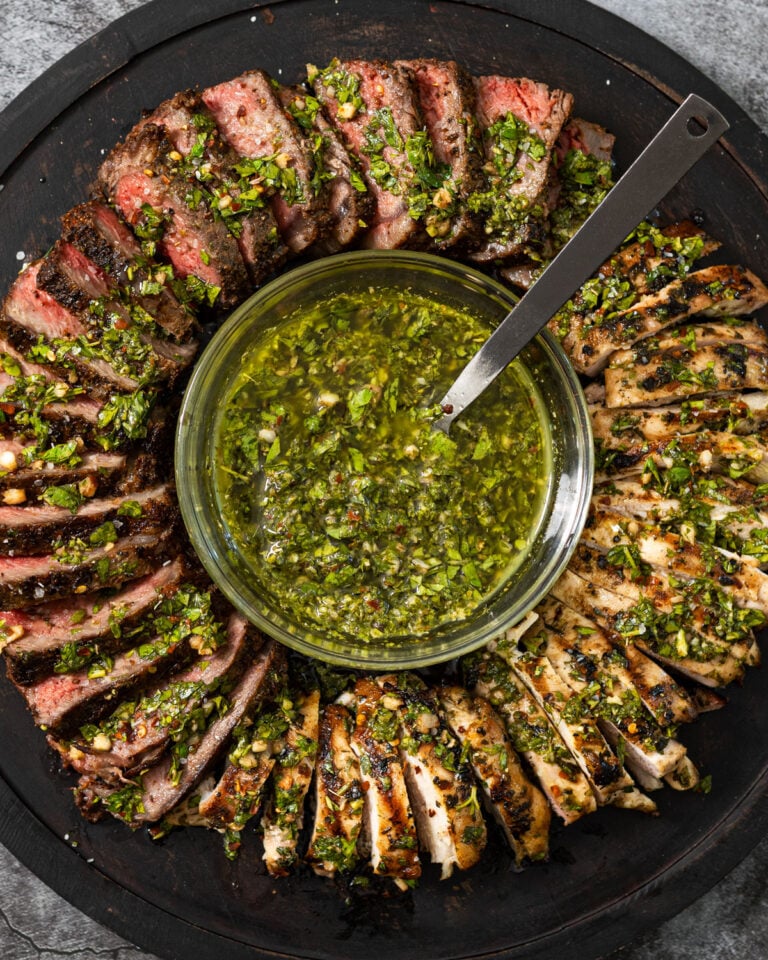
Grilled steak is the classic choice, and it is the pairing I reach for first, especially over rich cuts like reverse-seared picanha. But I probably use chimichurri just as often on grilled chicken thighs, pork tenderloin, lamb, shrimp, salmon, roasted potatoes, grilled vegetables, and even sandwiches. I have honestly had a hard time finding something cooked over live fire that does not benefit from a spoonful.
Frequently Asked Questions
Both are traditional. This recipe uses dried oregano, which is what a lot of Argentine cooks reach for, since the concentrated flavor holds up against grilled beef. Fresh works too and runs a little brighter. If you swap fresh for dried, use about double the amount. The older gaucho field version leaned on dried herbs across the board because fresh would spoil, so dried is not a shortcut here, it is traditional.
No, and the Argentines are the ones who will tell you so. Ask a cook from Argentina and they draw the line fast: chimichurri is parsley, never cilantro. The cilantro versions are American and Mexican-influenced takes, and they taste good, but they are a different sauce wearing the same name. I keep this one parsley to respect where it comes from. If you love cilantro, add it and call it your own, just know you have crossed into variation, not classic.
Red wine vinegar is the classic choice and the one I use. It gives the tang that cuts through grilled meat. Stick to a roughly 3 parts oil to 1 part vinegar ratio as a starting point, and add more vinegar if you like it sharper. Apple cider vinegar works as a substitute. Avoid white vinegar and balsamic, since they pull the flavor away from traditional.
It is best in the first few days but keeps for about a week in an airtight container in the fridge. The vinegar helps preserve it, so it stays usable, it just loses brightness as the herbs settle. The flavor deepens after the first day and the color dulls, which is normal. Bring it to room temperature before serving so the oil loosens.
Room temperature, not cold and not warm. Take it out of the fridge ahead of time so the olive oil, which thickens when chilled, loosens back up and the flavor opens. Straight from the fridge it tastes flat. You do not need to cook chimichurri, since it is a raw, uncooked sauce.
It can sit out for the length of a meal, and there is an old tradition of aging it on the counter that you will see in Argentina. Between uses, though, I keep mine in the fridge. It is a raw garlic and oil sauce, so refrigeration is the safe choice, and the vinegar helps keep it in check, which is one reason you do not skip the acid.
More Chimichurri Recipes
Once you have the classic down, change it up:
- Red Chimichurri: the smoked-chile take when you want it deeper and a little hotter.
- Hatch Chile Chimichurri: the Sonoran version, roasted hatch green chile folded into the herbs.
- Cranberry Chimichurri Sauce: the holiday plate, bright and tart against a roast.
Try It and Tag Us
Make a batch and put it on everything. Spoon it over a grilled steak, use it to marinate chicken thighs before they hit the fire, or drizzle it on roasted potatoes and charred vegetables and see what you think. Tag us on Instagram when you do. Leave a rating below if this helped.
Authentic Chimichurri Sauce
Authentic Argentine chimichurri made by hand with fresh parsley, garlic, dried oregano, red wine vinegar, and olive oil. No blender needed. It is bright, tangy, and perfect on grilled steak, chicken, seafood, and vegetables.
- Total Time: 35 min
- Yield: About 1 cup 1x
Ingredients
- 1 cup fresh flat-leaf parsley, finely chopped
- 4 to 5 garlic cloves, minced
- 1 tablespoon dried oregano, or 2 tablespoons fresh
- 1/2 cup extra virgin olive oil
- 2 1/2 to 3 tablespoons red wine vinegar
- 1 teaspoon red pepper flakes
- 1/2 teaspoon kosher salt, plus more to taste
- 1 teaspoon freshly cracked black pepper, optional
Instructions
- Finely chop the parsley by hand and mince the garlic, keeping the pieces small and even.
- In a bowl, combine the parsley, garlic, oregano, red wine vinegar, red pepper flakes, salt, and black pepper if using. Stir together.
- Pour in the olive oil and stir until combined and glossy. The sauce should look loose and spoonable, not thick.
- Rest at room temperature for at least 20 minutes. Taste, adjust the salt and vinegar, and stir again before serving.
Notes
- Serve at room temperature. If it has been in the fridge, let it come up to temp so the olive oil loosens.
- Store leftovers in an airtight container in the fridge. It is best in the first few days and keeps about a week.
- Freeze in an ice cube tray for longer storage and thaw a portion at a time.
- Chop by hand for the best texture. A food processor works in a pinch, but pulse two or three times and stop before it turns smooth, or it emulsifies into more of a dressing.
- If you use mostly dried herbs, stir in a splash of warm water to help them hydrate.
- Prep Time: 15 min
- Rest Time: 20 min
- Category: Sauces & Salsas
- Method: Mixing
- Cuisine: Argentine
- Diet: Gluten-Free, Vegan
Nutrition
- Serving Size: 2 tablespoons
- Calories: 128
- Sugar: 0.1 g
- Sodium: 82.5 mg
- Fat: 14.1 g
- Carbohydrates: 1.6 g
- Protein: 0.4 g
- Cholesterol: 0 mg


Brad Prose has been crafting recipes over live fire for 20 years. He’s the author of two cookbooks, Chiles and Smoke and Epic BBQ Sandwiches, and the creator of the original smash burger taco, as credited by the Washington Post, TODAY Show, Good Morning America, and Food Network. Brad is the force behind Chiles and Smoke, the home of Sonoran BBQ: bold flavors built around chiles, smoke, and the traditions of the American Southwest. Follow along on Instagram, YouTube, and Facebook.