
Chimichurri Chicken Thighs (Charcoal-Grilled)
Last tested July 2026
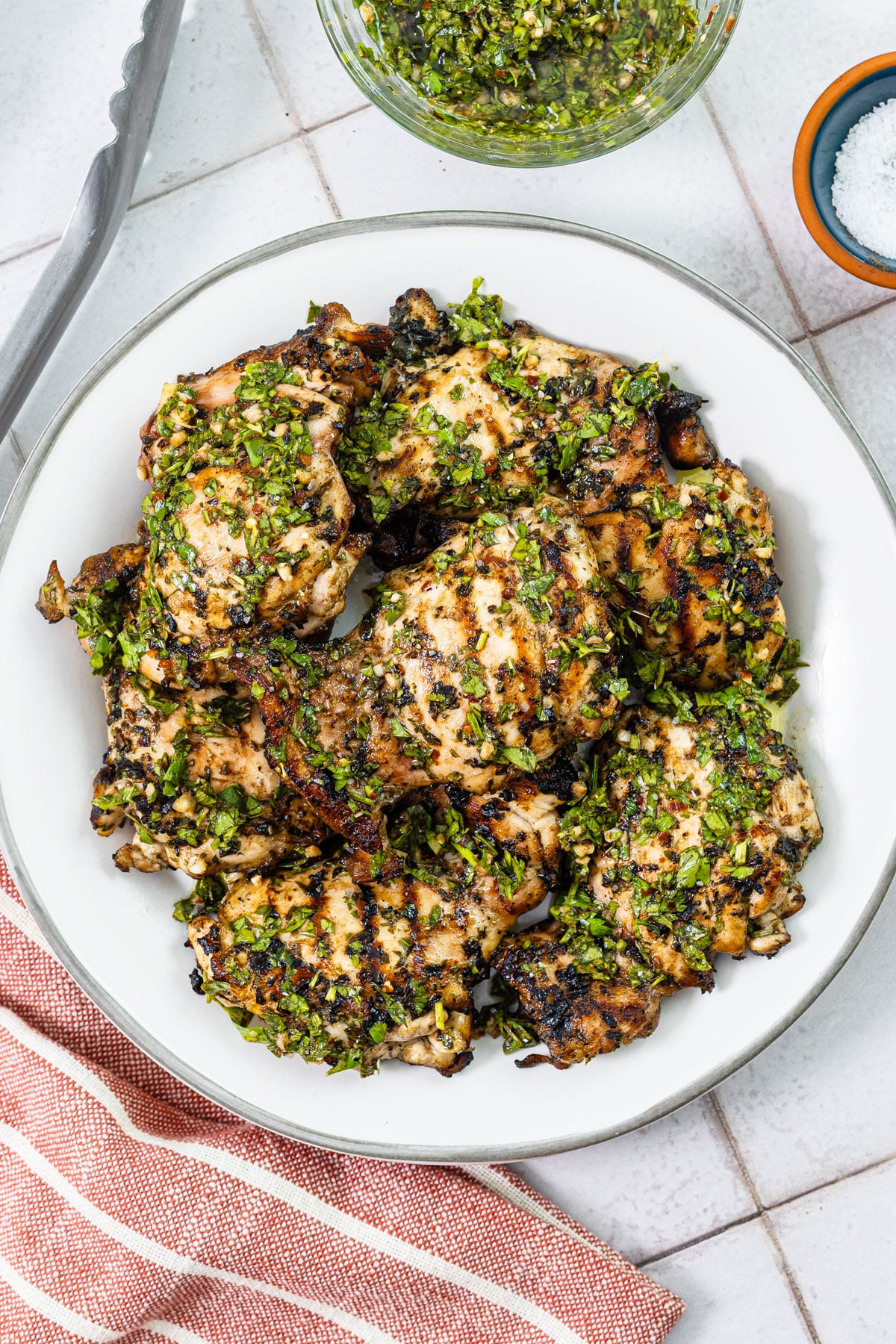
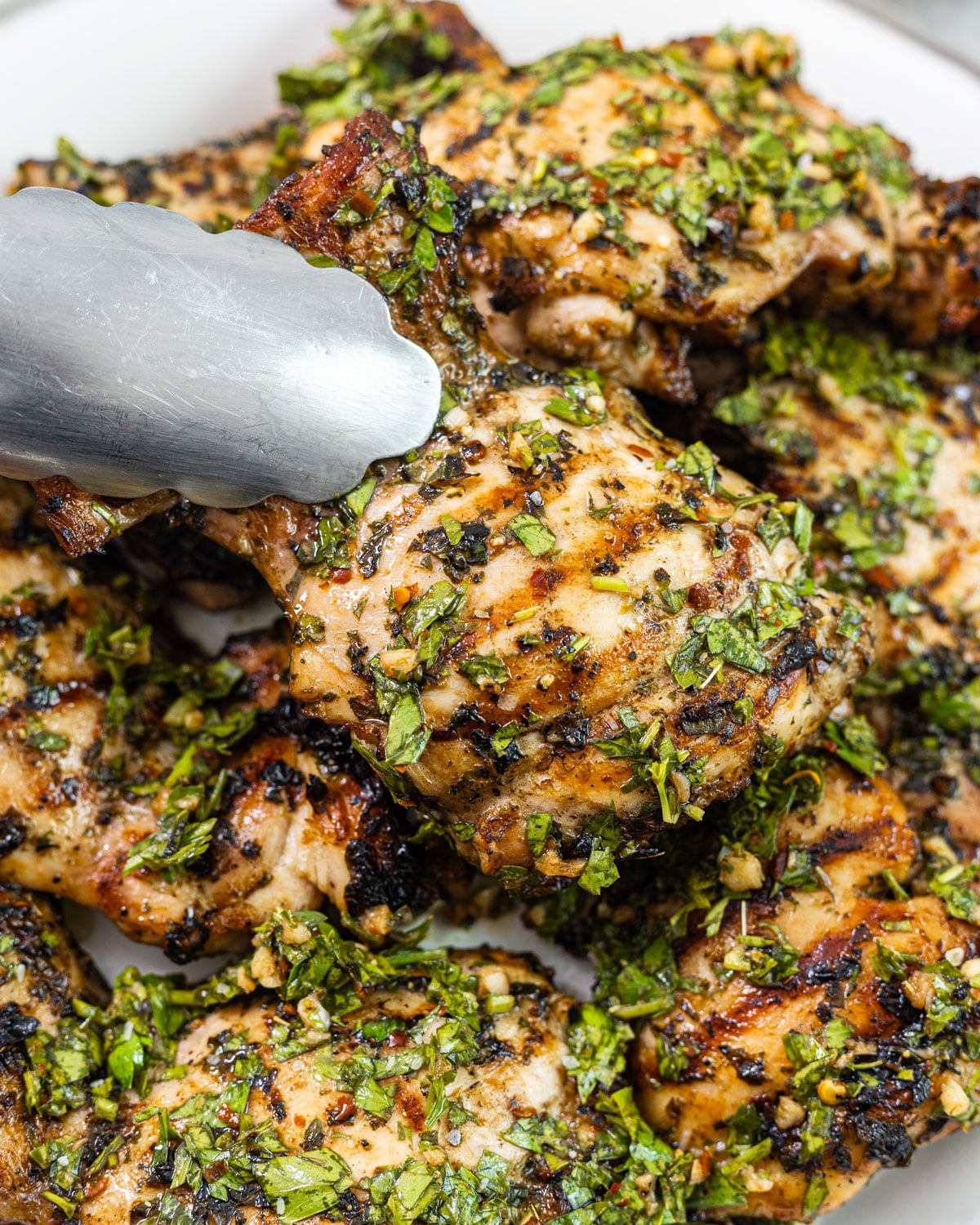
Chimichurri chicken thighs are marinated in the sauce, grilled until the edges char, then finished with more chimichurri spooned over the top. I cook mine over charcoal, and the same batch of sauce does double duty as the marinade and the finish, which is what makes it a fast weeknight cook.
The fat is why I stick with thighs. It renders over the coals and keeps the meat juicy through a hard sear, so I can push for real char without drying anything out. This is one of the recipes where charcoal earns its keep, since the marinade oil hits the fire and sends smoke and char back up into the meat.
What most people miss is that the richness of a thigh is exactly why chimichurri belongs on it. The sauce is sharp with garlic and vinegar, so it cuts straight through the fat instead of sitting on top of it. Put a bright green herb sauce on a thigh and it reads light and fresh, even though you and I both know that fat is where the flavor was hiding the whole time.
Why This Method Works
- The char earns its place here. Charcoal crisps the marinated surface and drives smoke into the edges. That is the flavor you light a fire for.
- The sauce on top tastes alive. I pull a little chimichurri aside before any raw chicken goes near it, so the batch that finishes the plate stays sharp and fresh against the smoky meat.
- Thighs give you room to be aggressive. The fat renders as they cook and keeps the meat moist through a hard sear, so you can chase color without paying for it with a dry center.
- One batch of chimichurri, start to finish. It seasons the thighs going on and brightens them coming off. All that flavor, and nothing made twice.
Key Ingredients
- Boneless skinless chicken thighs: This is one of the few recipes where I won’t tell you to use chicken breast instead. Thighs have enough fat to stand up to a hard sear over charcoal, and that extra richness is exactly what makes the bright chimichurri work. Try to buy thighs that are close to the same size so they finish together.
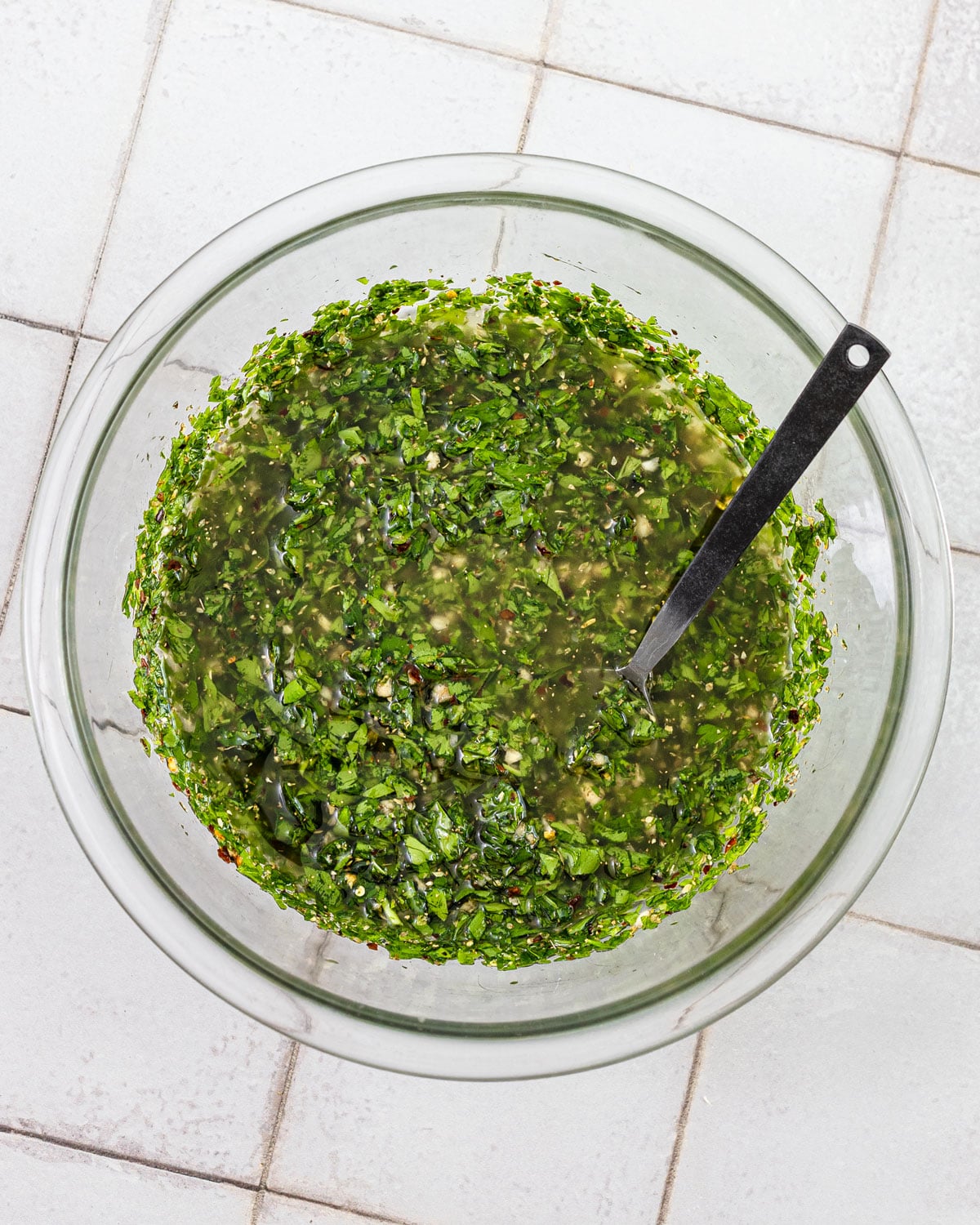
- Chimichurri: One batch does everything here. Reserve some before the raw chicken goes in, then use the rest as the marinade. After the cook, that fresh reserved sauce is what wakes the whole plate back up. Use my classic chimichurri recipe as written and you’ll have plenty for both jobs.
- Kosher salt: Don’t count on the chimichurri to season the chicken for you. Salt the thighs first, then add the marinade. That gives the meat a head start while the chimichurri does what it’s best at: adding fresh herbs, garlic, and acidity.
Any of my chimichurri flavors works as the marinade here, not just the classic. There is a fuller breakdown in Change Up the Chimichurri near the bottom.
How to Make Chimichurri Chicken
Step 1: Reserve the finishing chimichurri first
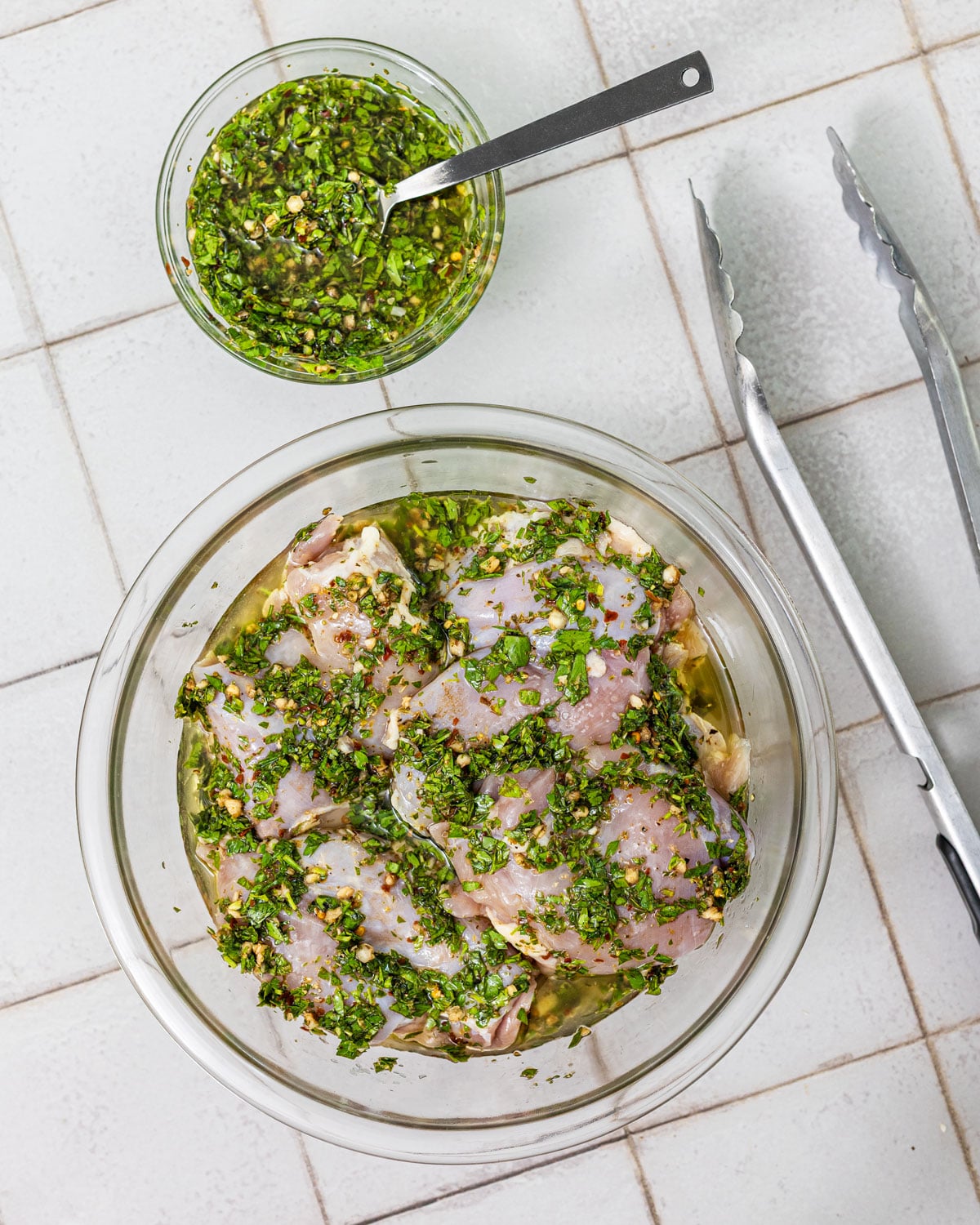
Before the chicken goes anywhere near the bowl, scoop about 1/2 cup of the chimichurri into a separate dish and set it aside. That reserved batch is what you’ll spoon over the finished chicken, so keep it completely away from the raw meat. Once the chicken goes in, there’s no going back.
Step 2: Salt first, then marinate
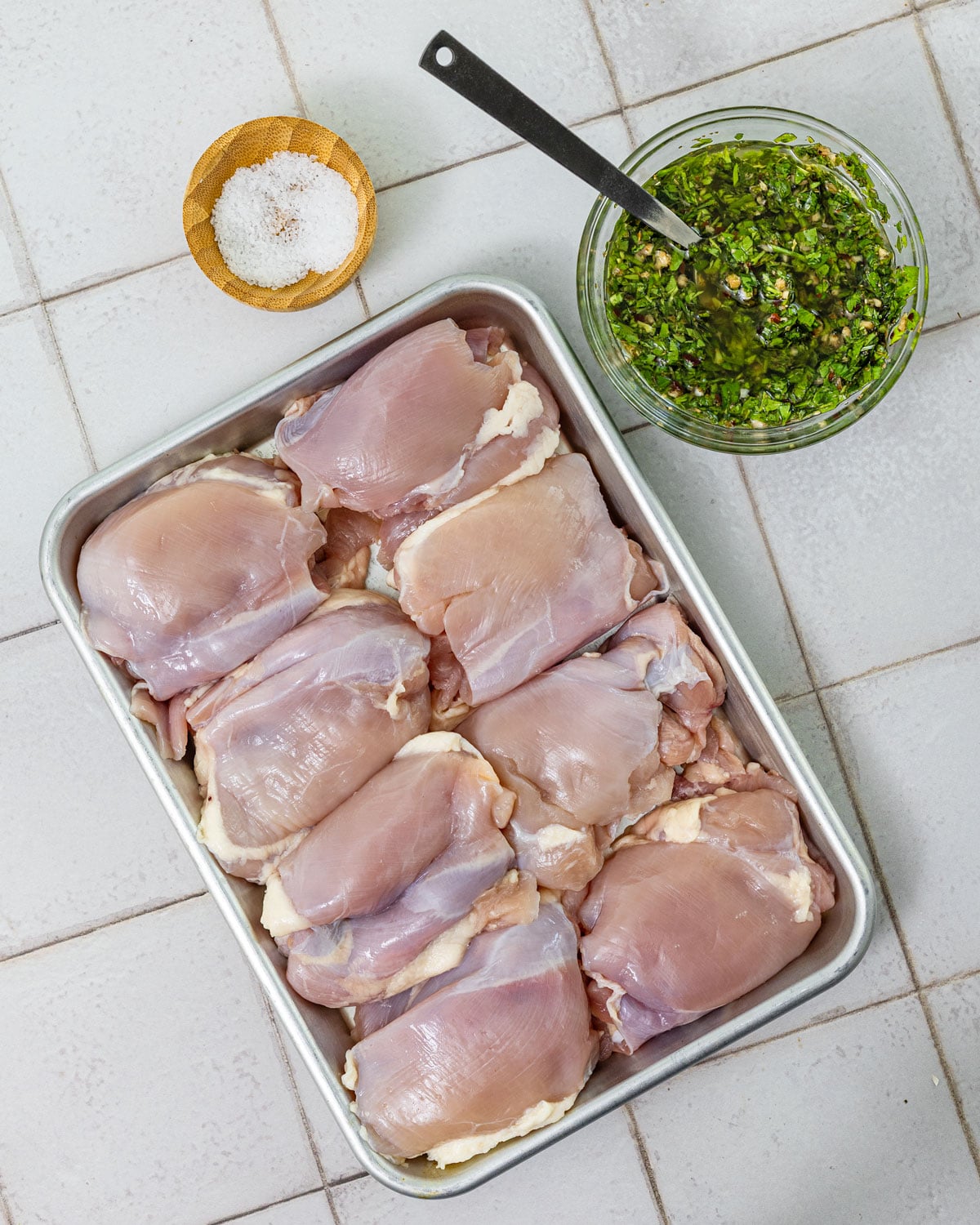
Pat the thighs dry and season both sides with about 1½ teaspoons of kosher salt. Then coat them with the remaining chimichurri, cover, and refrigerate for 30 minutes to 2 hours. That’s all the time this marinade needs. The vinegar works quickly, so 30 minutes to 2 hours is all this marinade needs. Any longer and you’re not gaining much.
Step 3: Build a two-zone charcoal fire
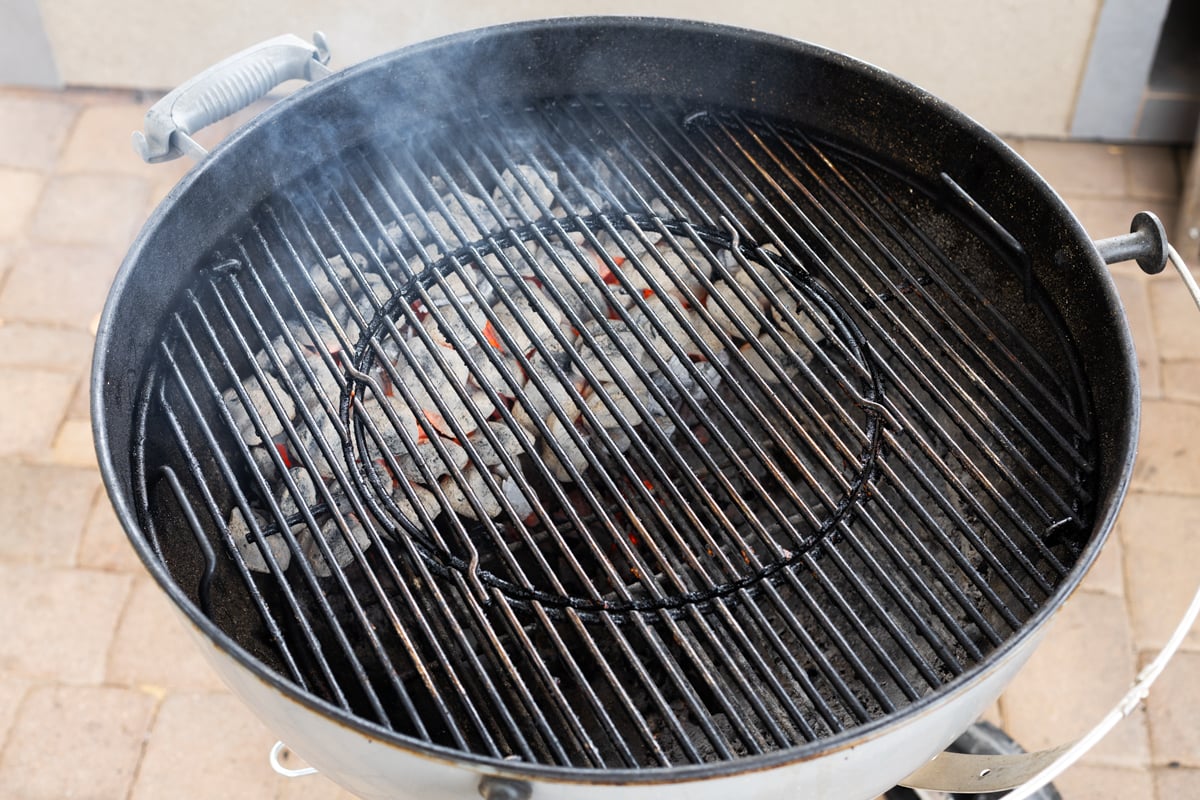
While the chicken marinates, light a full chimney of charcoal and bank the coals to one side of the grill. Leave the other side empty so you have a cool zone ready when the flare-ups start. Once the coals are hot, set the grate in place, let it heat for a few minutes, and give it a quick cleaning before the chicken goes on.
Step 4: Sear over the coals and manage the fire
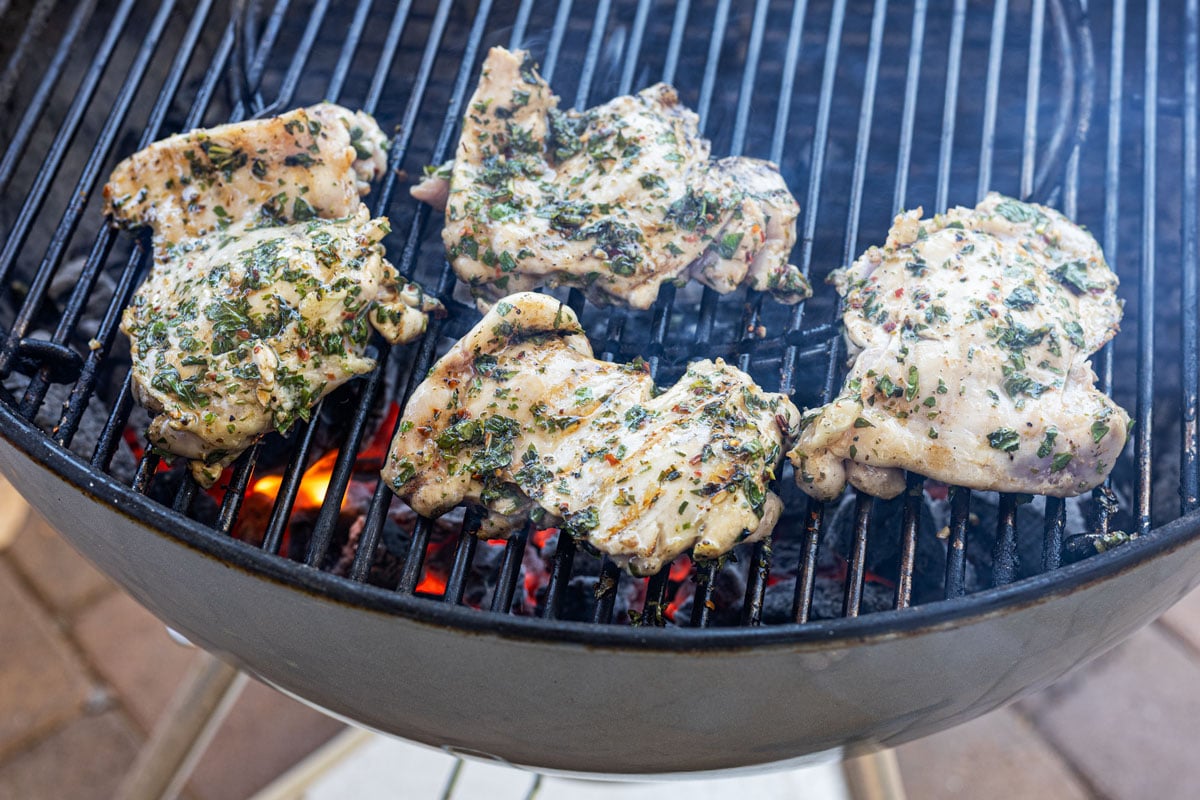
Let the excess marinade drip off each thigh, then place them over the direct heat. Sear for about 3 to 4 minutes per side until the edges pick up deep char. The oil in the chimichurri will cause flare-ups, and that’s expected.
When the flames climb, slide the thighs over to the cool side for a few seconds, then move them back once the fire settles. That’s exactly why you built a two-zone fire.
Step 5: Finish over indirect heat
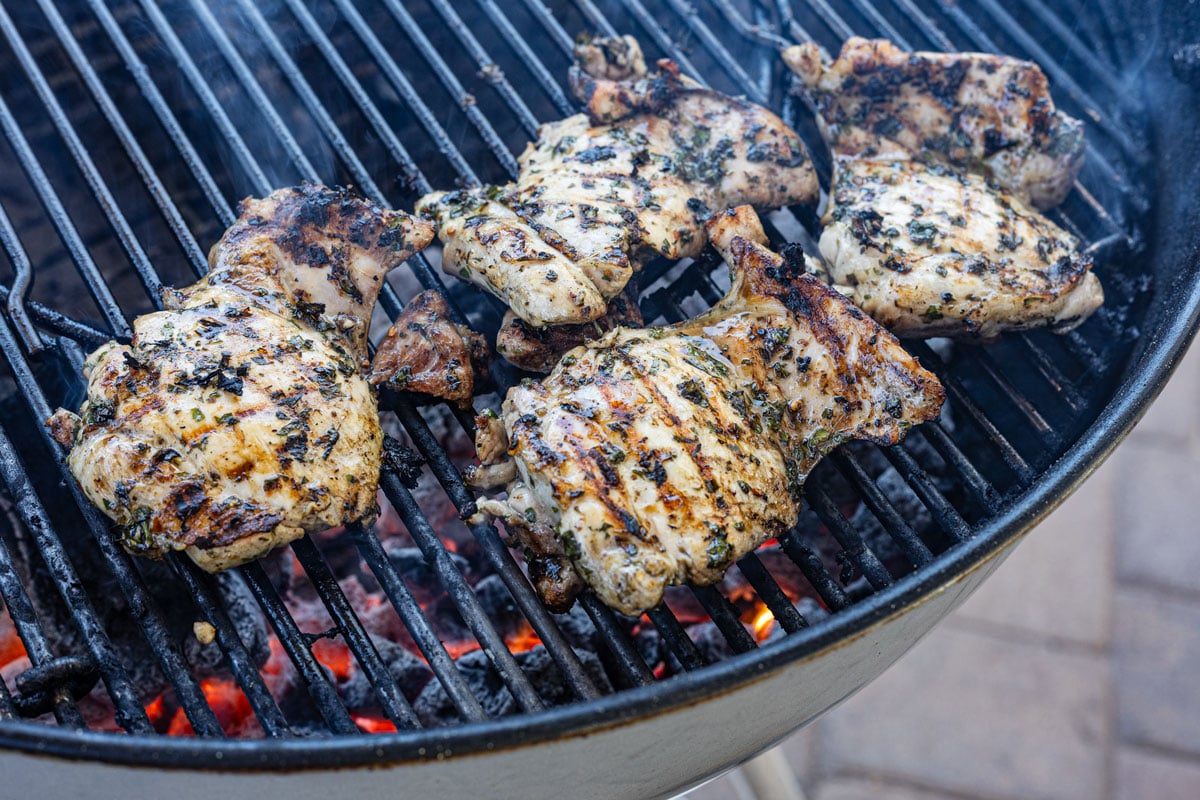
Once both sides are nicely charred, move the thighs to the cool side, close the lid, and let them finish cooking until they reach 175-185°F. Chicken thighs are perfectly safe at 165°F, but those extra degrees are where the fat and connective tissue finish rendering, giving you the tender texture that makes thighs worth choosing in the first place.
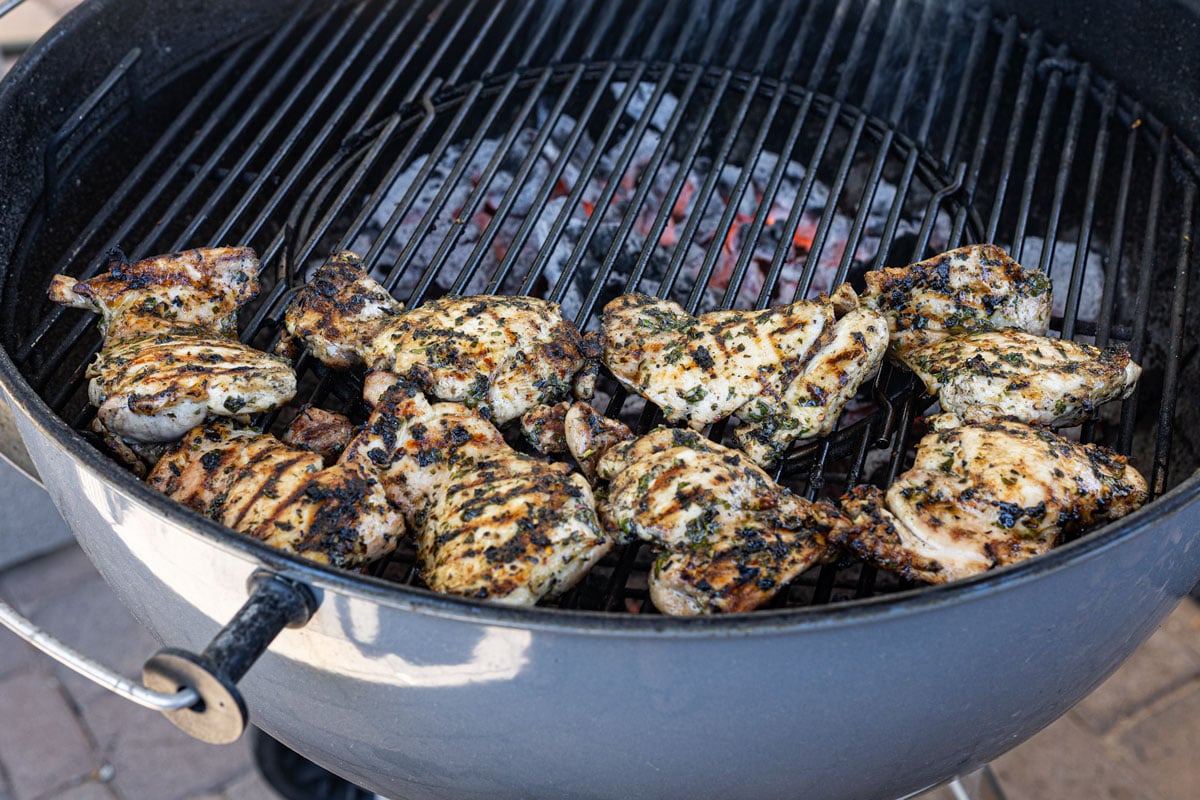
Let them rest for about 5 minutes, then spoon the reserved chimichurri over the top and finish with a pinch of flaky salt if needed.
Make-Ahead and Storage
This recipe is easy to prep ahead, but the chimichurri doesn’t need an overnight marinade. Salt the thighs earlier in the day if you want a head start, then coat them in the chimichurri 30 minutes to 2 hours before they hit the grill. That’s all the time the marinade really needs.
For leftovers:
- Refrigerator: Store the cooked chicken in an airtight container for up to 4 days.
- Reheating: Slice the thighs and warm them in a hot skillet for a couple of minutes. It keeps the char intact much better than the microwave.
- Freezer: Freeze the cooked chicken for up to 2 months.
The reserved chimichurri keeps about a week in the refrigerator. Let it come back to room temperature before serving so the olive oil loosens up and the herbs taste fresh again.
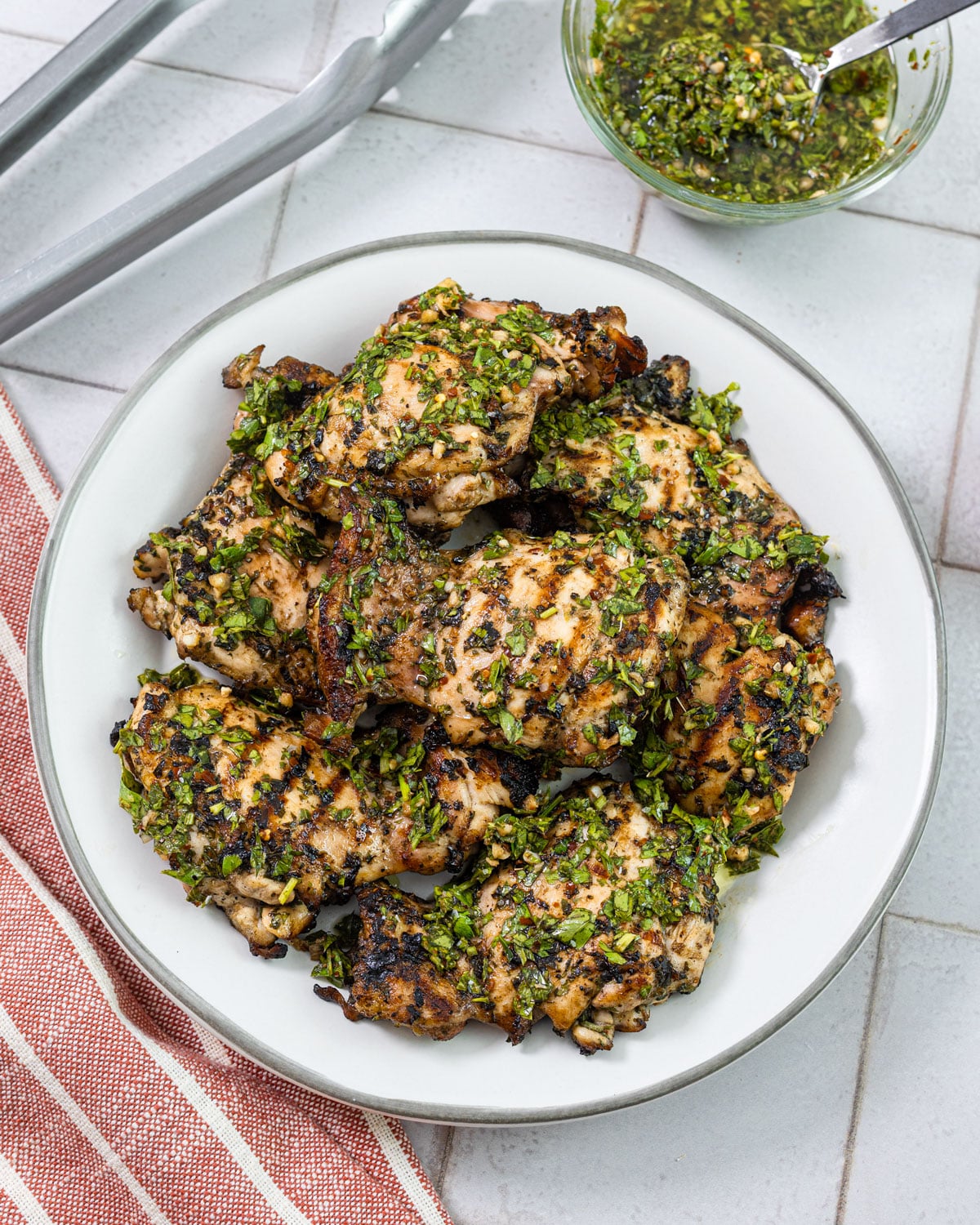
Pro Tips from the Pit
- Pat the thighs dry before they hit the grate. The chimichurri has already done its job. A quick pat with a paper towel removes excess moisture so the surface chars instead of steaming.
- Expect flare-ups. The oil in the chimichurri is going to drip into the coals. That’s normal. Keep the cool side of the grill open so you can slide the chicken away from the flames for a few seconds instead of fighting the fire.
- Sauce after the rest. Give the chicken about 5 minutes before adding the reserved chimichurri. The juices stay in the meat, and the fresh herbs stay on the chicken instead of washing onto the cutting board.
- Make a full batch of chimichurri (or even more). You’ll use part for the marinade, part for finishing, and you’ll probably want leftovers. It’s just as good on eggs, grilled vegetables, steak, or crusty bread later in the week.
Change Up the Chimichurri
The classic is the default, but every one of my chimichurri variations works as the marinade and the finishing sauce here. Pick the one that fits the meal.
- Classic Chimichurri: parsley, garlic, oregano, and red wine vinegar. The version I reach for most and the baseline for this cook.
- Red Chimichurri: smoked paprika and red pepper build a deeper, warmer sauce that leans into the char.
- Hatch Chile Chimichurri: roasted Hatch green chile for real heat and a Southwest angle.
- Cranberry Chimichurri: tart and a little sweet, the one I run in the fall and over the holidays.
Frequently Asked Questions
hirty minutes, up to 2 hours. Thirty minutes is enough to season the meat before it hits the fire, and you are not gaining anything past the 2 hour mark. If it is easier to marinate closer to 30 minutes on a busy night, that works just as well.
Chicken thighs are safe at 165°F, but I pull them between 175°F and 185°F. That range is where the fat and connective tissue in a thigh render, which is what makes the cut tender instead of chewy. Use an instant-read in the thickest part and pull toward the higher end if you like your thighs more done.
You can, and it still works with this sauce. I build it around thighs on purpose: the extra fat takes char better and gives you more margin over the fire, and the sharp sauce keeps that richness from feeling heavy. If you go with breast, pull it at 160°F and let carryover finish it so it does not dry out on the direct side. My grilled chicken breast guide covers the full method if you want to go that route.
Gas works and the two-zone setup is the same, high burners on one side and off on the other. You lose the charcoal smoke and some of the char, which is where a lot of the flavor in this version comes from, but it is still a good plate of chimichurri chicken. If you have the charcoal, use it here.
More Grilled Chicken Recipes
- Grilled Chicken Wraps: slice the leftovers thin and this is where they go the next day.
- Grilled Chicken Torta: a grilled chicken sandwich on a toasted roll, and leftover chimichurri thighs stack right into it.
- Grilled Honey Pepper Pimento Chicken Sandwich: a sweet-heat take on grilled chicken for when you want a sandwich instead of a plate.
- Grilled Chicken Alfredo: grilled chicken over pasta when you want a heavier dinner off the same grate.
- Grilled Chicken Wings: another cut for the charcoal when you want grilled chicken in finger-food form.
Try It and Tag Us
Fire up the charcoal this weekend and make the full batch. Eat it straight off the cutting board tonight, then turn the rest into rice bowls, tacos, or wraps through the week. Tag us on Instagram when you do. Leave a rating below if this helped.
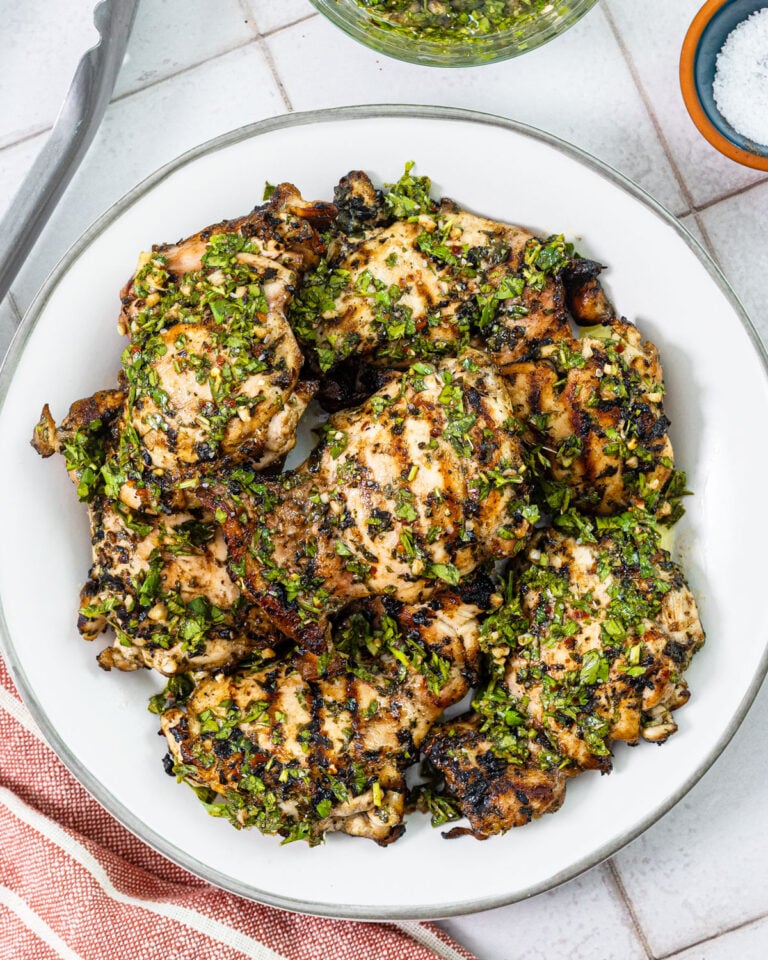
Chimichurri Chicken Thighs (Charcoal-Grilled)
Charred, smoky chicken thighs loaded with bright, garlicky chimichurri. This is what happens when a simple weeknight dinner meets a hot charcoal grill.
- Total Time: 1 hour
- Yield: 4 to 6 servings 1x
Ingredients
For Chicken
- About 3 pounds boneless skinless chicken thighs (8 thighs)
- 1.5 teaspoons kosher salt, Morton’s, for pre-salting, plus more to finish
Chimichurri Sauce
- 2 cups fresh flat-leaf parsley, finely chopped
- 8 to 10 garlic cloves, minced
- 2 tablespoons dried oregano, or 4 tablespoons fresh
- 1 cup extra virgin olive oil
- 5 to 6 tablespoons red wine vinegar
- 2 teaspoons red pepper flakes
- 1 teaspoon kosher salt, plus more to taste
- 2 teaspoons freshly cracked black pepper, optional
Instructions
- Reserve about 1/2 cup of the chimichurri in a separate bowl for finishing. Set it aside and keep it away from the raw chicken.
- Pat the thighs dry and season both sides with the kosher salt.
- Fold the thighs into the remaining chimichurri, cover, and refrigerate 30 minutes, up to 2 hours.
- Light a full chimney of charcoal and bank the coals to one side of the grill for a two-zone fire. Bring the grate to temp and clean it.
- Drain the marinade off each thigh. Sear over the direct side 3 to 4 minutes per side until well charred, sliding thighs to the cool zone whenever the marinade oil flares.
- Move the thighs to the cool side to finish, cover, and cook until they reach 175°F to 185°F internal.
- Rest 5 minutes. Spoon the reserved chimichurri over the top, add a pinch of salt to taste, and serve.
Notes
- Reserve the finishing sauce before marinating. Never reuse marinade that touched raw chicken.
- Pull thighs between 175°F and 185°F for the best texture. 165°F is the minimum safe temp.
- Marinate 30 minutes to 2 hours. Any longer doesn’t add much.
- Gas works too, same two-zone setup.
- Any chimichurri variation works here: classic, red, Hatch chile, or cranberry.
- Cooked thighs keep 3 to 4 days refrigerated, reheat best in a hot skillet. Reserved sauce keeps about a week.
- Prep Time: 15 min
- Marinade Time: 30 min
- Cook Time: 15 min
- Category: Chicken & Turkey
- Method: Grilling
- Cuisine: Argentine
- Diet: Gluten-Free
Nutrition
- Serving Size: 1-2 chicken thighs
- Calories: 352
- Sugar: 0.3 g
- Sodium: 394.2 mg
- Fat: 31.4 g
- Carbohydrates: 4.1 g
- Protein: 15.7 g
- Cholesterol: 70 mg


Brad Prose has been crafting recipes over live fire for 20 years. He’s the author of two cookbooks, Chiles and Smoke and Epic BBQ Sandwiches, and the creator of the original smash burger taco, as credited by the Washington Post, TODAY Show, Good Morning America, and Food Network. Brad is the force behind Chiles and Smoke, the home of Sonoran BBQ: bold flavors built around chiles, smoke, and the traditions of the American Southwest. Follow along on Instagram, YouTube, and Facebook.


