
Carne Asada Tacos

Last tested June 2026
Carne asada tacos start with the right cut of beef, a citrus-and-lager marinade, and a screaming-hot grill. The marinade is built for skirt, flank, or flap steak. The cook is fast, the slicing matters as much as the cooking, and the meat is finished medium to medium-plus rather than medium rare. Wrap it in a Sonoran flour tortilla, top with onion and cilantro, and add salsa.
I grew up in Phoenix eating carne asada everywhere, but my father-in-law from Chihuahua is the one who demystified it for me. He showed me the recipe he makes at home: lager, lime, soy sauce, pepper, and oil, nothing else. The simplicity of those flavors changed how I thought about this dish. Over the years I have added two ingredients to that foundation, and the recipe below is the version I serve at every cookout.

Why This Process Works
- Juicier, more tender meat without overcooking it. The Mexican lager and citrus tenderize the beef while the soy sauce works its way into the muscle fibers, so even leaner cuts like flank stay juicy when cooked to the right temperature.
- The beef is the star in every bite. The marinade is built to tenderize and amplify, never to mask. You taste deep, char-edged steak first, with brightness and savoriness underneath.
- Edges crisp, interior stays tender. Grilling thin cuts over direct high heat gives you the dark char that defines carne asada. The thinness of the skirt and flap means the interior cooks fast, so you get crust without dry meat.
Key Ingredients (and Why They Matter)
- Skirt, flank, or flap steak: All three work. Skirt is my favorite for its fat distribution. Flap soaks up the marinade like a sponge. Flank is the most accessible at any grocery store.
- Mexican lager: Modelo, Pacifico, or Tecate. The malt and CO2 tenderize the meat and add a subtle depth. Substitute with a non-alcoholic lager if needed.
- Soy sauce: Adds salt and umami while breaking down the surface of the beef. Tamari works as a gluten-free swap.
- Fish sauce: Red Boat is my brand. Trust the process. There is no fish flavor in the finished meat, just a beefier beef. In a pinch, swap 1 tablespoon Worcestershire for the fish sauce. Same umami principle, slightly different finish.
- Fresh orange and lime juice: Bottled juice will not deliver the same brightness. Squeeze your own.
- Flour tortillas: Small Sonoran-style flour tortillas are my pick for this recipe. They are the traditional choice in this region for carne asada. Look for thin, pliable tortillas with no baking powder.
Note: Sedona Sand Fiesta Seasoning makes a great seasoning in place of the salt and pepper before grilling for an added Southwest layer.

Choosing Your Cut
The three cuts I recommend, in order of preference:
Skirt Steak
My personal favorite. Skirt has ribbons of fat running through it that keep the meat juicy at higher temperatures. The edges crisp beautifully over direct fire, and the texture chops cleanly into taco-sized bites. Skirt benefits from being cooked a touch past medium rare so the fat renders properly.
Flank Steak
Beefier and leaner than skirt. Flank has a defined grain running the length of the steak, so slicing against the grain is non-negotiable. The marinade tenderizes the muscle, but you still need to pull this one slightly earlier than skirt because there is less fat to protect the meat from drying out.
Flap Steak (Sirloin Flap)
The most underrated cut for carne asada. Flap has a coarse, open texture that soaks up marinade better than skirt or flank. It is harder to find at standard grocery stores, but Costco and Latin grocers usually carry it. The flavor is closest to skirt with a slightly looser texture, and it cooks similarly.
How to Make Carne Asada Tacos: Step by Step
Step 1: Mix the marinade and add the steak
Whisk together the orange juice, lime juice, lager, soy sauce, fish sauce, oil, and black pepper in a bowl. Pour into a large zip-top bag with your steak. Press the air out, seal, and refrigerate for 2 to 4 hours. You can go up to 8 hours, but no longer. The citrus will start to break down the protein and the texture turns mushy past that point.

Step 2: Get the grill screaming hot
For charcoal, build a hot two-zone fire and let the coals fully ash over. You want to hold your hand 4 inches above the grate for no more than 2 seconds. For gas, preheat all burners on high for 15 minutes with the lid closed. The grates should be hot enough to sizzle aggressively the moment the meat touches them.
Step 3: Dry the steak and season
Pull the steak from the marinade and pat both sides completely dry with paper towels. A dry surface is the difference between char and steam. Season lightly with kosher salt and fresh black pepper. The marinade has soy and fish sauce in it, so the meat is already partially seasoned.

Step 4: Grill hot and fast
Place the steak over direct high heat. Skirt steak goes 3 to 4 minutes per side. Flank steak goes 4 to 5 minutes per side. Flap steak goes 3 to 4 minutes per side. Use a probe thermometer to confirm the internal temp. Pull at 145°F for skirt and flap, 140°F for flank.
Step 5: Rest, slice, and chop
Let the steak rest for 5 minutes on a cutting board. Identify the direction of the grain, then slice thin perpendicular to those lines. Once sliced, chop the strips into half-inch pieces so they fit cleanly in a taco. This step is what separates good carne asada from chewy carne asada.
Step 6: Warm the tortillas and build
Hold each tortilla directly over a gas flame for 10 to 15 seconds per side until blistered and pliable. No gas stove? Use a dry cast iron over high heat. Stack the warm tortillas in a clean kitchen towel.
Build each taco with a generous spoonful of carne asada, finely diced white onion, fresh cilantro, and a squeeze of lime.

Make-Ahead and Storage
The marinade can be made up to 2 days ahead and stored in the fridge in a sealed container. Marinated steak can sit in the marinade for up to 8 hours, no longer.
Cooked carne asada keeps in an airtight container in the fridge for 3 days. Reheat in a screaming-hot cast iron skillet for 1 to 2 minutes to bring back the char. Avoid the microwave when you can, since steaming kills the texture.
For freezer storage, freeze the cooked and sliced meat in a sealed bag for up to 2 months. Thaw overnight in the fridge before reheating.
Pro Tips from the Pit
- The char is the cue, not just the timer. When you see deeply caramelized edges and the fat starting to crisp, the steak is close to done. The thermometer confirms it, but your eyes get you there first.
- Slice against the grain or start over. With flank especially, slicing with the grain produces meat that is tough no matter how well you cooked it. Look at the surface, find the lines, slice perpendicular.
- Make extra meat on purpose. Carne asada is one of the best leftovers in cooking. Eggs, fries, bowls, nachos, breakfast burritos. Cook two pounds even if you only need one.
Optional Toppings
The classic street taco build is white onion, cilantro, and a squeeze of lime. That is the foundation. Beyond that, here are the additions worth keeping on the table:
- Crumbled cotija cheese: Salty, mild, and traditional with carne asada
- Thinly sliced radishes: Fresh crunch and a peppery bite
- Sliced avocado or guacamole: Adds richness, especially with leaner flank steak
- Quick-pickled red onions: Acid and color, both useful with rich beef
- Pickled jalapenos: Spicy, tangy kick with every bite.
- Lime wedges: Always
For salsa, three options from my site that pair well with carne asada:
- Charred Salsa Verde: The most classic pairing with carne asada. Bright, acidic, smoky.
- Hatch Chile Salsa Verde: Southwest signature, deeper and earthier.
- Restaurant-Style Chipotle Salsa: Smoky red salsa with medium heat.
A bottle of Smoky Sonoran BBQ Sauce on the table works here, too if you want a sweeter, BBQ-leaning option. It’s built with a rich guajillo chile puree, so it pairs well with grilled steak.
Frequently Asked Questions
Carne asada literally translates to “grilled meat” in Spanish. Carne means meat or beef, asada means grilled or roasted. The dish originated in northern Mexico, especially the states of Sonora and Chihuahua, where ranching culture shaped the tradition of grilling thin cuts of beef over open fire. You will sometimes see it called “beef asada” in English, which is the same recipe described in plainer terms.
Marinate for 2 to 4 hours minimum, up to 8 hours maximum. Less than 2 hours and the marinade has not had time to penetrate the meat. More than 8 hours and the citrus starts breaking down the proteins, turning the surface mushy. Overnight marinating is a common mistake with citrus-based marinades.
Pull skirt and flap steak at 145°F. Pull flank at 140°F, since it has less fat and will carry over to 145°F during the rest. This is medium to medium-plus, not medium rare. The thin cuts used for carne asada need more heat than a thick steak to render fat and produce the right texture for chopping into tacos.
Yes. A cast iron skillet on the stove over high heat produces a solid carne asada. Get the pan ripping hot before the steak goes in, and turn on your exhaust fan because there will be smoke. Cast iron cooks faster than a grill, so use a probe thermometer and pull at the same target temperatures. You will not get the same char or smoke flavor as live fire, but the texture and core flavor translate well.
More Beef Recipes from the Grill
- Charcoal Burgers: The classic backyard burger, cooked over screaming hot coals for a real char.
- Smoked Smash Burgers: A smoke-infused twist on the smash burger format, all live fire.
- Reverse-Seared Tri-Tip: Another lean Southwest cut that benefits from a slow start and a hot finish.
Try It and Tag Us
If you make this carne asada taco recipe, leave a star rating and a comment below. Tag us on Instagram when you do.

Carne Asada Tacos
The best carne asada tacos start with the right cut and a citrus-lager marinade. Grilled hot, sliced against the grain, wrapped in flour tortillas.
- Total Time: 2 hours 25 minutes
- Yield: 6 people 1x
Ingredients
For the marinade:
- 1 orange, juiced (about 1/2 cup)
- 2 limes, juiced (about 1/4 cup)
- 1/4 cup Mexican lager
- 2 tbsp soy sauce
- 1 tbsp fish sauce
- 2 tbsp avocado or vegetable oil
- 1 tsp fresh ground black pepper
For the tacos:
- 2 lbs skirt steak, flank steak, or flap steak
- 1 tsp kosher salt
- 8 to 12 small Sonoran-style flour tortillas
- 1/2 cup white onion, finely diced
- 1/2 cup fresh cilantro, roughly chopped
- 2 limes, cut into wedges
- 1/2 cup cotija cheese, crumbled (optional)
- 6 radishes, thinly sliced (optional)
- Salsa of choice (see options in post)
Instructions
- Whisk together orange juice, lime juice, lager, soy sauce, fish sauce, oil, and black pepper in a bowl. Pour into a zip-top bag with the steak. Refrigerate 2 to 4 hours, up to 8 hours.
- Preheat the grill to maximum heat. Charcoal should be fully ashed over. Gas burners on high for 15 minutes.
- Pat the steak completely dry with paper towels. Season with kosher salt.
- Grill over direct high heat: skirt 3 to 4 minutes per side, flank 4 to 5 minutes per side, flap 3 to 4 minutes per side. Pull skirt and flap at 145°F, flank at 140°F.
- Rest the steak for 5 minutes. Slice thin against the grain, then chop into half-inch pieces.
- Warm tortillas over a gas flame or in a dry cast iron, 10 to 15 seconds per side.
- Build each taco with a warm tortilla (one flour or two corn), a generous spoonful of carne asada, diced onion, cilantro, and a squeeze of lime. Add cotija, radishes, and salsa to taste.
Notes
- Fish sauce is the umami secret. One tablespoon adds beefiness without any fish flavor.
- Pat the steak dry before grilling. A dry surface is the difference between char and steam.
- Slice against the grain every time. With flank especially, this is what separates tender from chewy.
- Leftovers keep 3 days in the fridge. Reheat in a screaming-hot cast iron to bring the char back.
- Prep Time: 15 minutes
- Marinate Time: 2 to 4 hours
- Cook Time: 10 minutes
- Category: Beef & Lamb
- Method: Grilling
- Cuisine: Mexican, Sonoran
Nutrition
- Serving Size:
- Calories: 442
- Sugar: 5.5 g
- Sodium: 1129.2 mg
- Fat: 15.3 g
- Carbohydrates: 38.7 g
- Protein: 38.2 g
- Cholesterol: 90.7 mg

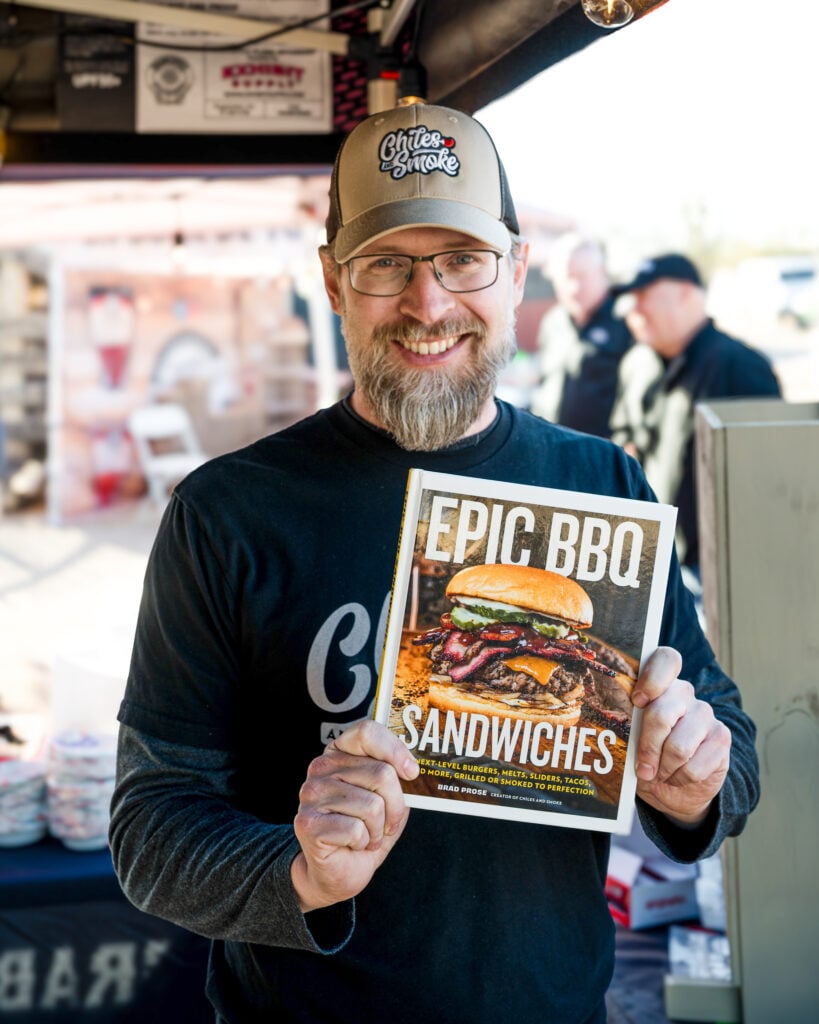
Brad Prose has been crafting recipes over live fire for 20 years. He’s the author of two cookbooks, Chiles and Smoke and Epic BBQ Sandwiches, and the creator of the original smash burger taco, as credited by the Washington Post, TODAY Show, Good Morning America, and Food Network. Brad is the force behind Chiles and Smoke, the home of Sonoran BBQ: bold flavors built around chiles, smoke, and the traditions of the American Southwest. Follow along on Instagram, YouTube, and Facebook.



Hey David I’m Mexican,just shut up!
As a Mexican I have to say that you are full of it. Carne Asada does not mean “grilled beef” it means “grill meat” and it could be anything, but it’s mainly beef.
Second: I don’t care if your father in law is from Chihuahua or whatever, once you add oil or soy sauce it becomes something Tex Mex, not Mexican at all. We don’t add oil or soy sauce if you’re grilling beef. Why, because you want to keep the natural flavor of the meat.
So please, stop calling this carne asada when is something else.
David, I appreciate your passion.
There is not one, true recipe. You’d be hard-pressed to find a single, true recipe for any dish out there. Period. That would be like saying nachos should only be served with grated cheese and jalapenos, which was an original recipe. Can Wet Burritos in the midwest be considered a Mexican burrito? Spend some time doing research and you’ll find that carne asada is very regional, and even Tex Mex grilled-beef recipes can be called Carne Asada. Most importantly though, this is an overall guide designed to educate. I covered the fact that original carne asada typically just used lime juice, salt, and maybe pepper. Perhaps you skipped over the part where I described my recipe: “Playing with this over the years, I’ve modified it to my flavor profile…”
Soy sauce is absolutely an ingredient that penetrated Mexican cuisine. It’s more prominent on the coast, but the Chinese emigrated to Mexico in the late 1800s and brought many ingredients that are now more common in the Mexican culture. It’s a very interesting topic, I highly recommend reading The Chinese in Mexico by Robert Romero which does an excellent job documenting the influences.
Oil serves a purpose in marinades, helping to transfer fat-soluble flavors across the surface of the meat. This works well with ingredients such as chiles, herbs, and aromatics like garlic or onions. As I mentioned in the article though, certain regional variations use a dry rub with just lime.
Lastly, I dare you to try the recipe. It’s easy to criticize something you haven’t tasted, simply because you have bias. This is my personal version of carne asada, happily approved by many from your country. It tastes good. You’re welcome to call it whatever you’d like, but I bet you’d enjoy the flavors.
Thank you for the translation correction, that was a total oversight that’s been corrected.